


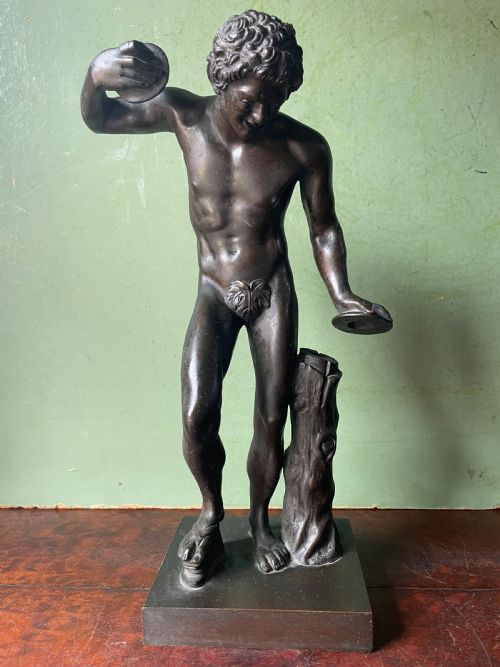


Dark Bronze Faun Statue
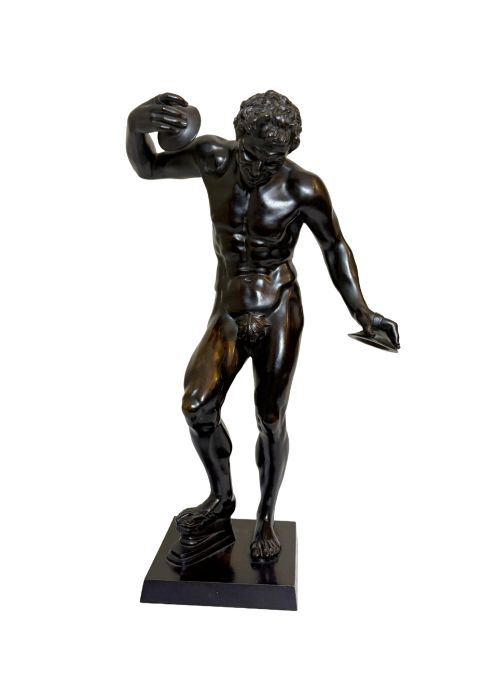
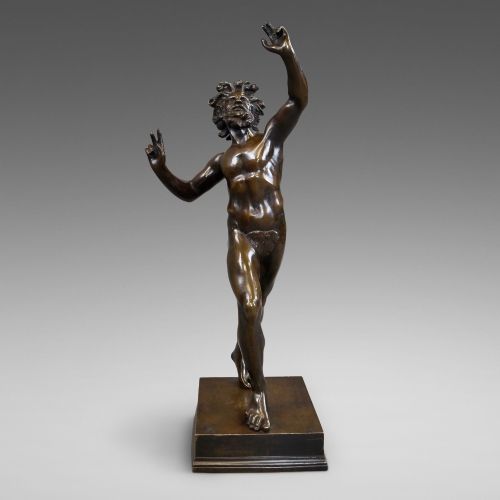
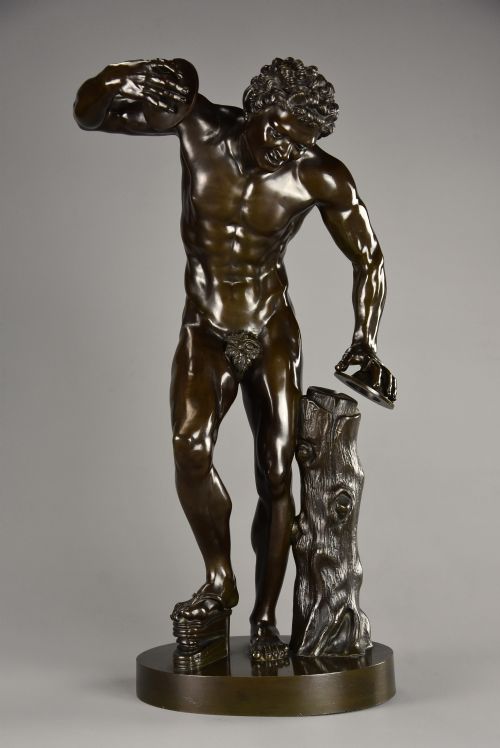
These dark bronze faun statues bring classical mythology into the room, cast to capture the lively posture of ancient sculpture.
Dark Bronze Faun Statue
A dark bronze faun statue depicts a mythological woodland figure, often shown dancing, playing pipes, or holding cymbals. These pieces draw directly on classical antiquity, frequently echoing the famous Dancing Faun discovered at Pompeii during the nineteenth century. Buyers seek them to add classical character and sculptural movement to a study, library, or mantelpiece.
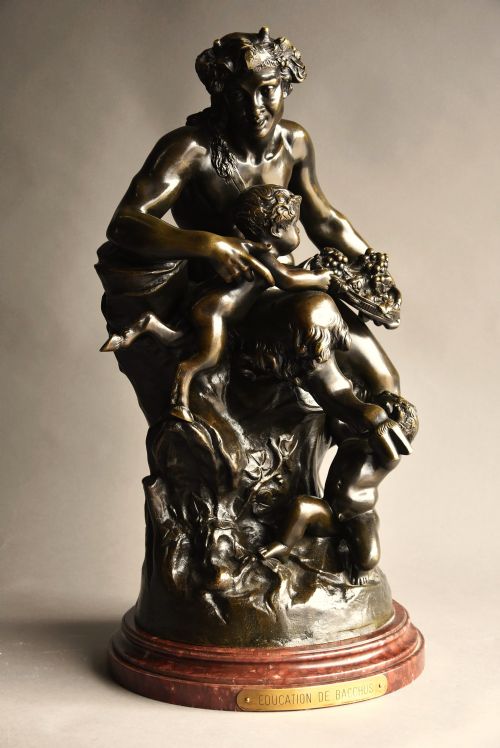
The selections available here stem predominantly from the nineteenth century, including Victorian examples and Italian Grand Tour souvenirs. Formats range from individual standing figures to groups featuring a satyr or Bacchus, cast in patinated bronze or occasionally plaster. Most examples measure as cabinet bronzes or larger tabletop reductions designed for European travellers and collectors.
What varies in quality
The refinement of the chasing separates standard souvenir castings from superior sculptural reductions. Finer pieces preserve crisp details in the faun's fingers, facial expression, and musical instruments, whereas lower quality casts appear softened and indistinct. The depth and evenness of the bronze patina also contribute significantly to the visual weight and finish of the object.
The quality of the mount and material used for the base further distinguishes the pieces. Heavy marble plinths, stable construction, and well-proportioned casting mark out superior nineteenth-century examples intended for discerning collectors of classical antiquities.
Pan occasionally stops playing his pipes to watch a dancing faun keep time with cymbals.
Claude Michel Clodian·Duchemin·Augusto Rivalta
The Dark Bronze Faun Statue Glossary
- Grand Tour
- A traditional trip of Europe undertaken by upper-class European young men of the 18th and 19th centuries to key cultural sites. Souvenirs purchased on these journeys often included small bronze sculptures of classical statues.
- Patinated Bronze
- Bronze metal treated with chemical solutions to alter its surface colour. This process creates a dark bronze tone that protects the metal and accentuates sculptural contours.
- Reduction
- A scaled-down sculptural copy made after a famous large-scale ancient statue. Nineteenth-century founders produced these reductions so collectors could own miniature versions of museum masterpieces.
- Neoclassical
- A Western cultural movement drawing inspiration from the art and culture of classical antiquity. Sculptures in this style favour restrained classical proportions and mythological subjects.
Dark Bronze Faun Statue: Frequently Asked Questions
How do I identify a nineteenth-century faun sculpture?
Nineteenth-century faun sculptures typically display dark patinated bronze surfaces, sometimes mounted on marble bases. Examining the casting quality, the depth of the patina, and any foundry stamps helps establish the period.
Many examples explicitly reference classical discoveries from Pompeii or Naples, reflecting the Victorian fascination with ancient Mediterranean archaeology.
Where should I display a bronze faun?
These sculptures suit studies, libraries, and living rooms, traditionally placed on mantelpieces, desks, or wooden pedestals. Their compact size as table bronzes makes them ideal for display among books and other decorative objects.
Ensure the piece rests on a stable surface, particularly if the sculpture includes a heavy marble base.
Are these statues solid bronze?
Many nineteenth-century bronze figures are hollow-cast to reduce weight and metal usage, a standard foundry practice for sculptures of this size. The metal walls remain thick enough to provide structural rigidity and a satisfying weight.
Some smaller reductions and details may be cast solid, while integral marble components add further weight to the base.