



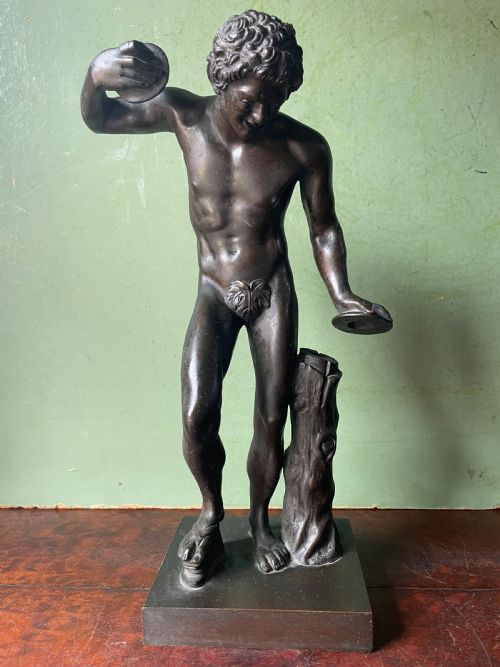
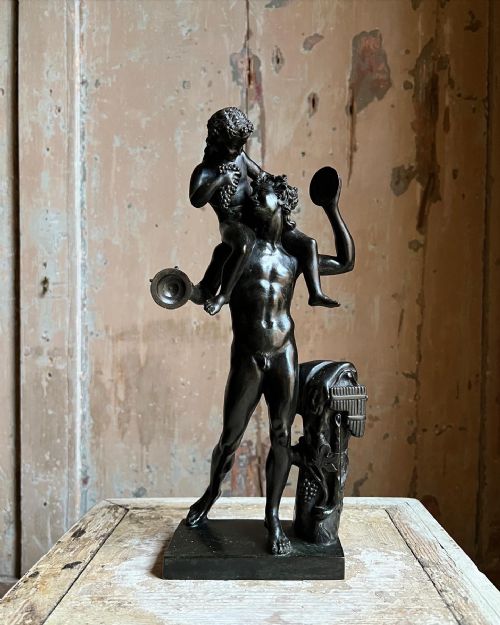

Bronze Satyr Statue
These bronze satyr statue examples bring classical mythology into the interior, cast in metal and mounted on marble for display.
Bronze Satyr Statue
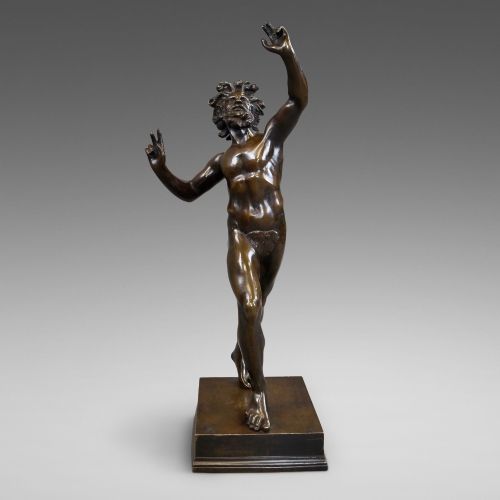
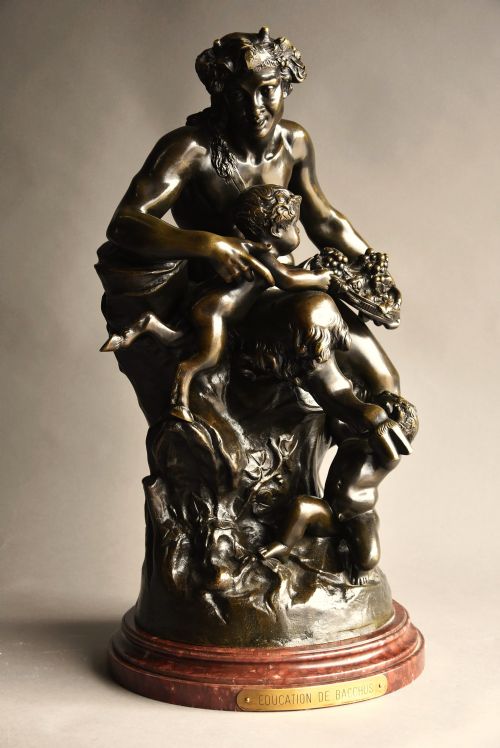
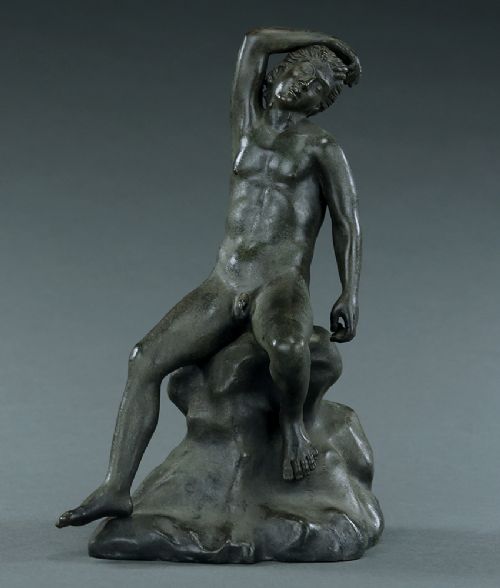
A bronze satyr statue represents mythological figures associated with classical antiquity, frequently depicted as dancing, playing pipes, or interacting with fauns and Bacchus. Buyers searching for a bronze satyr statue will encounter works ranging from small Grand Tour souvenirs to larger French and Italian sculptures.
The selections span the nineteenth century, including specific dates such as eighteen-fifty, eighteen-ninety, and nineteen-ten, alongside Victorian examples. Many pieces draw directly on classical prototypes like the Dancing Faun of Pompeii.
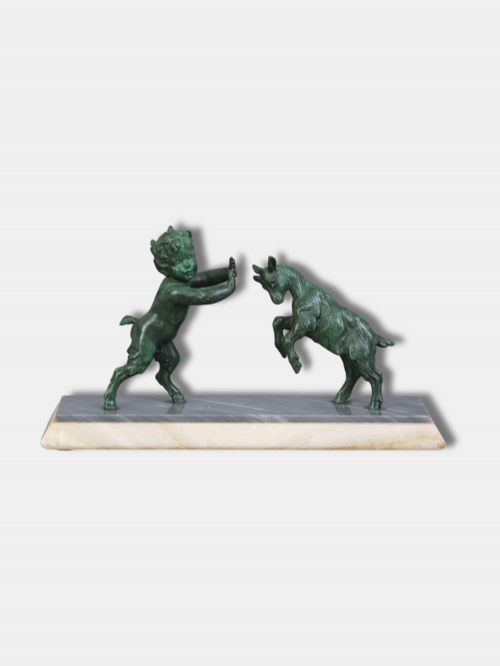
Forms include single figures playing flutes or cymbals, groups with goats or infants, and plaster alternatives alongside cast metal. Italian and French workshops dominate the origins recorded in the inventory.
Materials and casting methods
Sculptures are cast in bronze, often featuring patinated surfaces, verdigris finishes, or a bronze patina to simulate ancient metalwork. Certain pieces incorporate marble components as structural bases for the figures.
Makers utilised traditional foundry techniques to produce reductions after antique originals, capturing anatomical detail in metal and occasional plaster alternatives.
Several satyrs share their bronze space with infant Bacchus, goats, or cymbals, proving that mythological partygoers required constant supervision.
Distinctions in craftsmanship
The depth and consistency of the patination contribute significantly to the visual weight of the sculpture, distinguishing carefully finished examples from simpler commercial productions.
Claude Michel Clodian·Emile Carlier·Augusto Rivalta
The Bronze Satyr Statue Glossary
- Grand Tour
- A nineteenth-century travel souvenir tradition where wealthy travellers acquired small bronze reductions of famous classical sculptures in Italy.
- Patina
- The surface coloration and finish developed naturally over time or applied chemically by the founder to enhance the appearance of the bronze.
- Verdigris
- A green patina formed on copper, brass, or bronze through atmospheric exposure, replicated deliberately on certain antique castings.
- Reduction
- A smaller scale copy of a larger public monument or antique sculpture, produced for domestic display during the nineteenth century.
- Neoclassical
- An artistic movement reviving the styles and subjects of ancient Greece and Rome, heavily influencing nineteenth-century sculpture production.
Bronze Satyr Statue: Frequently Asked Questions
What is a bronze satyr statue?
These pieces are sculptural representations of mythological woodland spirits, often shown dancing or playing musical instruments.
They reflect nineteenth-century interest in classical antiquity and the art of Pompeii.
Where were these statues made?
Many examples originate from French and Italian foundries catering to the domestic market and travellers abroad.
Workshops in Naples and Paris produced numerous reductions after museum antiquities.
How do I display a bronze satyr statue?
These sculptures suit tabletops, mantelpieces, or dedicated display cabinets alongside books and other classical objects.
Ensure the surface is stable and capable of supporting the combined weight of the metal and any marble base.
How do I identify a Grand Tour piece?
Grand Tour pieces typically replicate famous excavated sculptures like the Dancing Faun and date from the nineteenth century.
They often exhibit dark patination or verdigris finishes designed to emulate ancient artefacts.