



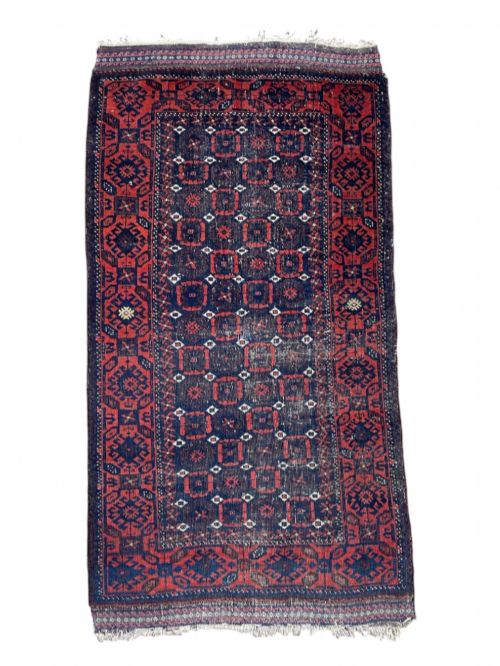


Dark Blue Tribal Rug
When you search for a dark blue tribal rug, you are looking for a hand-knotted textile carrying centuries of nomadic tradition and deep indigo dye work.
Dark Blue Tribal Rug
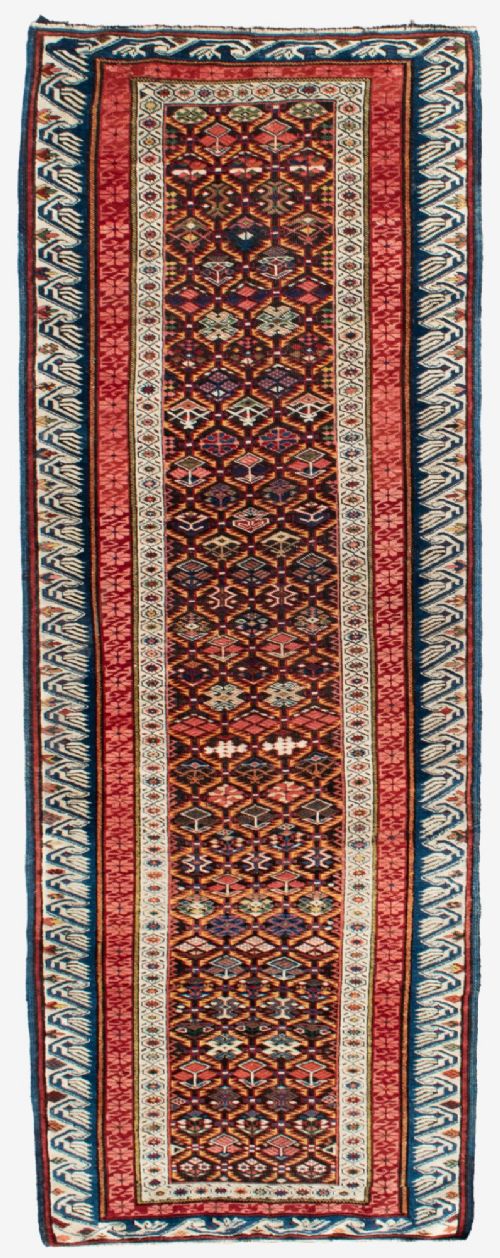
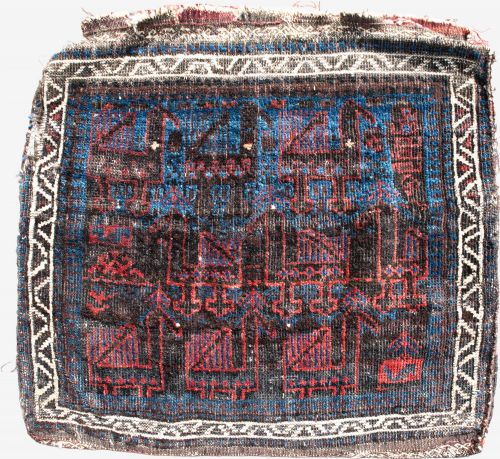
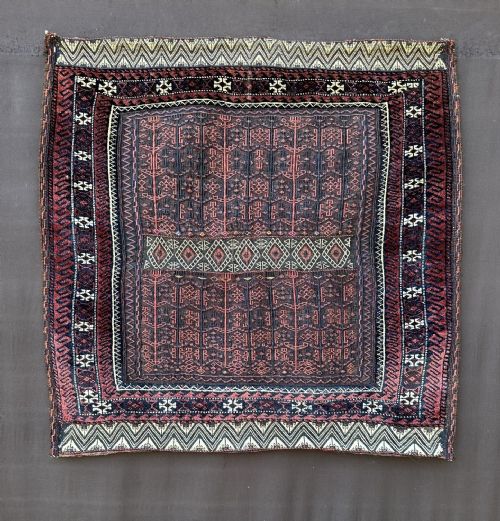
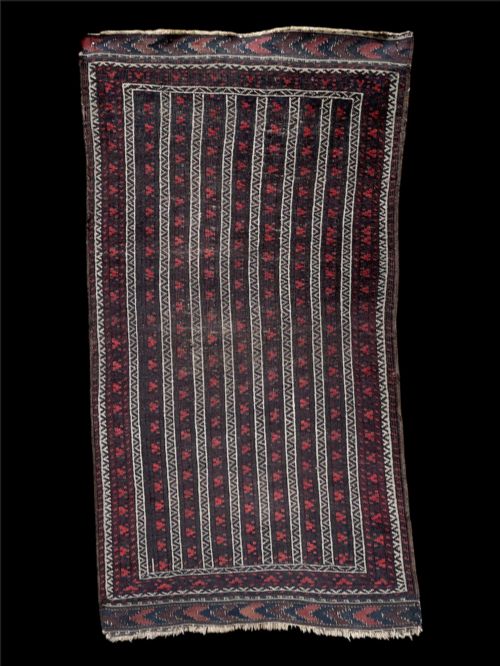
A dark blue tribal rug encompasses hand-knotted floor coverings, runners, and woven utility items produced by nomadic and village groups across Persia, Afghanistan, and the Caucasus. These textiles take many structural forms, ranging from standard area sizes and narrow corridor runners to specific domestic items like bread sofrehs, bag faces, and torbas.
The pieces on this page originate from regional tribes and confederations such as the Baluch, Qashqai, Timuri, Khamseh, and Kurdish groups, spanning the late nineteenth and early twentieth centuries. Production methods remain rooted in traditional village and tribal life, yielding dense, resilient weaves designed for practical utility rather than formal court display.
Materials and Construction
Makers constructed these textiles predominantly using hand-spun wool for the pile, paired with cotton or wool foundations, and occasionally incorporating goat hair for durability along the outer corded selvages. Natural dyes provided the deep indigo blues characteristic of the group, derived from plant sources and fixed through traditional mordant processes.
Weavers tied asymmetric or symmetric knots by hand onto vertical looms, varying knot density according to regional custom and the specific tribal workshop traditions. This manual process produced variable pile heights and structural tightness, creating sturdy pile surfaces suited to heavy daily domestic use.
Nomadic weavers occasionally inserted deliberate small weaving errors to ward off the evil eye, ensuring perfection remained strictly reserved for the divine.
Standards of Execution
Quality rests upon the purity of the materials and the consistency of the hand-spun wool, which dictates how well the pile ages under foot. Superior examples display dense knotting that secures the design sharply, alongside deep, saturated natural blue tones that show subtle abrash variations from dye batch changes.
Structural integrity also separates standard utility pieces from exceptional ones, measured by straight edges, intact original selvages, and complete end finishes. The precision of the tribal motif placement and the harmonious balance of secondary colours determine the visual depth of the finished textile.
The Dark Blue Tribal Rug Glossary
- Abrash
- Variation in colour shade caused by distinct batches of hand-spun yarn dyed at different times. This subtle tonal shifting appears as horizontal bands of slightly different hue across the field.
- Sofreh
- A flatwoven or piled spread used traditionally for sharing meals or preparing bread dough. These utility textiles often feature stark geometric field layouts.
- Torba
- A small storage bag face produced by Turkmen and related tribes, traditionally hung inside a tent to store household possessions. They frequently display characteristic gul medallions.
- Selvage
- The reinforced outer edge of a rug formed by wrapping lateral warp threads. Secure binding prevents the sides from fraying under normal wear.
Dark Blue Tribal Rug: Frequently Asked Questions
How were dark blue tribal rugs used?
Nomadic families utilised these heavy textiles as floor coverings inside tents, seating areas around hearths, and practical storage containers for household provisions.
Smaller formats functioned specifically as sleeping mats, prayer rugs, or specialised wrappers for bread and grain during seasonal migrations.
How do I care for a tribal rug?
Regular gentle vacuuming without a rotating power brush removes embedded dust from the wool pile without pulling the hand-spun fibres.
Professional specialist cleaning is necessary for older natural-dyed textiles to prevent colour bleeding and protect fragile wool foundations.
What causes the deep blue colour?
Diemakers sourced indigo from plants to dye the hand-spun wool yarns, steeping the fibres through traditional vat fermentation methods.
Slight chemical variations in the dye process and wool absorption rates create the rich, mottled indigo shades seen across these pieces.
How do I identify a tribal rug?
Tribal pieces typically display geometric motifs, memory-woven patterns, and asymmetrical tribal symbols rather than formal court curves.
Irregular dimensions and varied hand-spun pile textures further distinguish nomadic village work from mass-produced city carpets.