



Red Border Oriental Rug
A red border oriental rug brings depth and warmth to a room through centuries of weaving tradition.
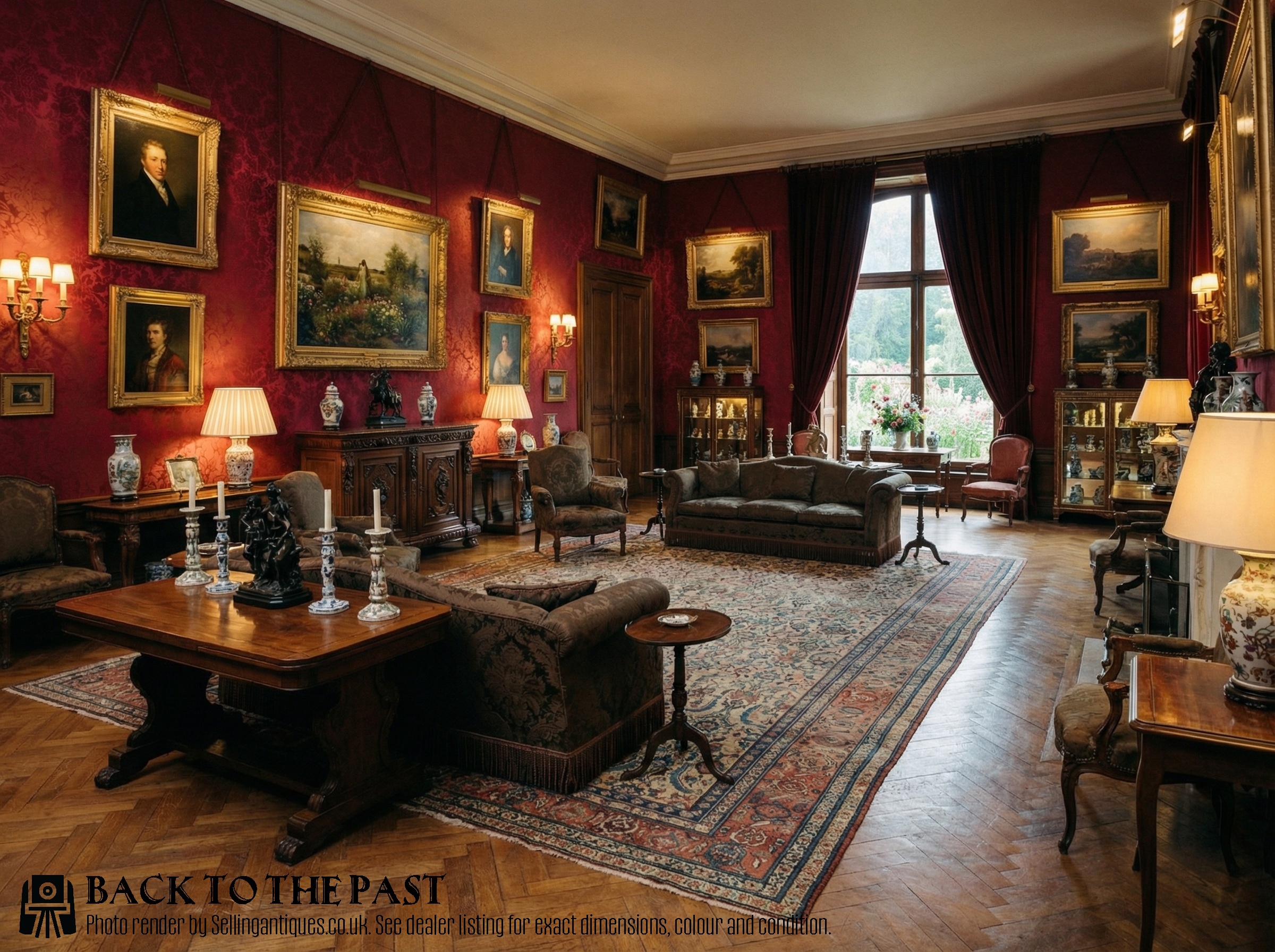
Red Border Oriental Rug
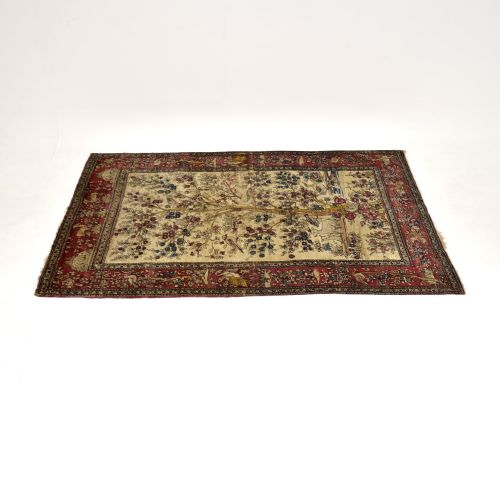
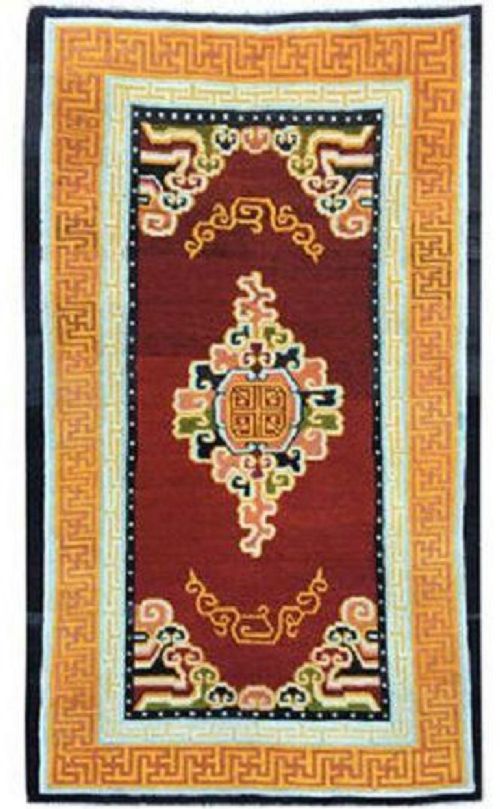
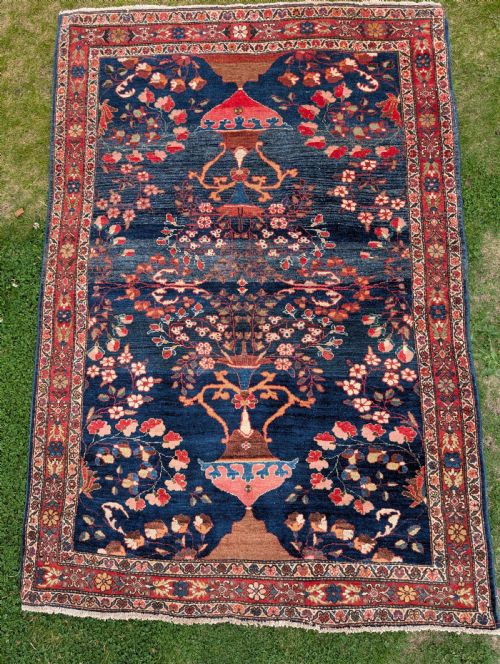
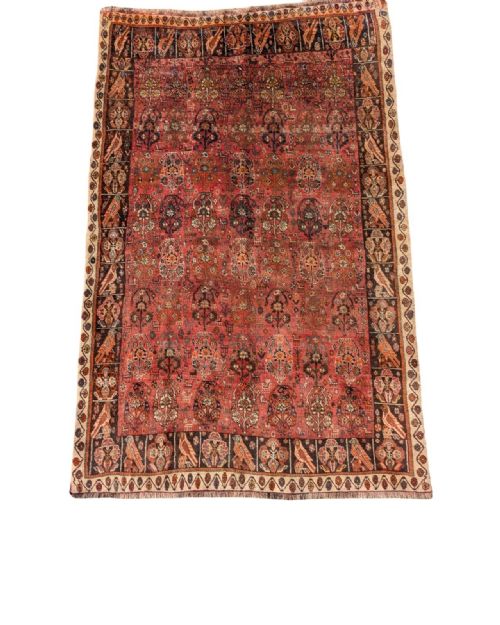
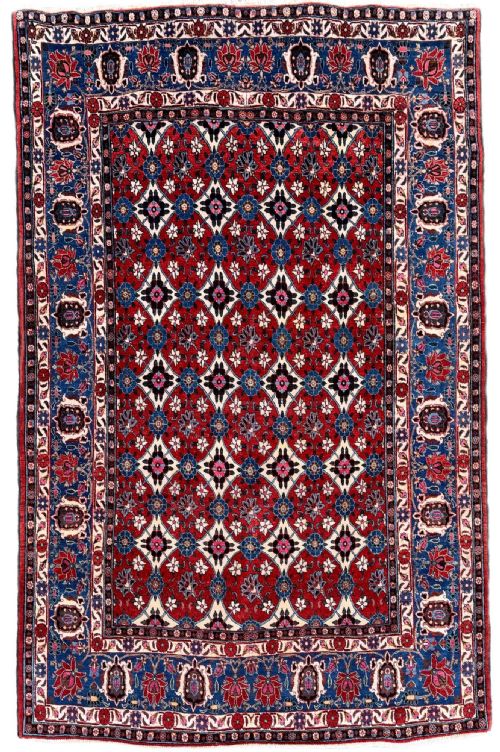
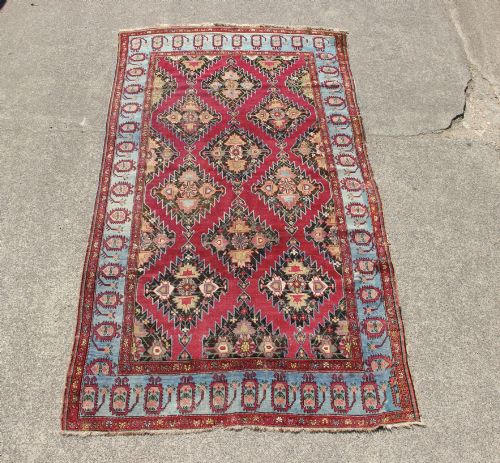
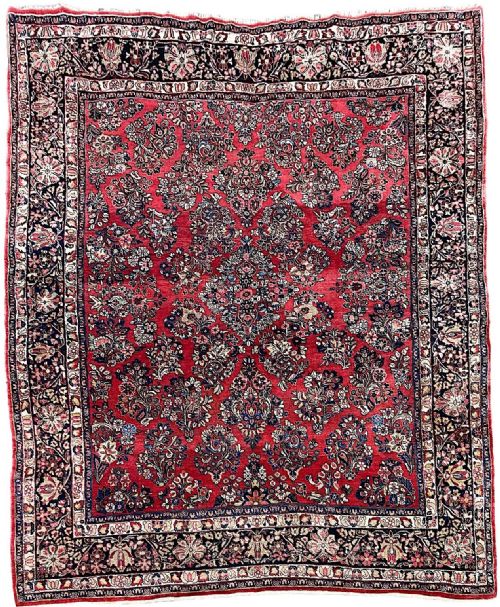
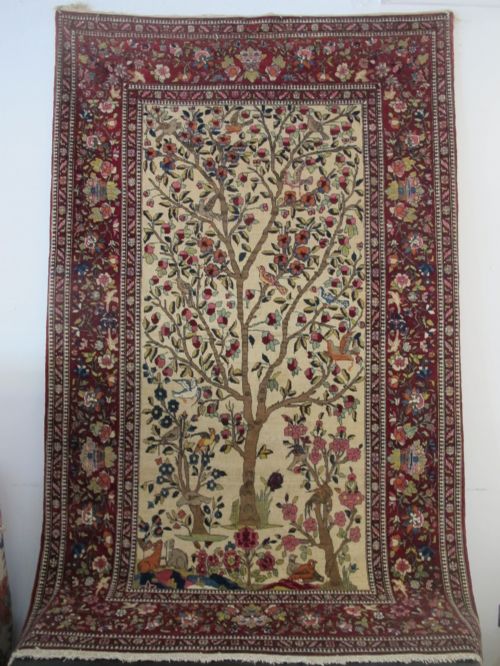
A red border oriental rug is a woven textile featuring distinct framing bands in madder red or crimson, enclosing intricate central fields. These pieces originate from historic weaving centres across Persia, Turkey, the Caucasus, and Tibet, spanning the late nineteenth and early twentieth centuries. Buyers seek them for their rich palettes and geometric or floral motifs that anchor traditional and eclectic interiors.
The most common examples on this page are Persian room-size carpets and area rugs from the late Victorian and Edwardian eras, particularly Heriz, Kashan, and Tabriz productions. Alongside these sit smaller village and tribal formats such as Kazak remnants, Senneh pieces, and Kurdish or Caucasian runners. Each type displays specific regional coloration and knotting characteristics developed over generations of local practice.
Materials and construction methods
These floor coverings rely on natural animal and plant fibres, predominantly hand-spun wool for the pile, supported by cotton or occasionally wool warps and wefts. Silk appears in finer urban workshops, while metallic thread and leather find occasional use in specific decorative traditions. Natural dyes derived from plants, insects, and roots provide the deep reds, indigos, and golds that mature gracefully over decades.
Weavers knotted the pile by hand onto vertical looms using either the symmetric Turkish knot or the asymmetric Persian knot, dictating the density and definition of the pattern. Selvedges are typically finished with overcast wool wrapping, and ends are secured with kilim end-weaves or braided fringes. The precision of this hand-knotting determines the crispness of the linear borders and medallion designs.
Nomadic weavers sometimes included deliberate small geometric imperfections or stray animal hairs in their carpets to ward off the evil eye.
Distinctions in weaving standard
Quality rests upon the density of the knotting and the integrity of the materials, where tighter knots allow for sharper resolution in the intricate border motifs. Master weavers in urban centres like Isfahan or Tabriz achieved high knot counts using fine lamb's wool, producing supple foundations that drape heavily. Village and tribal pieces, though sometimes coarser in knot count, often display bolder graphic spontaneity and highly saturated primary colours.
The longevity of a textile depends on the soundness of the wool pile and the stability of the foundation threads. Even wear across the surface indicates balanced dye usage and robust materials, whereas brittle foundations or uneven pile thinning reveal structural fatigue. The visual harmony of the abrash - the natural tonal variations in the red dye over the length of the carpet - also separates standard commercial output from superior artistic achievements.
Kashan·Isfahan·Tabriz·Heriz·Ziegler
The Red Border Oriental Rug Glossary
- Abrash
- Natural tonal variation within a single colour field caused by changes in dye batches or wool lots. This subtle striping is characteristic of genuine hand-dyed rugs.
- Warp
- The vertical foundation threads stretched lengthwise on the loom before weaving begins. The fringes of a finished rug are typically formed by the extended ends of these threads.
- Weft
- The horizontal threads passed alternately over and under the warp threads after each row of knots. They bind the knots tightly into place and determine the structural rigidity of the fabric.
- Knot count
- The number of individual knots per square inch or square decimetre. Higher counts generally indicate urban workshops and more complex, detailed pictorial designs.
- Medallion
- A large central ornamental motif set in the middle of the rug field. Many traditional formats place this focal point inside a strongly contrasting red border oriental rug design.
Red Border Oriental Rug: Frequently Asked Questions
How do I clean an antique rug?
Regular gentle vacuuming without a rotating power head removes surface grit before it damages the foundation fibres. Professional textile conservators should handle wet washing to prevent dye migration and shrinkage.
Harsh chemical detergents strip natural lanolin from the wool and dull the historic colours. Keep antique textiles out of direct, prolonged sunlight to preserve the rich red hues of the borders.
How can I tell a village rug from a city piece?
City workshop carpets like Tabriz or Kashan exhibit refined floral curves, high knot counts, and precise symmetrical layouts planned on paper cartoons. Village and nomadic examples such as Kazak or Heriz display geometric abstraction, bold primary blocks of colour, and asymmetry derived from memory.
The handle also differs significantly, with city pieces offering supple flexibility and village rugs presenting a heavier, stiffer structure.
What causes colour variation in the red field?
Hand-spun wool absorbs natural madder root dye at varying rates depending on seasonal shifts and water chemistry. When dyers prepared fresh vats for large projects, subtle shifts occurred between dye lots, creating intentional or accidental tonal bands known as abrash.
This variation proves the traditional hand-dyeing process and adds visual depth to the surface of the textile.