



Hand Knotted Bag Face
When you search for a hand knotted bag face, you are looking at tribal weaving from Central Asia and Persia made to carry belongings.
Hand Knotted Bag Face
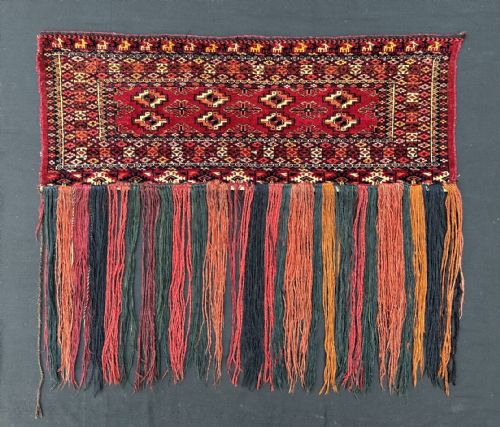
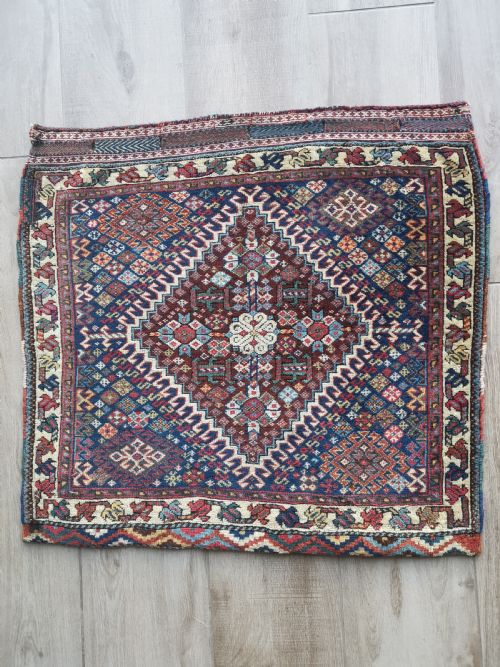
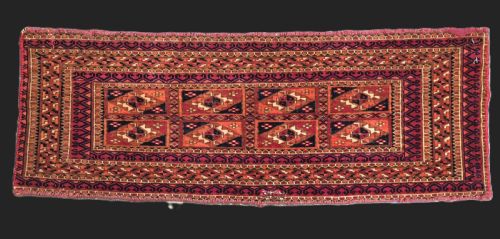
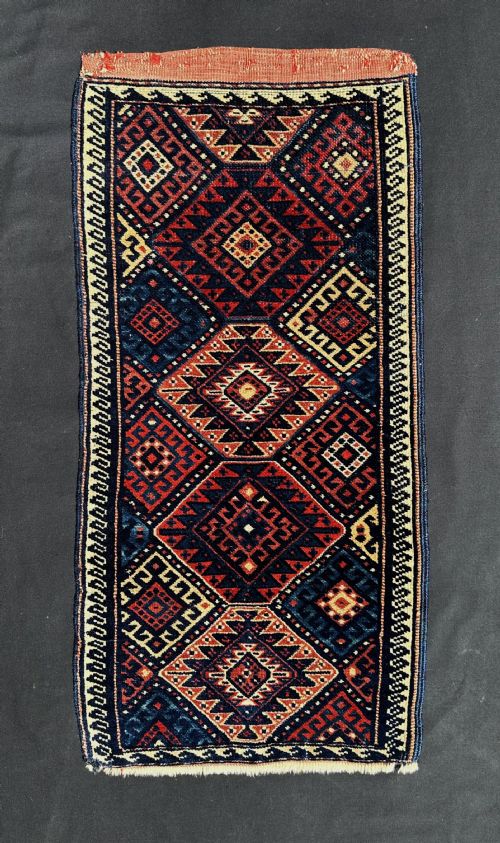
A hand knotted bag face represents the front panel of a nomadic storage sack, torba, chuval or saddlebag. These textiles originated among tribal confederations such as the Turkmen, Qashqai, Baluch, Ersari and Yomut during the nineteenth and early twentieth centuries.
Makers fashioned these panels to function as durable containers for household goods, bedding or transport on pack animals. Over time, families separated the decorated faces from the utilitarian backs as the pieces entered the collector market.
The versions most common on this page are Turkmen torba and chuval faces alongside Persian tribal bag fronts displaying traditional gul motifs, geometric layouts and medallion patterns.
How They Were Made
Weavers constructed each hand knotted bag face using hand-spun wool for the pile and foundation yarns, frequently paired with cotton for structural support. Artisans derived rich colours from natural dyes, creating deep tones that aged across generations.
The knotting technique determined the density and definition of the geometric patterns, ranging from standard tribal densities to exceptionally fine weaves found in Tekke examples.
Listings feature wool, cotton and natural dyes shaped into tribal bag faces across the nineteenth and early twentieth centuries.
What Varies in Quality
The standard of a hand knotted bag face depends heavily on the crispness of the drawing and the complexity of the gul or medallion design. Tighter knot counts and precise execution of secondary borders separate standard utility pieces from masterwork tribal weaving.
Material selection also dictates overall grade, particularly the use of luminous natural dyes and lustrous hand-spun wool that retain depth and handle softly.
The Hand Knotted Bag Face Glossary
- Gul
- A repeating primary medallion motif used widely in Turkmen and Central Asian tribal weaving. These octagonal or polygonal symbols often identified specific clans or tribal groups.
- Torba
- A small horizontal storage bag traditionally used inside nomadic tents for personal possessions. The front panel displays the principal decorative field.
- Chuval
- A large tent-storage bag utilised for bedding and bulky household items. Chuval faces show expanded tribal medallion arrangements.
- Chanteh
- A small traditional tribal carrier or personal bag. These portable pouches typically feature balanced geometric compositions.
Hand Knotted Bag Face: Frequently Asked Questions
What is a bag face?
A bag face is the decorative woven front panel harvested from a nomadic storage sack or saddlebag.
Nomads utilised these robust wool containers for daily storage and transport before collectors preserved the pictorial panels as independent textiles.
How were bag faces used?
Tribal families stored bedding, clothing and provisions inside these bags within tents or during seasonal migrations.
The sturdy construction protected contents from dust and moisture on pack animals.
How do I identify tribal origins?
Specific geometric gul motifs, border arrangements and colour palettes point directly to weaving groups such as the Tekke, Yomut or Ersari.
Structural details like wool quality and side-cord finishes also offer clues to regional provenance.
Can I display them on walls?
These panels suit wall hanging provided the mounting method distributes weight evenly across the textile.
Keep them away from direct sunlight to protect the natural dyes.