



Cut to Clear Glass
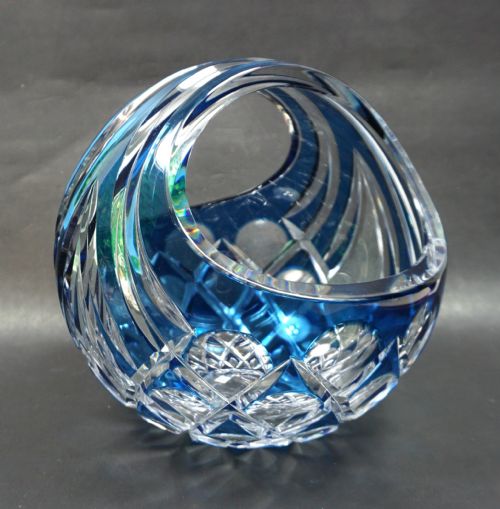
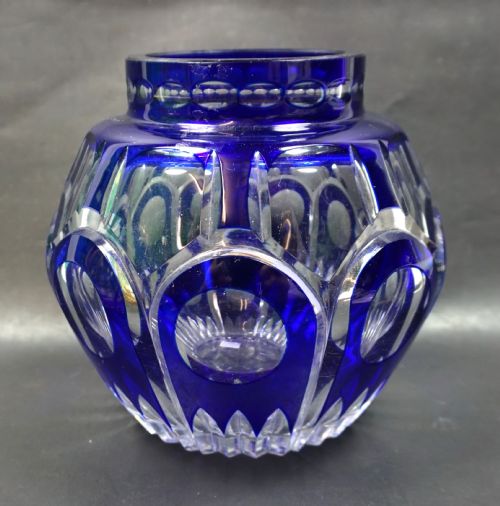
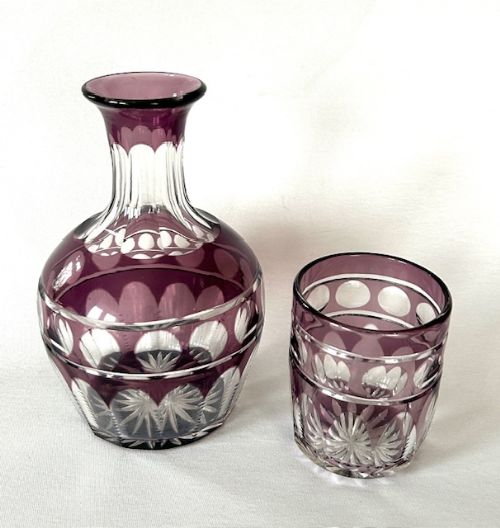
Cut to clear glass offers striking two-tone vessels created by cutting through a coloured outer layer to reveal the clear crystal beneath.
Cut to Clear Glass
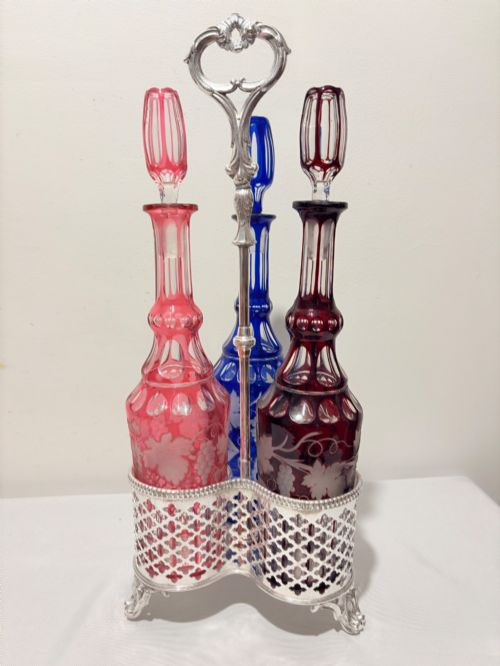
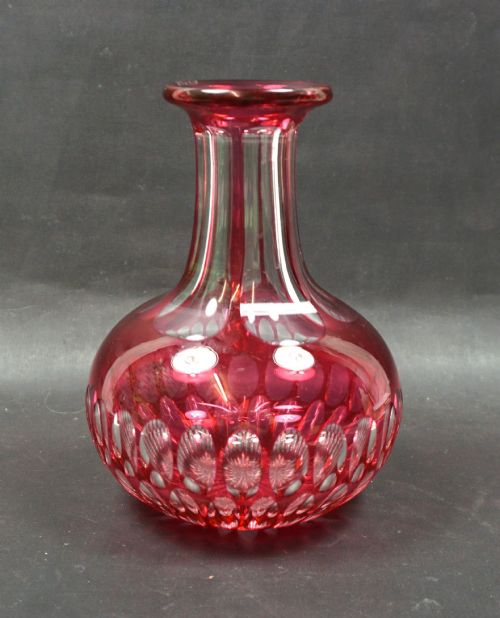
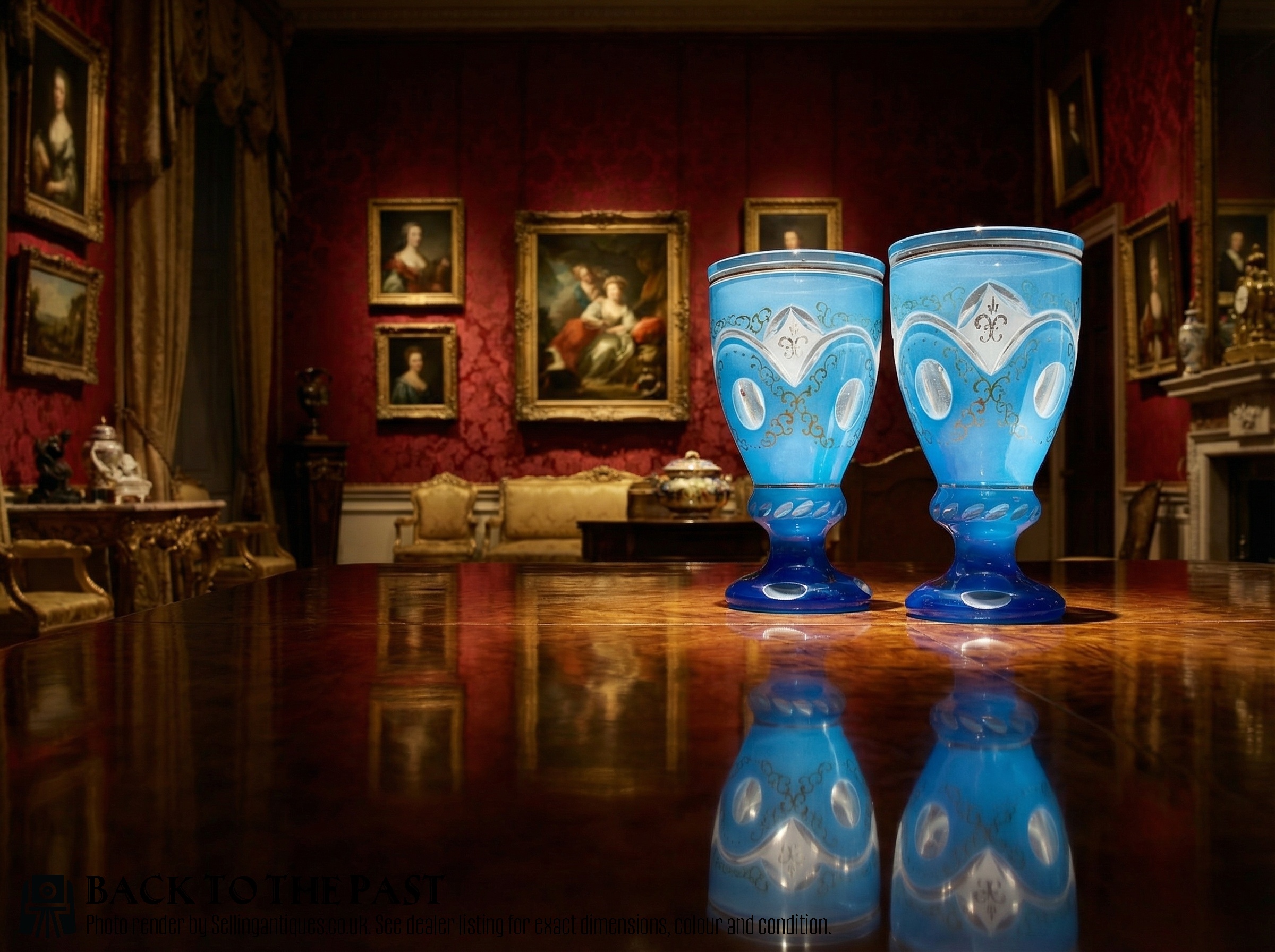
When you search for cut to clear glass, you encounter functional and decorative vessels defined by a coloured surface layer cut away to expose the transparent body underneath. The selection ranges from Victorian carafes and scent bottles to twentieth-century Bohemian vases and Belgian art glass.
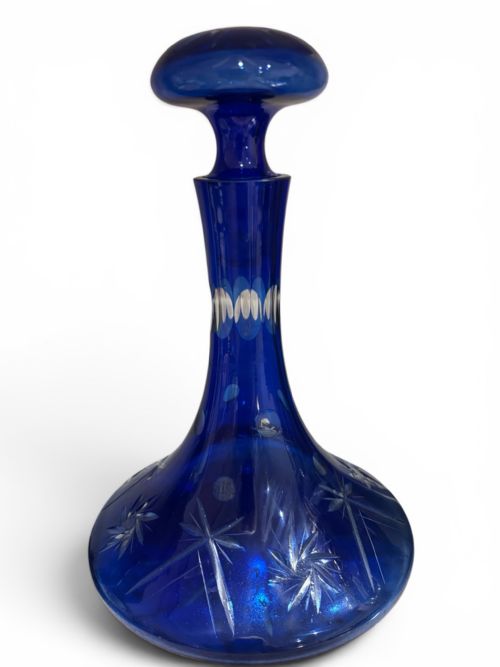
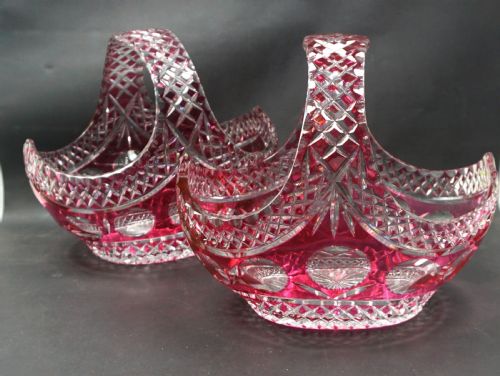
Vases, decanters, bowls, and baskets dominate the forms on this page, often hailing from nineteenth-century Victorian workshops or later continental makers. You will frequently find rich shades of ruby, cranberry, cobalt blue, and amethyst.
The aesthetic relies on high contrast between the saturated exterior casing and the brilliant clarity of the underlying lead crystal or glass. These pieces span production from the mid nineteenth century through to the art deco era.
How they were made
Makers produced these dual-layer vessels by fusing a skin of coloured glass over a clear crystal core while hot in the furnace. This casing technique required skilled manipulation to ensure an even bond across complex shapes like ovoid vases or handled baskets.
Artisans then applied deep wheel-cuts through the coloured outer layer down to the clear glass, mapping out geometric panels, flutes, or intricate floral engravings. Subsequent polishing brought a sharp brilliance to the cut facets and edges.
Cut to Clear Glass Retail Price Guide 2026
Typical asking prices for cut to clear glass among the pieces listed under this phrase on Sellingantiques today, from the lower quarter to the upper quarter. They describe what is for sale here now, not the wider market.
Listings feature lead crystal, cranberry glass, and cobalt glass across Victorian and twentieth-century periods.
What varies in quality
The depth and precision of the wheel-cut facets dictate the sharpness of the pattern where colour meets clear crystal. Superior examples display crisp, clean boundaries without blurring or ragged edges in the layered glass.
The weight and purity of the underlying lead crystal or glass foundation distinguish finer items from simpler production wares. Additional embellishments such as gilding, silver mounts, or complex intaglio engraving elevate individual pieces.
Val St. Lambert·Moser
The Cut to Clear Glass Glossary
- Cased glass
- Glass formed of multiple distinct layers of different colours, allowing artisans to cut through the outer skin to reveal the layer beneath. This method underpins every piece of cut to clear work.
- Intaglio
- A design carved into the glass surface by a rotating wheel so that the motif sits below the plane. This technique creates subtle, recessed pictorial details rather than raised relief work.
- Tazza
- An ornamental shallow cup or bowl raised upon a high stem and foot. These pedestal forms showcase the interplay of colour and cut crystal from every angle.
- Hook wine glass
- A traditional German or Bohemian glass style featuring a ribbed or panel-cut bowl atop a stout stem. Collectors often encounter harlequin sets of these glasses in varied jewel tones.
Cut to Clear Glass: Frequently Asked Questions
Are these items made of lead crystal?
Many of the Victorian and continental pieces on this page utilise heavy lead crystal for its superior weight and refractive clarity. Other examples employ standard high-quality glass.
The material composition contributes significantly to how sharply the wheel cuts hold their edge. You can often judge the density by the heft and ring of the vessel.
How can I tell Victorian pieces apart?
Victorian examples frequently feature rich cranberry, amethyst, or cobalt hues paired with dense floral or geometric cutting. Look for traditional forms like scent bottles with silver tops and heavy decanters.
Twentieth-century items often shift toward cleaner art deco profiles or specialised colourways like yellow and green. Maker attributions and design styles help pinpoint these later continental pieces.
Can I use these decanters for wine?
Period decanters and carafes were designed to hold and serve wine or liqueurs safely. Ensure the interior is thoroughly rinsed before any use.
Inspect the stopper and neck to confirm a secure fit. Hand wash the vessel immediately after use to prevent staining on the clear glass interior.