
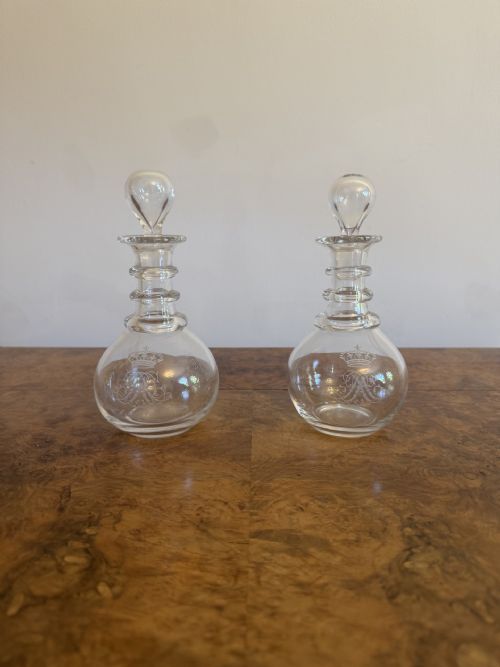

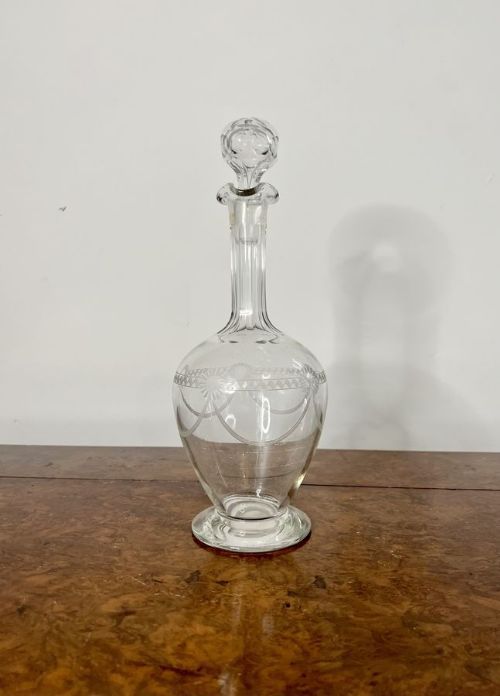
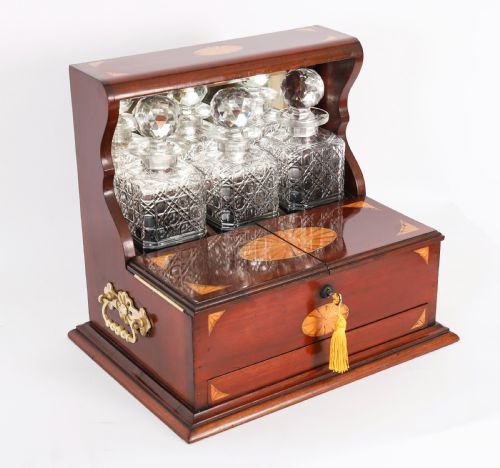


Cut Crystal Spirit Bottle
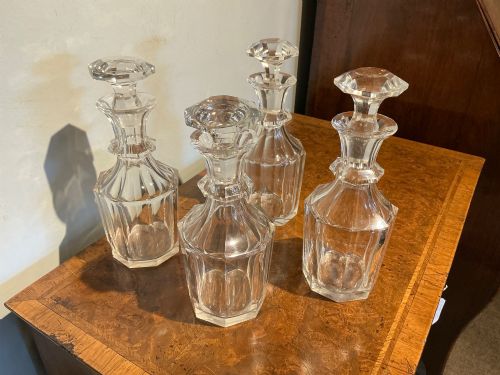
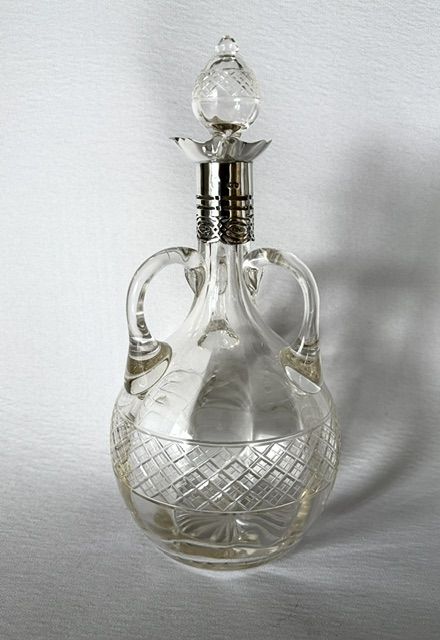
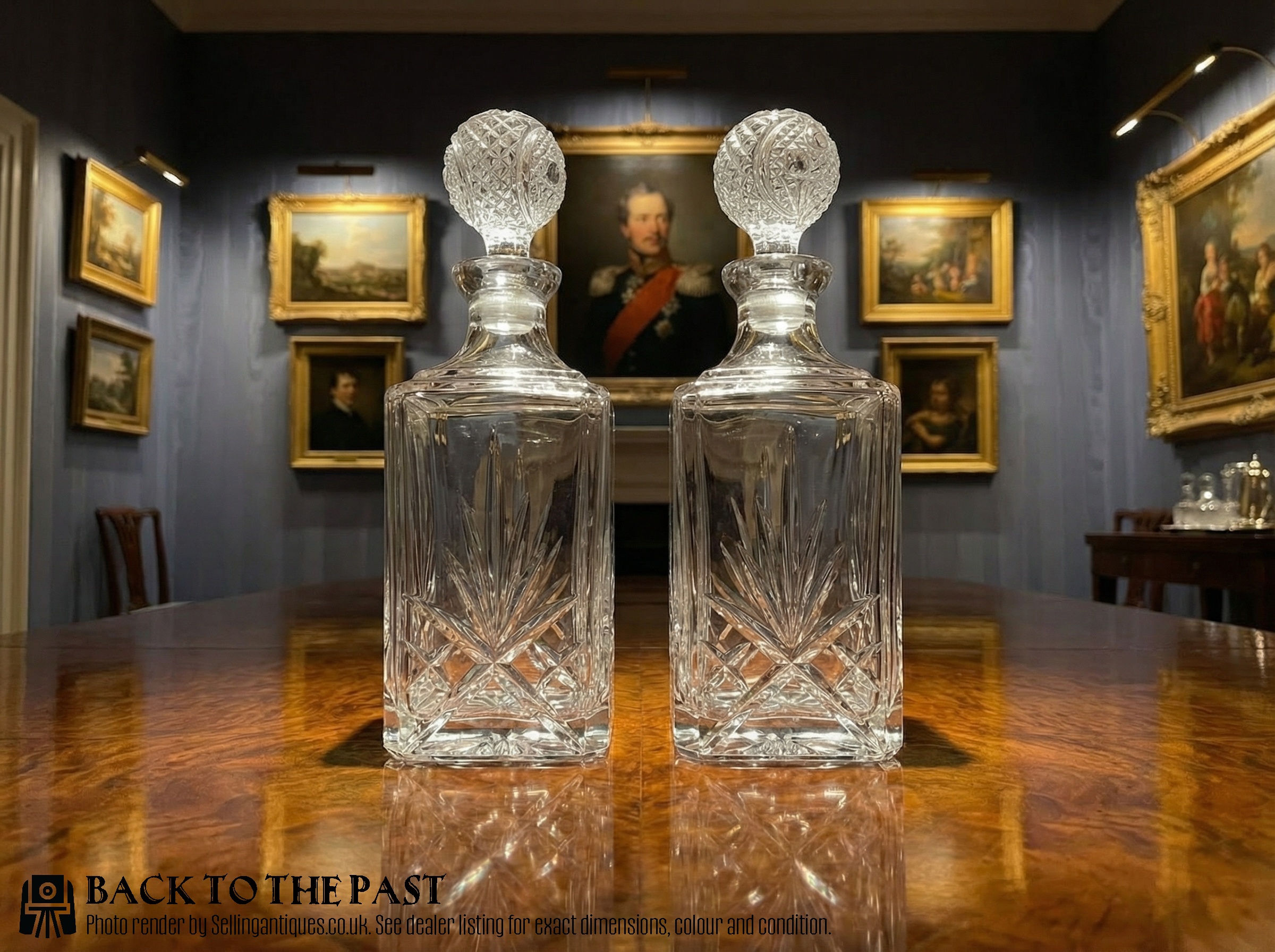
A cut crystal spirit bottle brings heavy brilliance and period weight to a sideboard, holding whisky or brandy with formal ceremony.
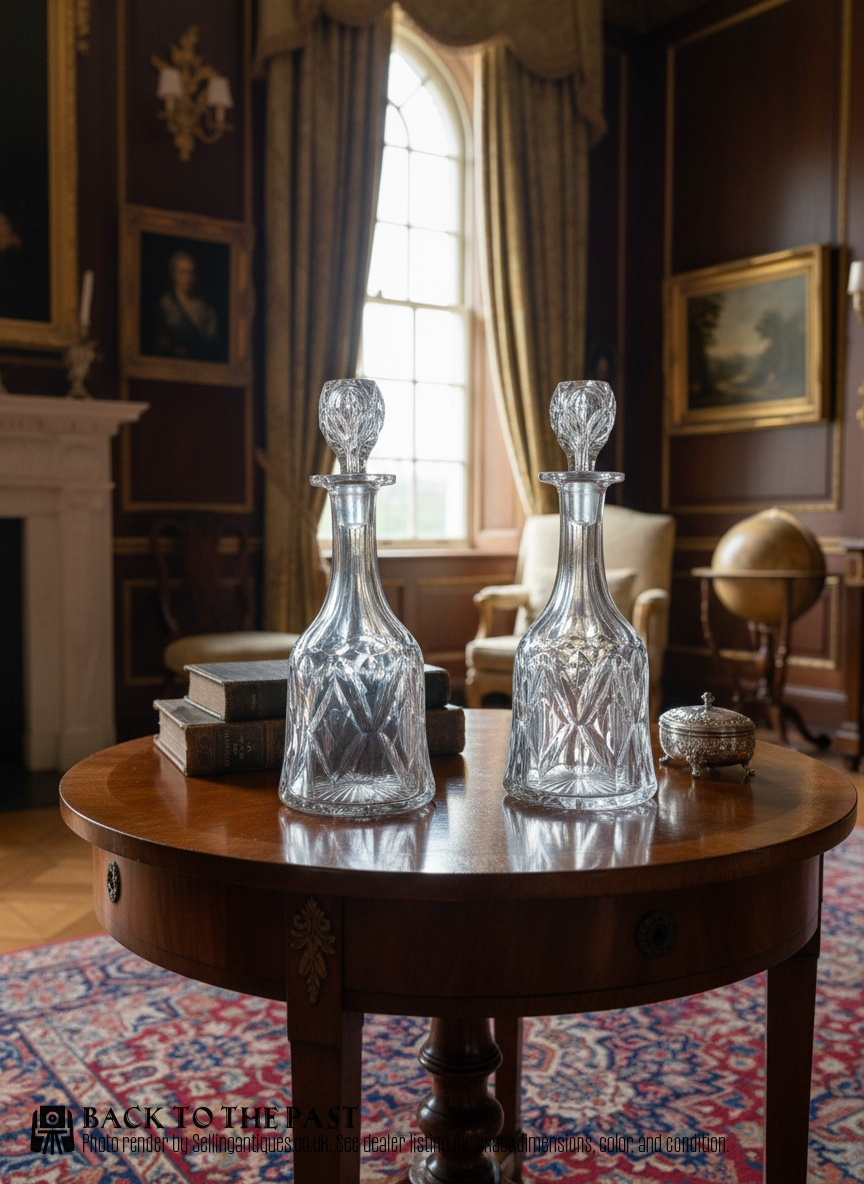
Cut Crystal Spirit Bottle
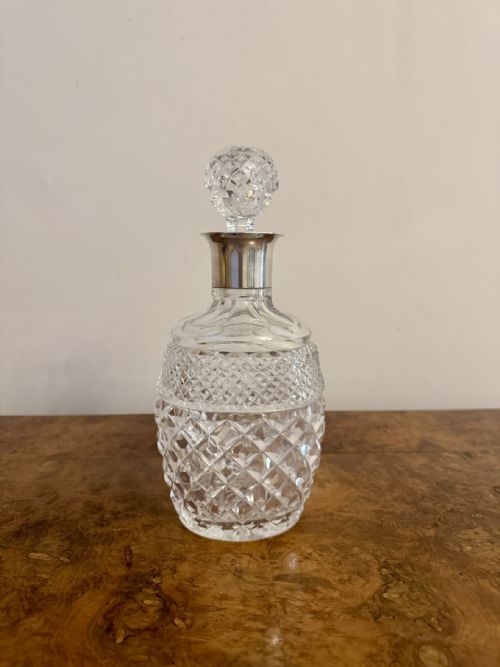
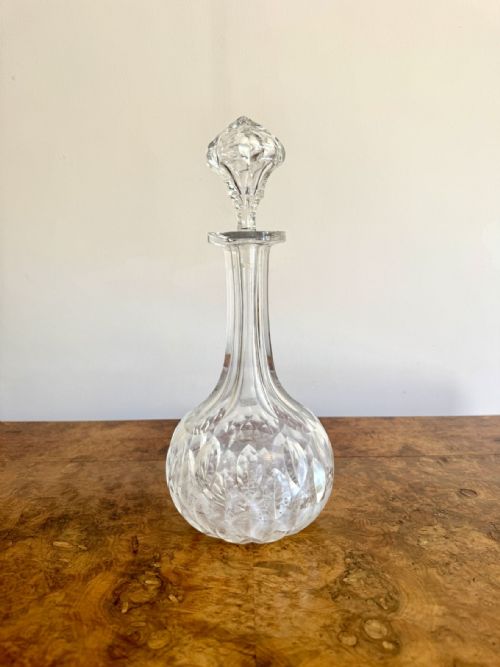
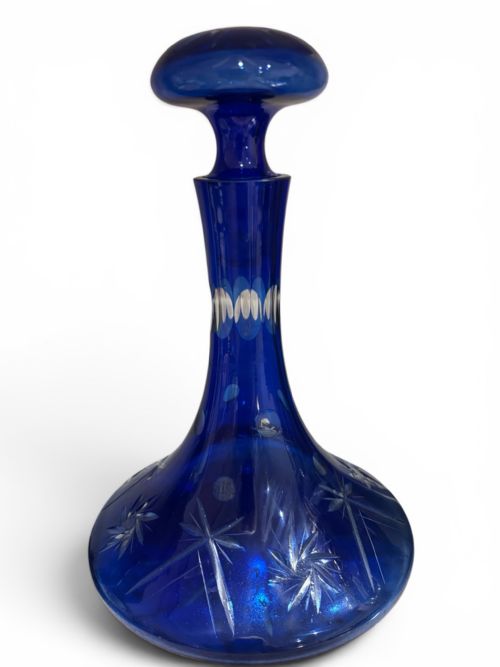
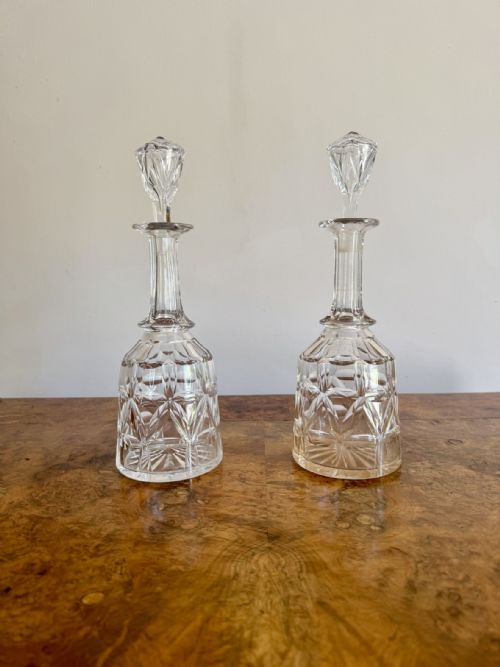
A cut crystal spirit bottle appears most often as a Victorian or Edwardian decanter, alongside fitted oak tantaluses and matched pairs designed for after-dinner service. These vessels range from straightforward shaft and globe shapes to bell-shaped bodies and coloured overlays in ruby or cobalt.
The selections span the nineteenth century into the early twentieth century, taking the form of standalone bottles with stoppers or multi-bottle frames secured by brass mountings and locking mechanisms. Alongside traditional clear lead glass, collectors encounter specialised tantalus sets and silver-mounted service pieces.
Glass Cutting and Mountings
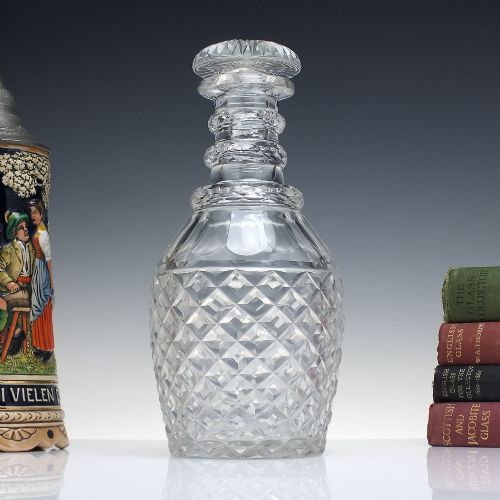
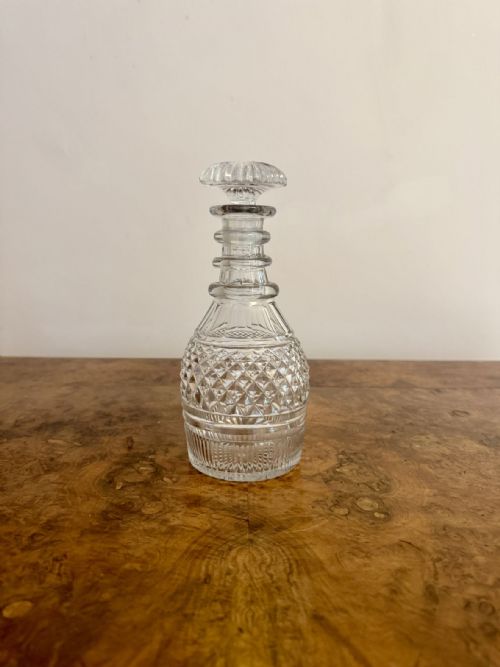
Makers shaped these heavy vessels using lead crystal and cut glass, applying deep wheel-cut facets that catch light across the body and neck. Optical blowing and ruby or cobalt glass overlays added coloured depth to the heavy material.
Metal mounts in sterling silver, silver plate, brass, and oak provide structural support and secure closures. Fitted wooden frames utilise satinwood inlay and secure locking bars to protect the bottles during the Victorian and Edwardian periods.
Victorian hosts locked their whisky away in tantaluses, teasing guests with a drink they could clearly see but not pour.
Clarity, Weight, and Mountings
Quality rests upon the depth and crispness of the wheel cutting, where sharper facets and heavy lead crystal create superior weight and brilliance. Superior examples maintain clear, unclouded glass without internal residue and retain their matching original stoppers.
The structural joinery and metal fittings define the upper tier of production, particularly in oak tantaluses with functioning brass locks and solid silver collars. Well-preserved mounts and tight frames distinguish finer domestic service sets from simpler utilitarian bottles.
James Powell
The Cut Crystal Spirit Bottle Glossary
- Tantalus
- A locked wooden frame holding spirit bottles visible to guests but inaccessible without a key. This clever Victorian invention kept the household brandy secure from servants.
- Lead Crystal
- A heavy glass variety containing metallic oxide that increases refractive index and brilliance. The dense material allows deep wheel cutting without compromising structural integrity.
- Shaft and Globe
- A decanter silhouette featuring a long slender neck rising above a rounded spherical body. This classic proportion balances stability on the sideboard with an easy pour.
- Silver Collar
- A metal band fitted around the neck of a decanter, often bearing hallmarks or engraved decoration. It reinforces the rim and provides a refined transition to the stopper.
- Overlay
- A layer of coloured glass fused over a clear crystal base before cutting. When the cutter ground through the outer colour, bright transparent patterns emerged against the tinted ground.
Cut Crystal Spirit Bottle: Frequently Asked Questions
How do I date a cut glass decanter?
Examinations of the base, neck finish, and stopper help determine the era. Pontil marks, star-cut bases, and the weight of the lead crystal point toward specific nineteenth-century decades.
Changes in cutting styles and mount materials also signal whether a piece belongs to the Georgian, Victorian, or Edwardian periods.
What is a tantalus used for?
A tantalus houses two or three spirit decanters within a secure wooden frame fitted with a metal locking bar. This device prevented unauthorised access to expensive imported liqueurs and spirits.
Popular in late Victorian and Edwardian dining rooms, it allowed hosts to display their hospitality while keeping the contents locked away.
How do I clean cloudy antique decanters?
Mineral deposits and residue build up inside old glass over decades of holding spirits. Gentle methods using warm water and specialised cleaning beads remove haze without scratching the interior.
Harsh chemicals and sudden temperature changes must be avoided to protect the integrity of antique lead crystal.
Are original stoppers important?
Matching stoppers that share the same cut pattern and number are essential for authenticity and value. Replacements often show slight variations in glass tint or fitting.
Collectors look closely at the ground glass peg and neck to confirm the stopper belongs to the specific bottle.