


Square Glass Decanter
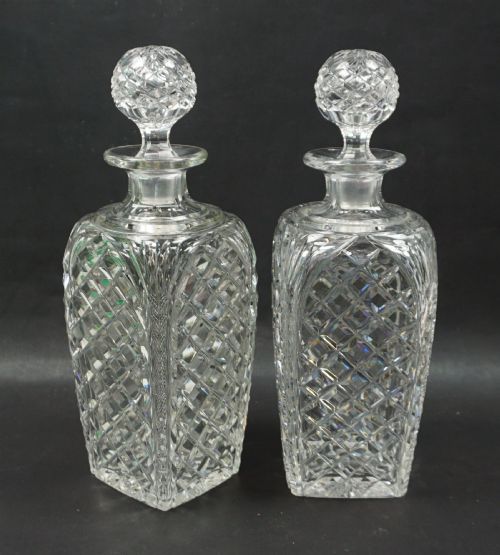
These square glass decanter examples are heavy-walled serving vessels designed to hold spirits, offering a sturdy profile that sits securely on a sideboard or drinks trolley.
Square Glass Decanter
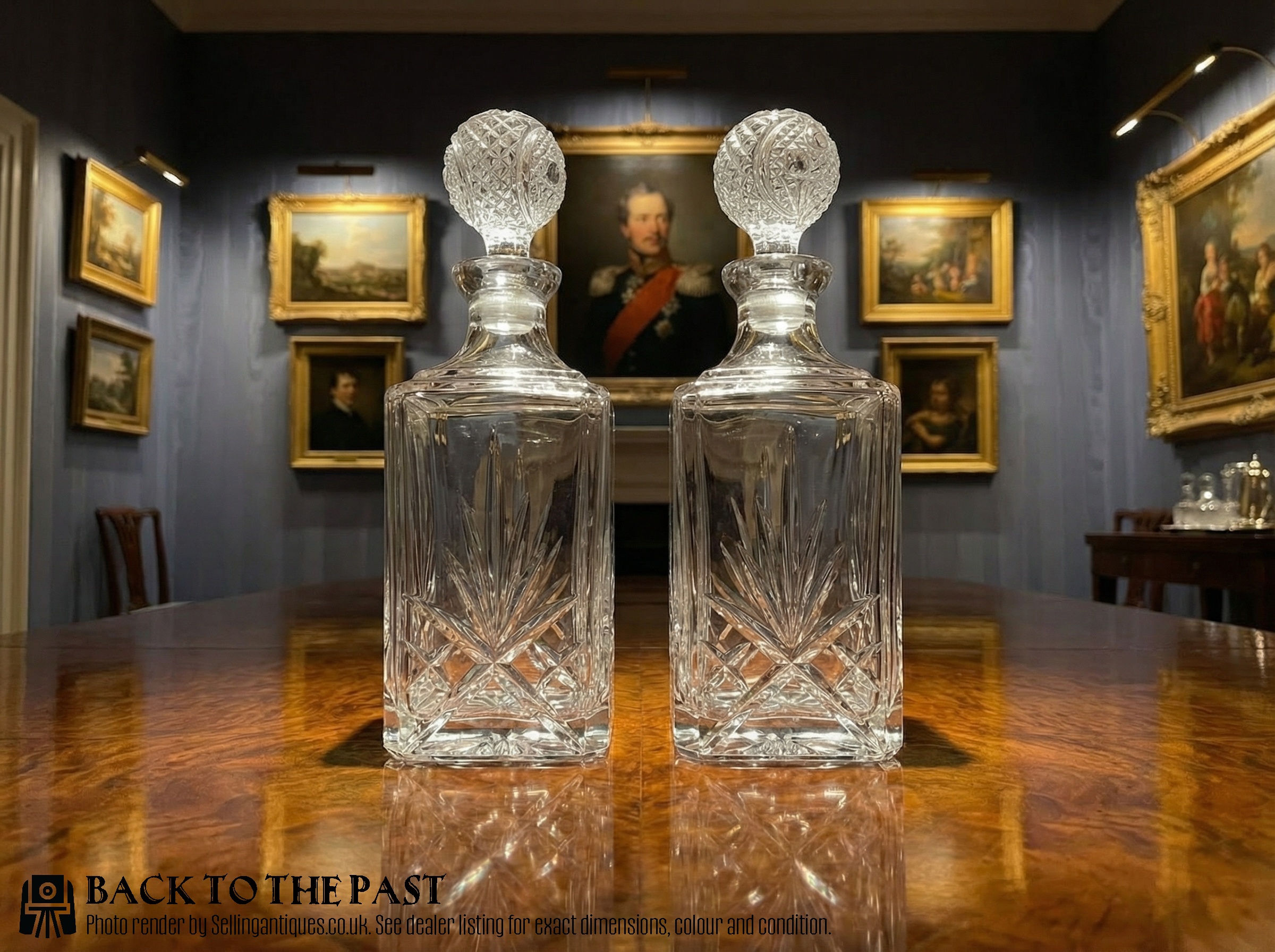
When you search for a square glass decanter, you are looking at utilitarian vessels designed for spirits like whisky, brandy, and scotch. The form is defined by a broad square base tapering or rising to a neck, offering stability on sideboards and trays.
The versions most likely to meet you on this page span the Victorian and Edwardian eras, alongside early and mid-twentieth-century examples. These pieces often appear as matched pairs or single spirit bottles, occasionally fitted with stoppers.
Originating predominantly from English workshops, these items serve a practical function in domestic hospitality. Their distinct footprint prevents tipping during service, making them a staple of period dining rooms.
How they were made
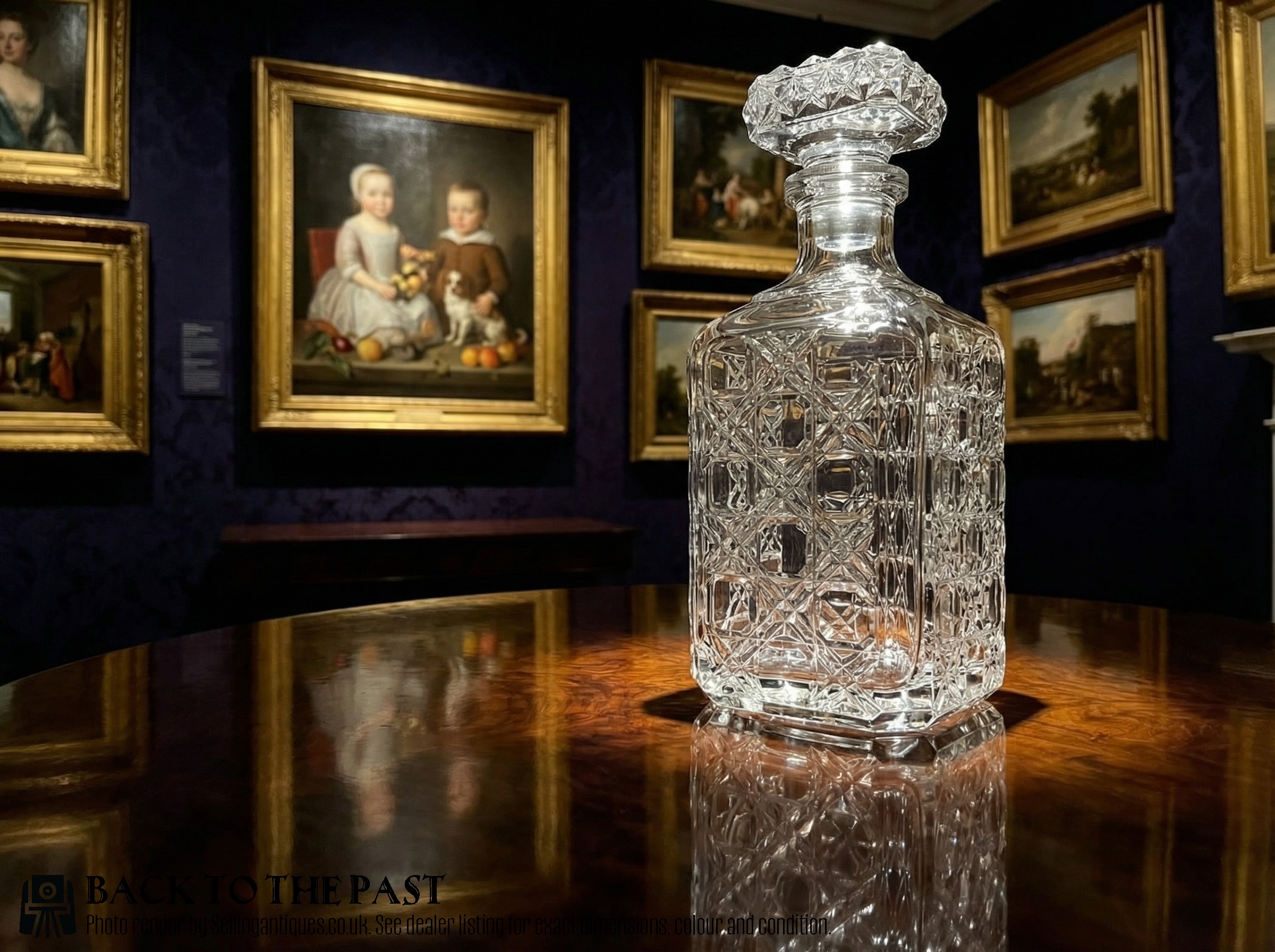
Makers shaped these vessels using heavy glass, cut crystal, and lead crystal, utilising glassblowing and moulding techniques to achieve the thick square profiles. Cut glass and cut crystal variants feature geometric facets wheel-cut into the body, which catch the light and provide a secure grip.
Square Glass Decanter Retail Price Guide 2026
Typical asking prices for square glass decanter among the pieces listed under this phrase on Sellingantiques today, from the lower quarter to the upper quarter. They describe what is for sale here now, not the wider market.
Glasgow pigeon blend whisky once filled a Scottish decanter here, proving birds could sponsor a stiff drink.
What varies in quality
The clarity and weight of the glass material dictate the initial impression of a piece. Heavier lead crystal and deeply cut crystal display sharper light refraction than lighter, plain blown glass.
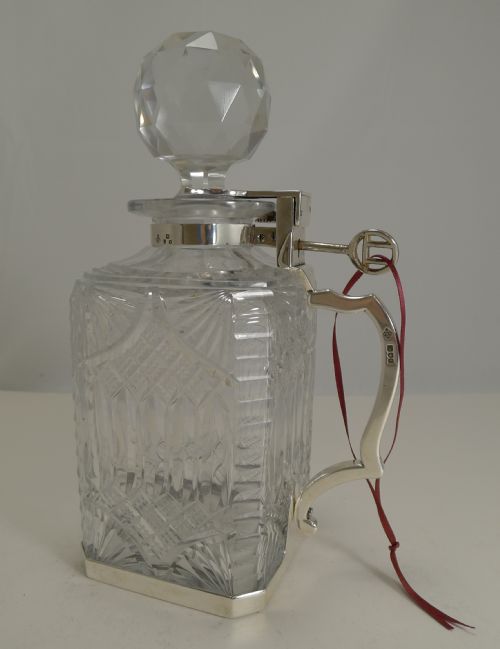
The presence and execution of metalwork elevate the standard of a vessel. Hallmarked sterling silver collars, silver gilt mounts, and matching numbered stoppers demonstrate a higher grade of original manufacture than plain glass necks.
Freeman & Son Ltd·Mappin & Webb
The Square Glass Decanter Glossary
- Decanter
- A vessel used for holding and serving liquids, especially wine or spirits. These objects feature a fitted stopper to preserve the contents.
- Crystal
- A type of glass containing metallic oxide that increases weight, brilliance, and clarity. This material allows for deeper, sharper cutting than standard glass.
- Silver Gilt
- Silver that has been coated with a thin layer of gold. This treatment provides the appearance of gold while retaining the structural strength of silver beneath.
- Hallmark
- An official mark stamped on precious metal items in the United Kingdom. It certifies the metal standard and links the piece to a specific assay office and maker.
Square Glass Decanter: Frequently Asked Questions
How do I clean a square glass decanter?
Residue inside these vessels is best removed using warm water and specialist cleaning beads rather than harsh abrasives. Avoid sudden temperature changes to prevent cracking the heavy glass walls.
After washing, allow the decanter to dry completely upside down on a rack. Leaving the stopper out prevents moisture from trapping inside the base.
Were these decanters meant for whisky?
Many examples on this page are specifically noted as whisky decanters, scotch bottles, or spirit decanters. Their robust square shape suited the storage of spirits on sideboards and in tantalus frames.
Pairs of cut glass spirit decanters also served brandy and other liqueurs during formal Edwardian and Victorian dining. The heavy base ensured they remained stable during transit on a tray.
How do I date a silver collar?
English silver collars carry hallmarks that include date letters corresponding to specific assay years. Consulting a standard assay office table reveals the exact year the metal mount was tested and marked.
While the glass body and the silver collar are generally contemporary, mounts can occasionally be replacements. Checking the fit around the glass neck helps confirm originality.
What is the purpose of a locking decanter?
Locking mechanisms on Victorian spirit bottles restricted access to the contents of the decanter. A metal collar with a functional lock required a key to release the stopper.
This design safeguarded expensive spirits from household staff or children in large period households. Surviving examples retain their original locking hardware.