




Curved Walnut Coffee Table
A curved walnut coffee table brings warmth and fluid twentieth-century movement into a sitting room.
Curved Walnut Coffee Table
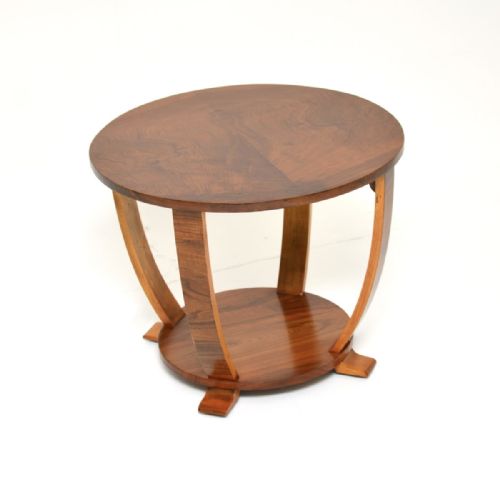
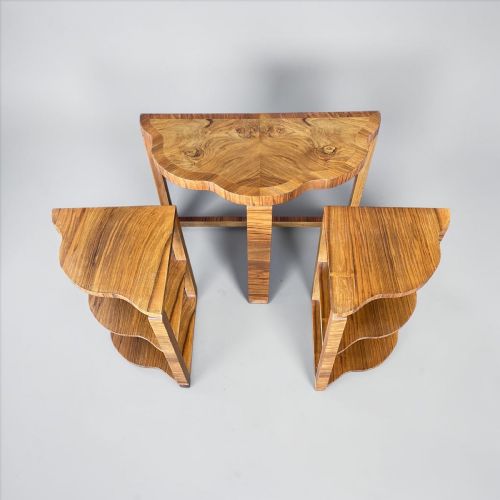
A curved walnut coffee table spans several distinct decades of twentieth-century design, from early century interpretations to later streamlined forms. Most examples encountered here belong to the Art Deco period, showcasing sweeping lines and rich grain patterns that anchor a room.
Makers adapted these forms into various practical formats, including low coffee tables, occasional tables, nests of tables, and tiered side surfaces. The predominant appearance relies on the natural warmth of walnut timber and its distinctive figuring.
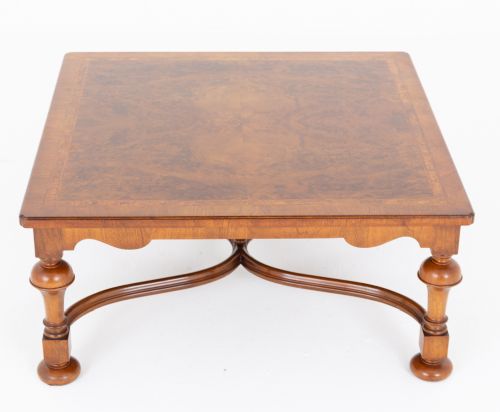
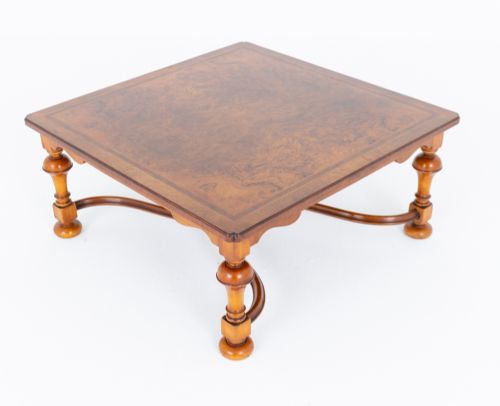
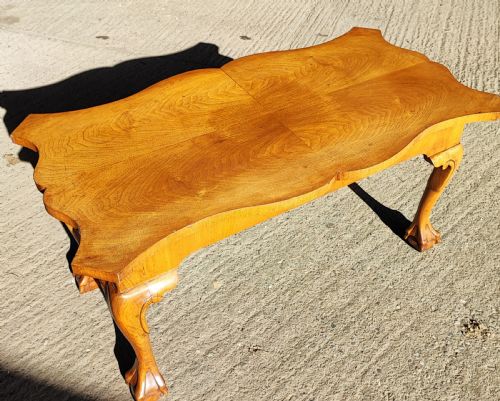
Earlier revivals also appear among the selection, drawing on Carolean or Queen Anne style influences executed in walnut. These pieces balance traditional woodwork shapes with low proportions suited to modern seating arrangements.
How they were made
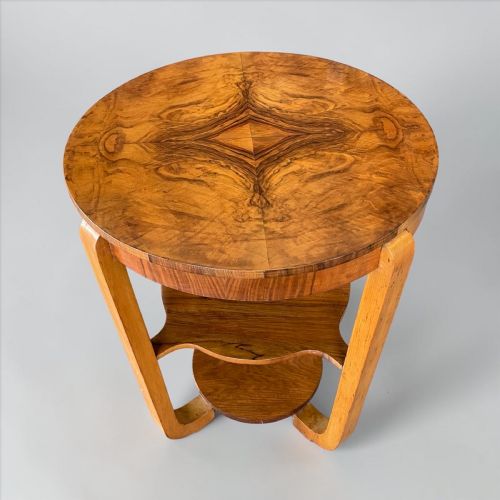
Construction relies heavily on walnut timber combined with walnut veneer and burr walnut veneer to create striking surface patterns. Cabinetmakers selected figured veneers for table tops to display natural swirls and movement across the grain.
Frames incorporate solid timber alongside bentwood techniques, particularly in Viennese pieces where wood is shaped under heat. Secondary materials such as glass and metal occasionally integrate into the designs for structural or decorative contrast.
Listings feature pieces spanning four decades from nineteen hundred to nineteen forty, predominantly utilising walnut, burr walnut veneer, glass, and metal.
What varies in quality
Quality rests primarily on the selection of the veneer and how symmetrically its grain is matched across the surface. Figured and burr walnut veneers demand high skill from the cabinetmaker to lay smoothly without interruption across curves.
The sophistication of the silhouette defines the better examples, where the sweep of the wooden structure feels resolved and intentional. Superior construction is evident in stable joints and well-integrated tiers or nesting elements that function smoothly.
Harry and Lou Epstein
The Curved Walnut Coffee Table Glossary
- Burr walnut
- A prized veneer taken from the growth excrescence of a walnut tree, producing intricate, swirling patterns. This grain creates a highly decorative surface on table tops.
- Veneer
- A thin slice of superior wood applied over a more stable secondary timber base. It allows makers to display striking grain figures without risking the warping associated with solid timber boards of that width.
- Art Deco
- A design style dominant in the nineteen-thirties characterised by sleek lines, geometric shapes, and streamlined forms. Tables from this period often utilise rounded corners and polished wood finishes.
- Carolean style
- A revival aesthetic reflecting late seventeenth-century British design, notable in walnut furniture through shaped legs and carved details. Pieces from this tradition bring heavier historic character to low table formats.
Curved Walnut Coffee Table: Frequently Asked Questions
What periods do these tables span?
The selection encompasses pieces from nineteen hundred through to nineteen forty, with a heavy concentration originating from the nineteen-twenties and thirties.
Art Deco examples dominate the offerings, though earlier revivals and turn-of-the-century Viennese bentwood items also appear.
How do I care for walnut veneer?
Walnut surfaces benefit from gentle dusting with a soft, dry cloth and protection from direct sunlight and excessive heat. Avoiding moisture buildup preserves the integrity of the thin veneer layers.
Periodic polishing with appropriate natural wax maintains the depth of the grain without creating heavy buildup.
Are these tables suitable for everyday use?
These tables function well in contemporary reception rooms as low coffee surfaces, side tables, or versatile nests. Their compact proportions accommodate modern seating layouts while providing useful surface space.
Care should be taken with liquids and hot items to protect the polished wood and veneer finishes.
What is burr walnut?
Burr walnut is derived from a tree growth that produces tightly clustered, swirling grain formations. When sliced into veneer, it yields complex patterns prized for decorative table tops.
This material is typically reserved for the most prominent surfaces of a piece to highlight the natural figure.