



Walnut Drinks Table
A walnut drinks table brings warmth and functional surface space to a room, offering a sturdy platform for glassware and bottles across various period styles.
Walnut Drinks Table
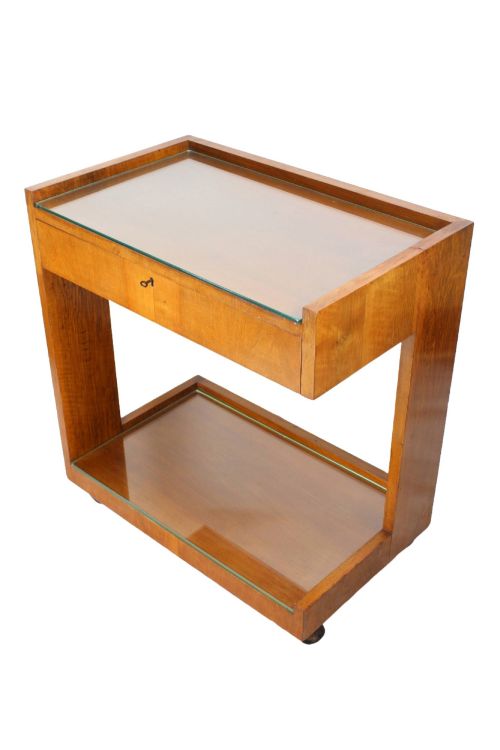
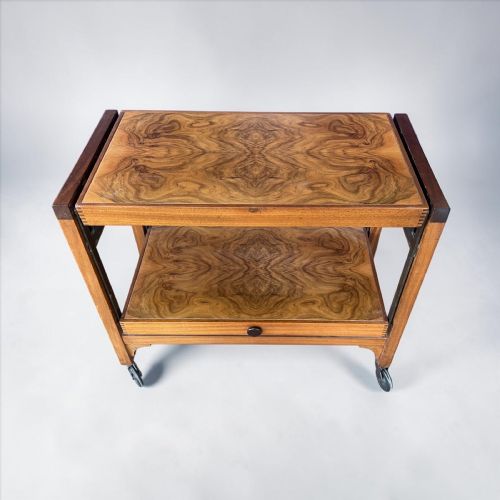
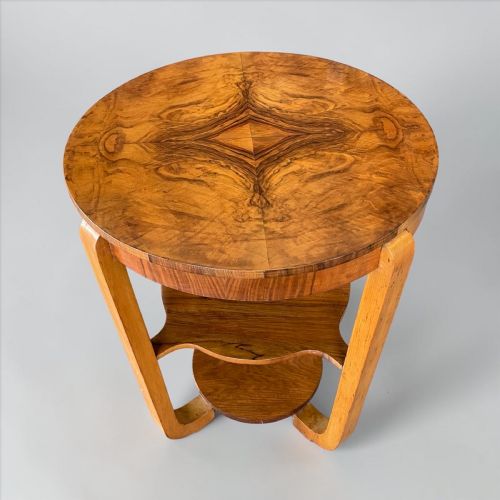
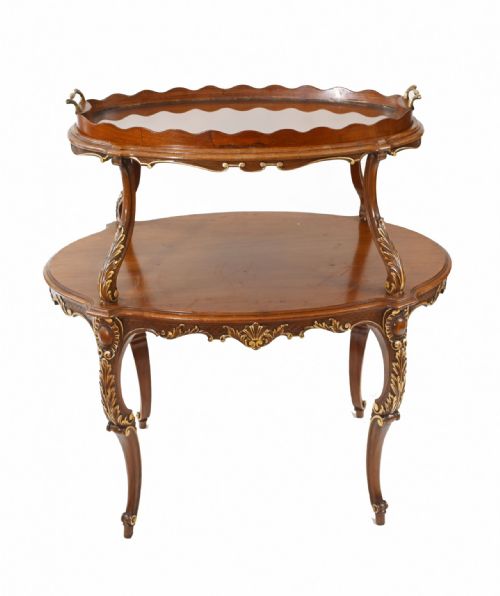
A walnut drinks table serves as a functional surface for entertaining, appearing in forms such as occasional tables, side tables, cocktail tables, and drinks trolleys. Buyers seeking a walnut drinks table encounter pieces spanning the nineteenth century through the Art Deco era, including Victorian, Edwardian, and Queen Anne styles.
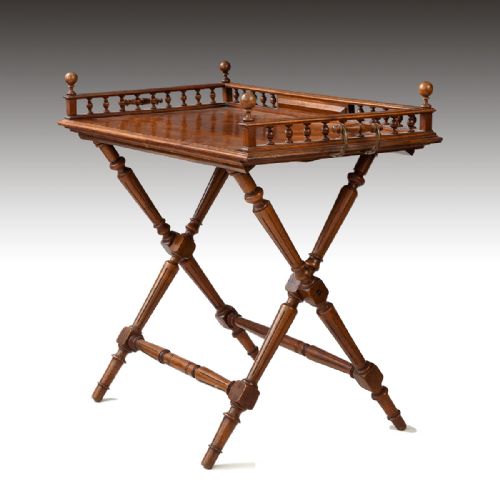
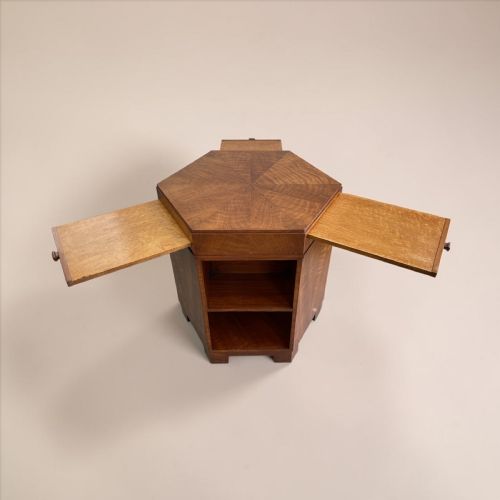
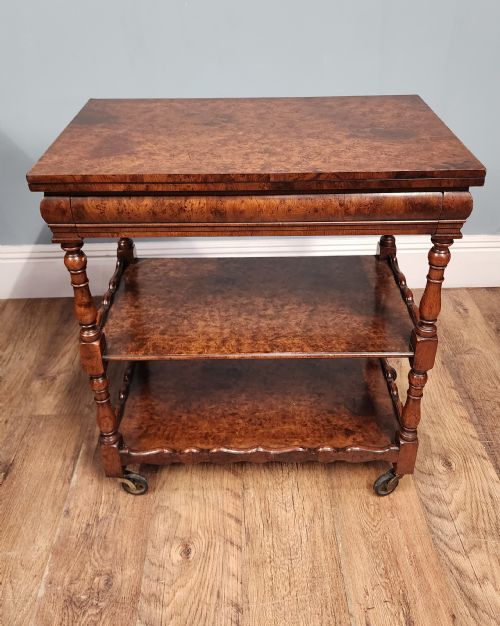
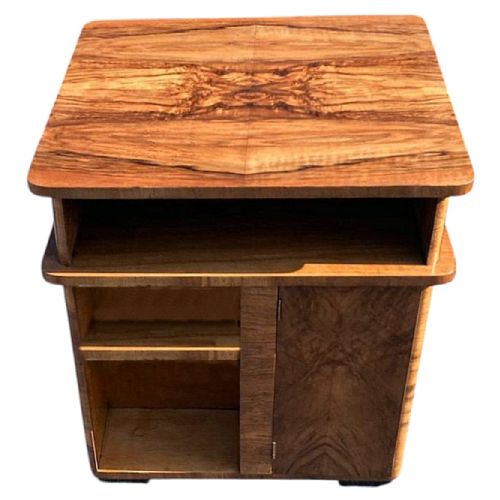
The selection ranges from simple wine tables and butlers trays on stands to elaborate metamorphic serving trolleys, pop-up cocktail bars, and tiered etageres. Art Deco examples from the 1930s dominate the selection alongside Victorian and Edwardian antecedents.
How They Were Made
Cabinet makers utilised solid walnut, walnut veneer, and burr walnut veneer over structural timber, often selecting figured veneers to create striking grain patterns on table tops. Ebonised wood details, marquetry, and carved elements appear across various styles to enhance the visual depth of the timber.
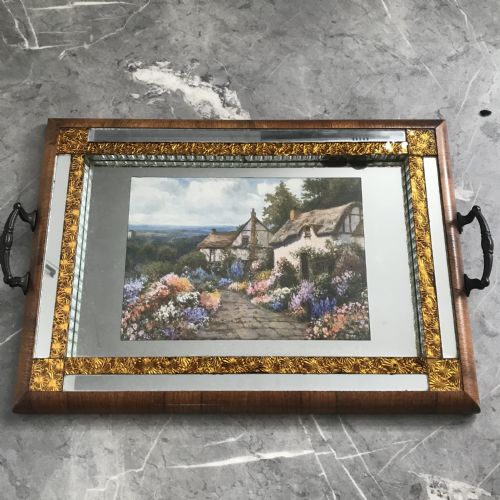
Metal components such as brass, chrome, and casters provide mobility and structural support on trolleys and tiered tables, while mirrored glass surfaces feature on specific tray and serving tables.
Some tables pop up or transform entirely, proving that furniture makers loved a party trick just as much as we do.
What Varies in Quality
The refinement of the timber selection dictates much of the visual appeal, distinguishing plain walnut surfaces from highly figured burr walnut or intricate marquetry work. Construction complexity also separates standard occasional tables from metamorphic serving trolleys, pop-up cocktail cabinets, and pieces featuring revolving mechanisms.
The integration of secondary materials like mirrored glass, brass hardware, and chrome detailing influences the overall finish, separating simpler utilitarian pieces from high-end design works.
Harry and Lou Epstein·Incorporall
The Walnut Drinks Table Glossary
- Burr walnut
- A wood harvested from walnut tree growths that produces intricate, swirling grain patterns. This highly decorative veneer appears frequently on tabletop surfaces.
- Metamorphic
- A descriptive term for furniture that transforms its shape or function through folding, sliding, or pop-up mechanisms. These clever designs allow tables to serve multiple purposes in entertaining spaces.
- Etagere
- A set of open shelves or tiered tables used for displaying objects or serving items. These multi-level pieces maximise surface area while maintaining a compact footprint.
- Butlers tray
- A removable tray resting on a folding or fixed stand, historically used for serving food and beverages. The portable top lifts off independently from the base structure.
Walnut Drinks Table: Frequently Asked Questions
What periods do these tables come from?
The pieces span from the nineteenth century through the Edwardian period and heavily into the 1930s Art Deco era. Victorian and Queen Anne style revivals also contribute to the historical range.
Craftsmanship methods shifted from traditional nineteenth-century cabinet making to modernist geometric forms and mechanical innovations by the interwar decades.
How were drinks trolleys used?
Drinks trolleys and serving carts provided mobile surfaces for transporting glassware, decanters, and bottles between rooms during social gatherings. Tiered designs allowed hosts to organise drinks and accessories across multiple levels.
Some examples incorporated wheels or casters to glide smoothly across carpets and wooden floors during service.
What is the difference between a wine table and a drinks table?
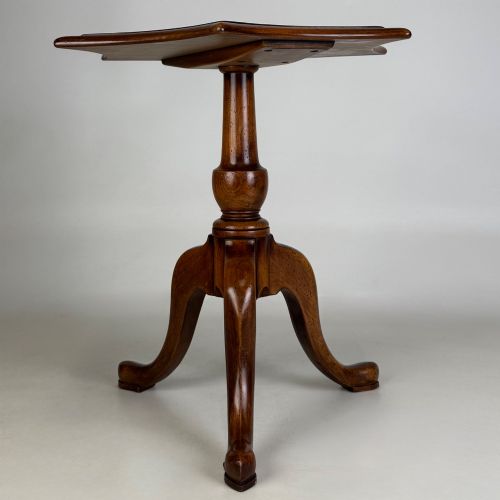
Wine tables typically offer a compact, single-pillar circular top designed to hold a single glass and bottle near a seat. Drinks tables encompass a broader category that includes larger coffee tables, trolleys, and cabinets suited for entertaining.
Both forms utilise walnut timbers, but drinks tables often provide expanded surface areas or specialised storage compartments.
How do I identify an Art Deco piece?
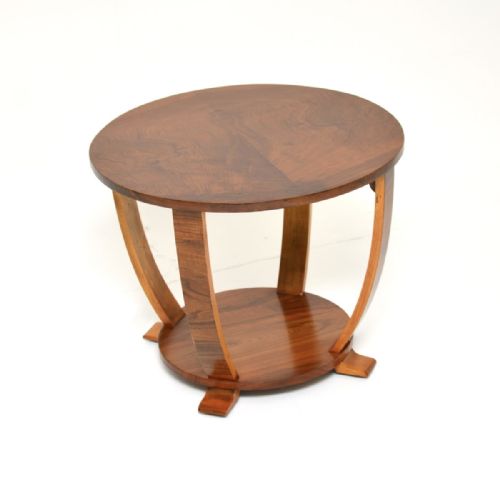
Art Deco pieces from the 1930s often feature streamlined geometric silhouettes, highly figured burr walnut veneers, and contrasting metal or mirrored glass elements. Metamorphic mechanisms and tiered shelving structures are also common hallmarks of this era.
These designs prioritise sleek functionality combined with rich, decorative wood grains rather than heavy historical carving.