




Curved Showcase Cabinet
A curved showcase cabinet holds precious objects behind glass, bringing elegance and visibility to domestic and retail interiors alike.
Curved Showcase Cabinet
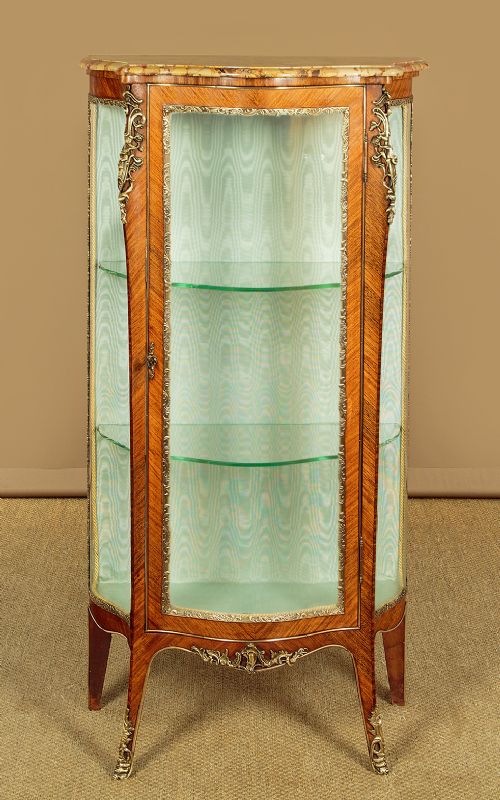
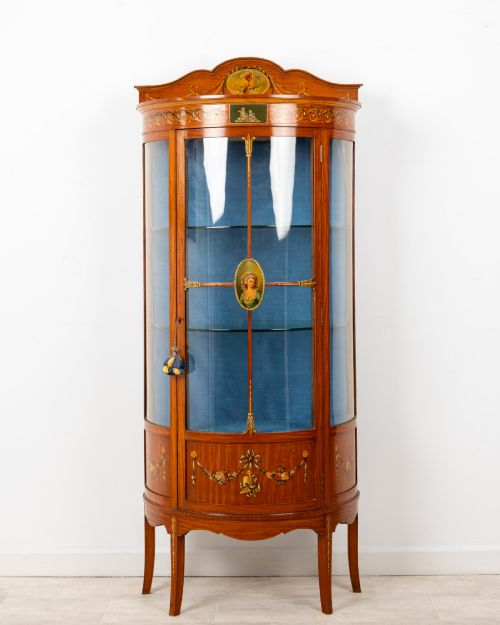
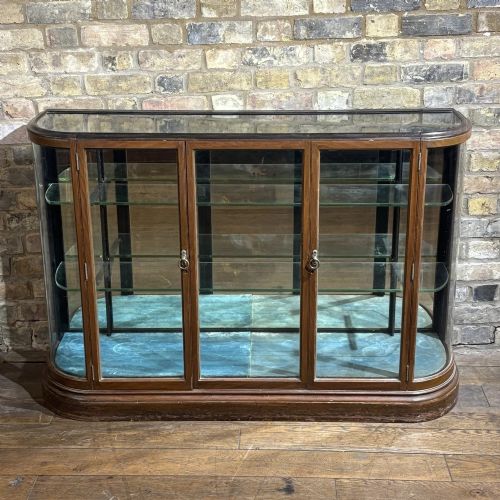
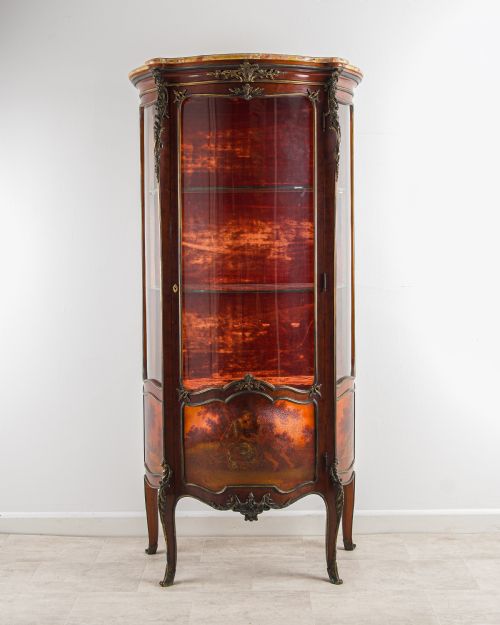
A curved showcase cabinet encompasses vitrines, bow front cabinets, and shop display counters designed to display objects from all angles. These pieces emerge in styles ranging from Victorian and Edwardian to Art Deco and French Revival.
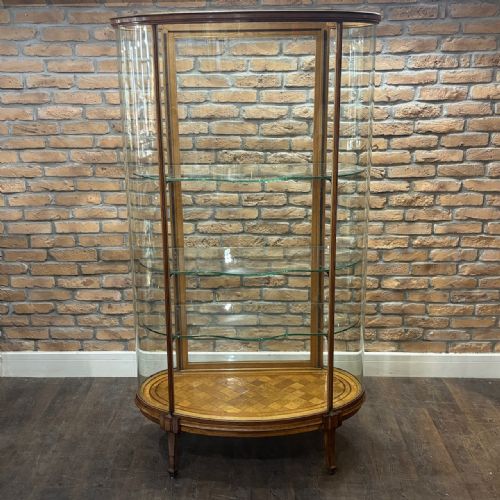
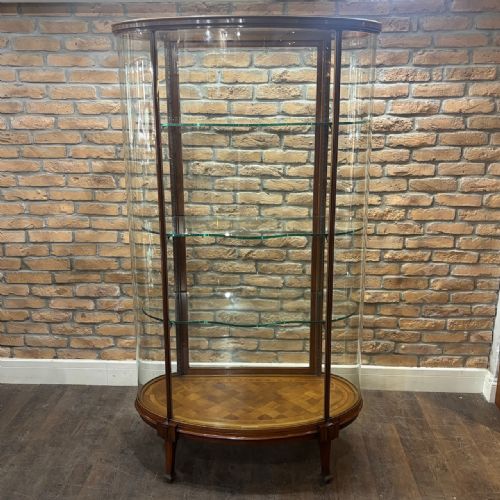
The pieces seen on this page span the nineteenth and twentieth centuries, featuring domestic display cabinets alongside commercial shop counters. Mahogany, satinwood, and walnut provide the primary timber structures for these curved glass forms.
Materials and Construction Methods
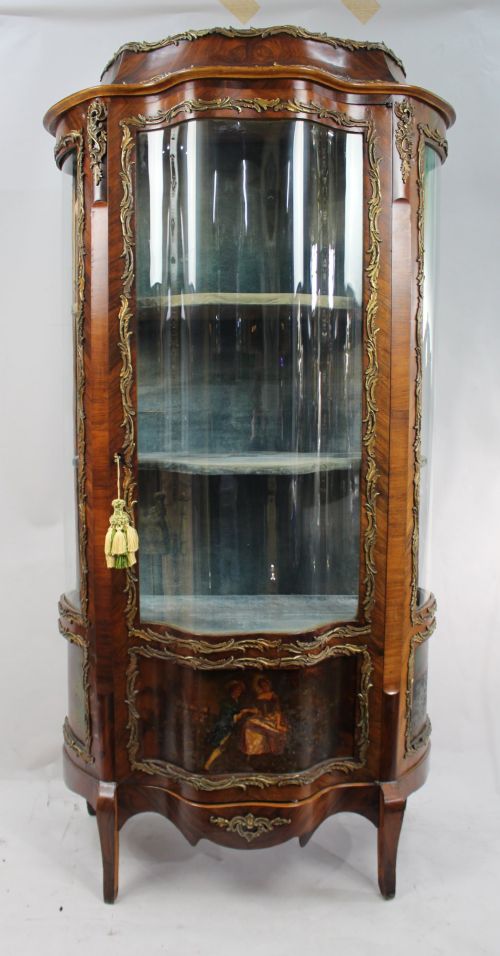
Cabinet makers utilised mahogany, satinwood, and walnut, frequently applying intricate inlay or painted decoration to the timber surfaces. Ormolu mounts and brass hardware accent the frames, while marble tops appear on select French examples.
Bent and curved glass panels require specialist glazing techniques to fit the sweeping contours of bow front, circular, and serpentine frames. Fabric linings such as velvet often furnish the interior display surfaces.
Listings feature mahogany, satinwood, and walnut timbers alongside aluminium frames on commercial counters.
Judging the Quality of Construction
Quality rests upon the precision of the curved glass fitting and the crispness of timber joinery and inlay. Finer examples display harmonious proportions, substantial mahogany or satinwood timbers, and well-cast ormolu mounts rather than simple pressed metal.
Commercial shop display pieces differ from domestic vitrines in their framing materials, with aluminium and oak structures serving functional retail purposes alongside polished mahogany domestic designs.
F. Sage & Co·James Hicks·François Linke
The Curved Showcase Cabinet Glossary
- Vitrine
- A glass-fronted cabinet designed specifically for the display of fine porcelain, curiosities, or decorative objects. These pieces often feature glass sides to maximise illumination of the contents.
- Vernis Martin
- A type of simulated Japanese lacquer developed in eighteenth-century France and emulated in later revival pieces. The technique involves applying successive layers of translucent varnish over painted decorative scenes.
- Ormolu
- Gilded bronze ornamentation applied to furniture and cabinets. This decorative metalwork adds neoclassical or rococo detailing to mahogany and satinwood frames.
- Bow Front
- A convex curved cabinet front that projects outward in a smooth arc. This shape softens the corners of a room and expands the interior display capacity.
- Bijouterie Cabinet
- A shallow glass-topped table or cabinet designed for displaying small valuable items such as jewellery or medals. These are frequently raised on slender legs.
Curved Showcase Cabinet: Frequently Asked Questions
What is a curved showcase cabinet used for?
These cabinets serve to exhibit collections of porcelain, glassware, and decorative objects while protecting them from dust. The curved glass design ensures visibility from multiple angles in a room.
Domestic versions suit sitting rooms and drawing rooms, while sturdier commercial counters originated in retail shops to display wares to customers.
How do I identify an Edwardian curved cabinet?
Edwardian examples often feature light satinwood timbers, delicate painted decorations, and inlaid borders reflecting Sheraton revival tastes. They tend to have slender proportions and refined glazing bars.
Earlier Victorian models generally utilise darker mahogany or walnut with heavier architectural detailing and cast brass or ormolu mounts.
Where should I place a bow front vitrine?
A bow front vitrine functions effectively against a flat wall where its curved projection can catch the light and soften room corners. Placing the cabinet away from direct sunlight protects both the timber finish and any fabric interior lining.
Ensure adequate floor space allows doors to open fully without obstruction to the curved glass panels.