
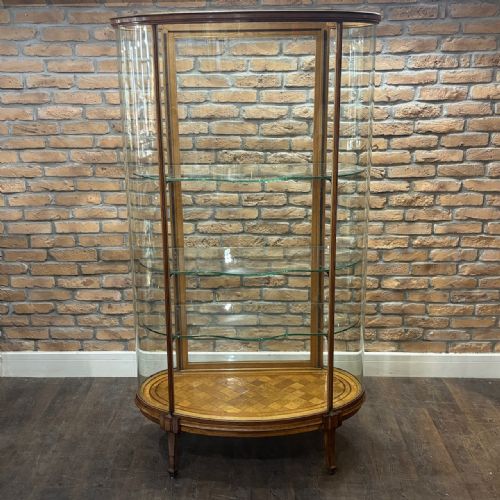
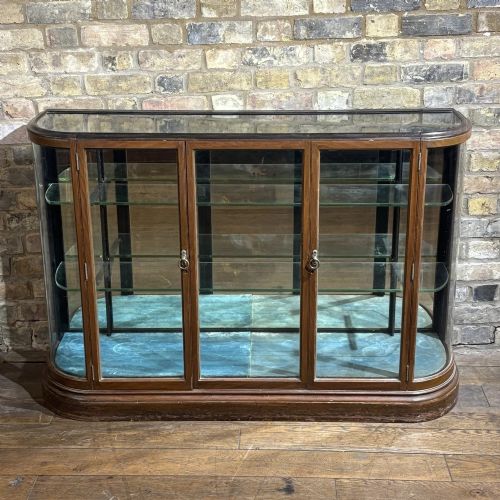


Curved Glass Shop Counter
These curved glass shop counters are commercial display cabinets offering panoramic visibility for merchandise, combining functional retail design with period craftsmanship.
Curved Glass Shop Counter
A curved glass shop counter is a retail display unit designed to showcase goods while protecting them behind formed glazing. These pieces combine timber frames with sweeping glass fronts that provide uninterrupted views from multiple angles.
The versions met on this page span the Victorian, Edwardian, and Art Deco periods, encompassing both floor-standing counters and countertop display cabinets. Mahogany and oak form the primary structural timbers, alongside aluminium frames appearing by the nineteen-thirties.
Makers such as Sage and Co produced notable examples during the early twentieth century. Forms range from bow-ended counters to large mahogany glazed display cabinets of generous proportions.
How they were made
Construction relies on solid timbers like mahogany and oak to build the heavy-duty frames required for commercial use. Cabinetmakers joined these hardwoods using traditional joinery methods to support the weight of the heavy glass and interior shelving.
The defining feature is the bent or bow glass front, a technique requiring specialised glass-heating and curving processes. Brass hardware, velvet linings, and occasional gilded wood details completed the interior presentation for retail customers.
These counters were built so well that generations of shop cats have used their warm timber bases as afternoon nap stations.
What varies in quality
The distinction between tiers rests upon the ambition of the original commission and the integrity of the surviving materials. Superior examples utilise dense figured mahogany or quarter-sawn oak with sophisticated architectural mouldings and robust brass fittings.
Original bent glass components represent a significant factor, as replacement panes alter the historical authenticity of the piece. The quality of the timber preparation and the subtlety of the curved framing distinguish standard utility counters from high-end retail furnishings.
F Sage And Co·Sage And Co
The Curved Glass Shop Counter Glossary
- Bow end
- A curved cabinet extremity designed to soften corners and maximise viewing angles. This rounded glass technique defines the silhouette of the counter.
- Countertop display cabinet
- A smaller glazed showcase built to sit upon a main shop counter. These units brought smaller merchandise closer to the customer's eye level.
- Glazed display cabinet
- A freestanding piece featuring glass panels on multiple sides for comprehensive visibility. They served as primary floor units in nineteenth and twentieth-century shops.
- Quarter-sawn oak
- Timber cut radially to the growth rings, producing a distinctive decorative grain pattern often found in quality Edwardian commercial furniture.
Curved Glass Shop Counter: Frequently Asked Questions
What periods do these counters cover?
The listings span from the late nineteenth century through the Edwardian era and into the nineteen-thirties. Victorian commercial pieces sit alongside Edwardian designs and later Art Deco aluminium frames.
This progression demonstrates how shopfitting materials shifted from heavy hardwoods towards industrial metals over several decades.
How were these counters used originally?
Merchants utilised these cabinets in retail shops to display high-value or delicate goods securely while maintaining clear visibility. The curved glass fronts allowed customers to inspect items from various angles without handling them.
Internal shelving and glazed enclosures kept merchandise dust-free and organised on the shop floor.
What materials make up the frames?
Primary structural materials include traditional cabinet timbers such as mahogany and oak, complemented by glass and brass hardware. Later twentieth-century examples incorporate aluminium frames.
Interiors occasionally feature fabric or velvet linings to enhance the presentation of displayed items.