


Crimson Wool Chuval Bag
A crimson wool chuval bag is a nomadic Central Asian storage sack woven for dowries and household goods.
Crimson Wool Chuval Bag
A crimson wool chuval bag represents traditional Turkmen tribal weaving from Central Asia, typically originating from the 18th, 19th and early 20th centuries. These large tent bags were originally utilised by nomadic groups for storing household belongings inside portable dwellings.
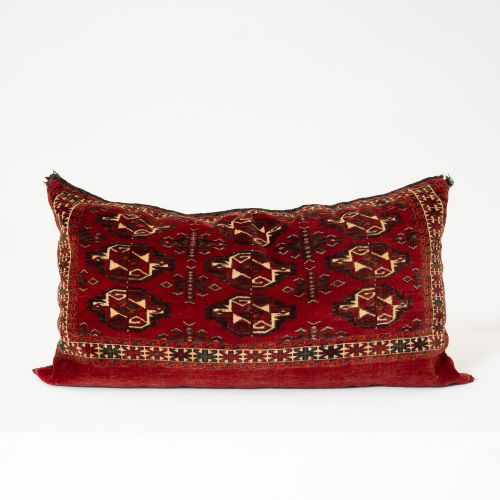
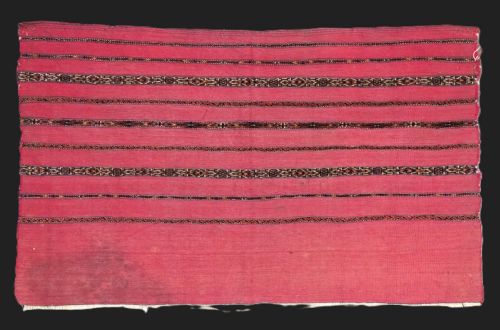
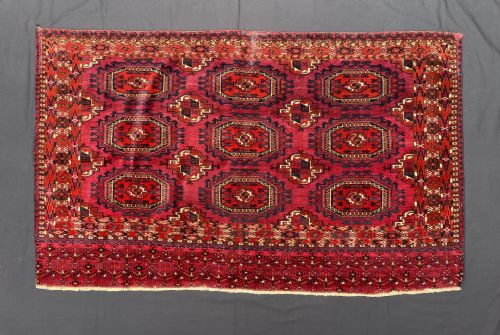
Most examples encountered on this page appear as complete storage sacks with plain weave backs, or as preserved chuval faces displaying intricate medallion patterns. Tribal and nomadic makers from groups such as the Tekke, Saryk, Ersary and Yomut wove these textiles using distinctive regional layouts.
The primary visual focus centres on repeating primary motifs known as guls, arranged across rich red grounds. Examples range from fragments and cushion conversions to complete bags retaining original hanging loops or flat-woven details.
Materials and construction
The foundation of a crimson wool chuval bag relies on hand-spun wool and cotton, frequently combined with elements of silk in specific highlights. Natural dyes provide the deep red and crimson tones that dominate the palette of these Central Asian tribal textiles.
Weaving techniques involve dense pile knots complemented by flat-woven elems and plain weave backs. Artisans executed these works with varying degrees of knot density, resulting in textures ranging from standard tribal weaves to exceptionally fine examples.
Nomadic weavers packed these sacks so tightly with blankets that camels had to carry them across the desert without spilling a single gul.
Assessing quality in tribal bags
The distinction between tiers of quality rests upon knot density, the clarity of natural dye colours, and the precision of the gul drawing. Finer weaves require greater labour and skill from the weaver, producing sharper geometric definitions across the surface.
Completeness also influences the standing of a piece, as surviving examples retaining original plain weave backs, hanging loops, or lower elem panels hold greater structural integrity than isolated fragments.
The Crimson Wool Chuval Bag Glossary
- Chuval
- A large Turkmen storage bag traditionally used in nomadic tents for household goods and bedding. These pieces were woven by women of various tribes across Central Asia.
- Gul
- A medallion motif repeated across Turkmen carpets and bag faces. Different tribal groups utilised distinct gul designs to signify lineage and origin.
- Elem
- The decorated lower panel of a chuval or main carpet, often featuring separate geometric or floral motifs below the main field of guls.
- Torba
- A smaller Turkmen storage bag compared to the chuval, used for holding smaller items inside the yurt. These bags share similar wool materials and tribal motifs.
- Kizil
- A term denoting red-ground Turkmen weaving, particularly associated with specific tribal groups. These textiles highlight the dominant crimson colourway.
Crimson Wool Chuval Bag: Frequently Asked Questions
What is a crimson wool chuval bag used for?
Nomadic tribes utilised these large sacks inside tents to store blankets, clothing, and personal belongings. They formed an essential part of a bride's dowry.
Today, collectors mount them on walls as art, convert them into cushions, or display them as flat textiles.
How do I tell different tribal designs apart?
Tribes such as the Tekke, Saryk, Yomut and Ersary developed distinct gul medallions and border arrangements. Examining the secondary ornaments and the style of the elem panel reveals the specific group.
Colour palettes also provide clues, with certain tribes favouring particular shades of crimson alongside white cotton or silk highlights.
Are these bags found complete with backs?
Many surviving examples survive only as decorative bag faces cut from the original storage sack. However, several pieces retain their original plain weave backs and hanging loops.
Complete examples offer a view of the original construction used by nomadic households.
How should I care for an antique textile?
Displaying these pieces away from direct sunlight protects natural dyes from fading over time. Gentle vacuuming through a mesh screen removes surface dust without disturbing the wool pile.
Professional textile conservators should handle any major cleaning or structural stabilization.