




Saryk Turkmen Rug
Saryk Turkmen rugs are historic Central Asian tribal textiles prized for deep crimson wool, rich natural dyes and precise geometric guls.
Saryk Turkmen Rug
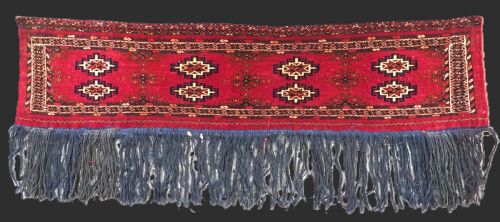
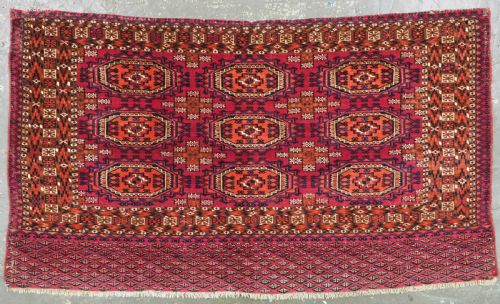
A saryk turkmen rug is a historic Central Asian tribal weaving created by nomadic makers for domestic and ceremonial use. The selections here comprise various formats, most notably torba faces, chuval faces, ensis and smaller rugs spanning the mid nineteenth century to the close of that era.
Buyers encounter numerous torba and chuval fragments alongside complete rugs and smaller carpets. These pieces often display characteristic tribal motifs, including turreted guls, kedjebe designs and salor influences.
The objects stem from nomadic traditions where utilitarian dowry weaving intersected with intricate tribal artistry. Pieces vary from compact dowry torbas to larger tent hangings and floor coverings.
What varies in quality
Quality rests upon the fineness of the weave, the precision of the gul arrangement and the clarity of the natural dyes. Dense knotting elevates smaller formats like dowry torbas.
The presence of secondary materials such as white cotton or crimson silk details adds sophistication to the overall design. Intricacy in secondary motifs and structural integrity distinguish finer examples from standard tribal output.
Some nomadic weavers thoughtfully provided plain weave backs on utility bags, ensuring durability while storing household treasures.
The Saryk Turkmen Rug Glossary
- Gul
- A primary medallion or repeating octagonal motif used in tribal carpet design. These motifs often identify the specific weaving tribe.
- Torba
- A small utility bag or tent hanging traditionally used for storage within the nomadic dwelling. They frequently feature elaborate face designs.
- Chuval
- A large storage bag face produced by Turkmen weavers for domestic utility. These pieces display multiple guls arranged across the field.
- Ensi
- A tribal door hanging designed to cover the entrance of a yurt. They feature a distinct quartered design layout.
- Kedjebe
- A lattice pattern associated with camel wedding litters. The motif appears frequently across torba faces.
Saryk Turkmen Rug: Frequently Asked Questions
What is a saryk turkmen rug?
A saryk turkmen rug is a historic tribal textile originating from Central Asia during the nineteenth century. These pieces were hand knotted by nomadic weavers utilising wool and natural dyes.
They encompass functional domestic items such as tent bags, door hangings and small floor rugs. Each piece reflects traditional tribal motifs and cultural symbolism.
How were torba bags used?
Torba bags functioned as storage containers hung inside nomadic tents to hold personal possessions and household items. They served both practical storage needs and decorative purposes within the dwelling.
Many surviving pieces are torba faces separated from their original plain weave backs. Collectors value them for their concentrated artistic design.
What colours appear in these rugs?
Natural dyes produce the dominant deep crimson, madder red and ivory grounds found across these weaves. Secondary shades include dark tones and highlights generated through traditional dyeing methods.
Cotton and silk additions occasionally provide stark contrast against the wool pile. These natural colour palettes mellow gracefully over time.
How do you date nineteenth century pieces?
Dating relies upon material analysis, structural characteristics and dye types rather than written documentation. Nineteenth century examples typically exhibit hand spun wool and organic dyestuffs consistent with pre synthetic eras.
Stylistic markers such as specific gul variations and weave density help establish the approximate production decade. Comparative study with dated archive examples refines these estimates.