
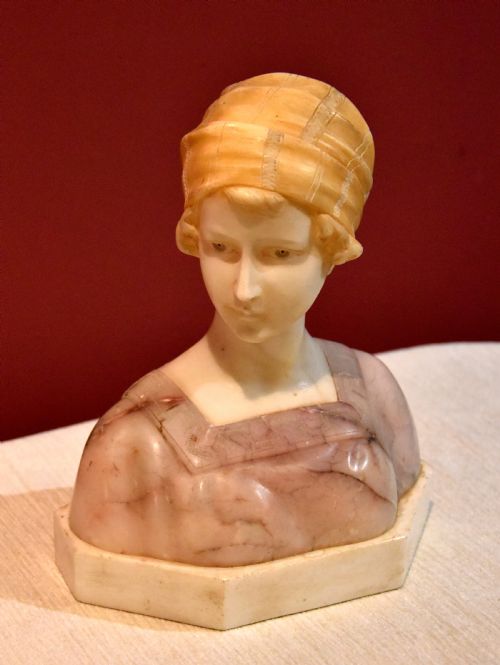
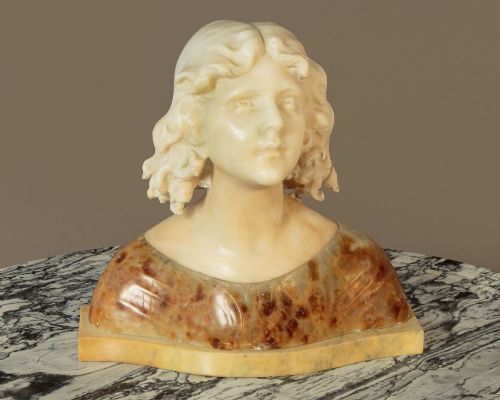


Cream Marble Sculpture
These cream marble sculpture pieces bring tactile weight and classical calm into a room, offering carved portraits, figures, and pedestals shaped across past centuries.
Cream Marble Sculpture
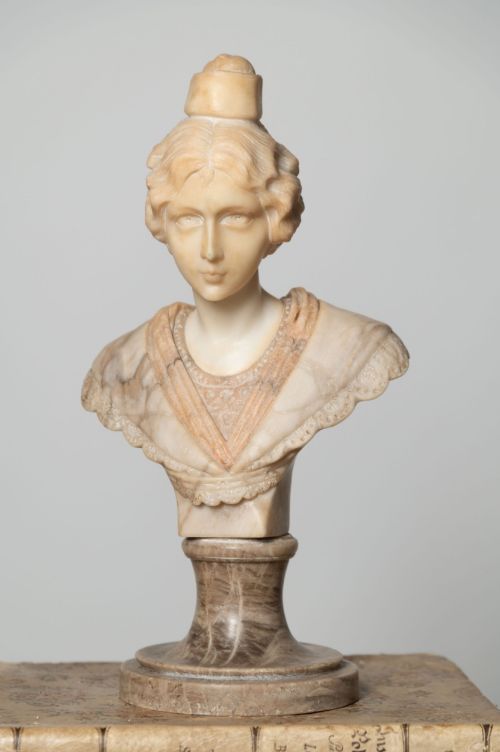
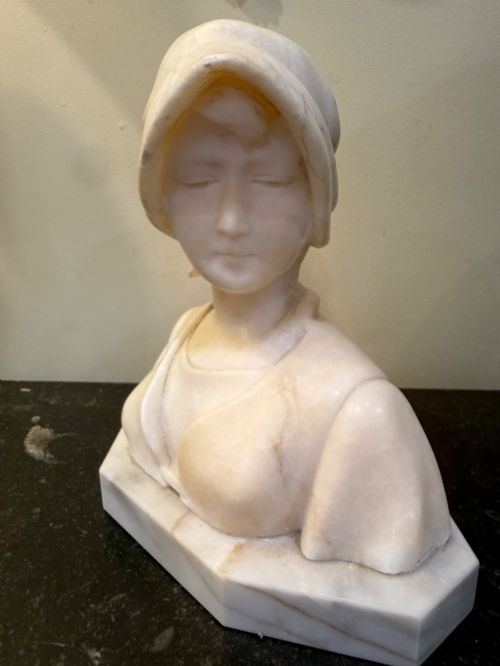
A cream marble sculpture search brings together carved alabaster and marble portrait busts, full-figure statues, and supporting columns spanning the eighteenth, nineteenth, and early twentieth centuries. Buyers encounter Neoclassical representations of classical figures alongside Victorian and Edwardian portrayals of young women and historical subjects.
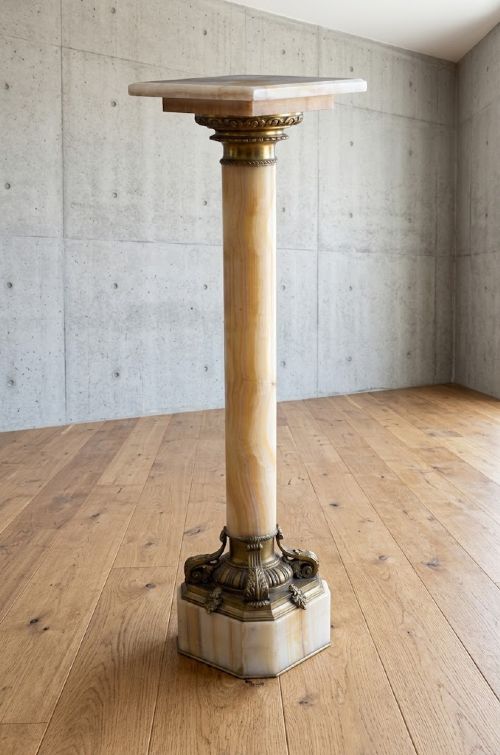
The objects take multiple physical forms, ranging from tabletop figures and night lights to substantial architectural pedestals, plant stands, and life-size portrait busts of gentlemen and ladies. Pieces emerge from French, Italian, and British workshops, reflecting shifting tastes from strict classical revivals toward flowing Art Nouveau and geometric Art Deco designs.
Materials and carving techniques
Carvers shaped these works primarily from quarried marble and softer alabaster, employing hand chisels and rasps to achieve smooth flesh tones and textured drapery. Makers often combined materials, setting alabaster figures onto contrasting marble bases, or mounting bronze and brass elements such as eagles, serpents, and ormolu collars.
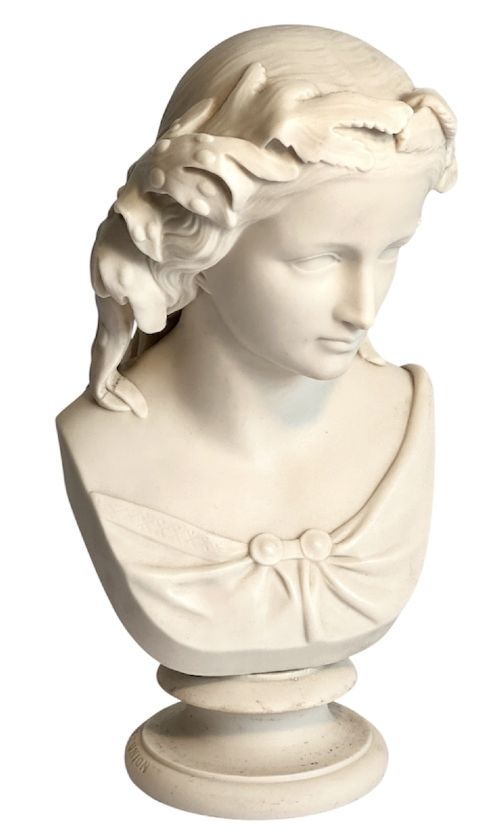
Surface finishes vary from polished stone that catches ambient light to matte treatments on parian porcelain and painted plaster counterparts. Artisans also utilised mixed media construction, pairing carved stone elements with bronze animal figures or mounting carved reliefs onto wooden and stone plinths.
Several Victorian ladies share shelf space with a watchful bronze working dog resting on a solid marble plinth.
Defining qualities in carved stone
The integrity of the stone and the balance of the composition also determine distinction, with superior pieces showing harmonious integration between the figure and its base or column. Finer items often bear the signatures of known sculptors or respected potteries, marking them out from anonymous studio output.
Auguste Henri Carli·Fritz Kochendorfer·Mieczyslaw Leon Zawiejski·Gugielmo Pugi·Greuze
The Cream Marble Sculpture Glossary
- Alabaster
- A fine-grained, translucent stone that accepts intricate hand carving and mimics the softness of human skin. Sculptors favoured this material for nineteenth-century portrait busts and figurative table pieces.
- Bust
- A sculpted representation of a person from the chest or shoulders up. These portrait pieces capture individual likenesses, historical personages, and idealized mythological figures.
- Ormolu
- Gilt bronze ornamentation applied to mounts, collars, and bases. This decorative metalwork adds contrasting metallic warmth to stone columns and sculptural pieces.
- Parian ware
- A fine-grained unglazed porcelain developed in the nineteenth century to imitate white marble. British factories utilised this ceramic body for classical figures and literary busts.
- Tazza
- A shallow saucer-like dish mounted on a stem and foot. Carved from marble, these ornamental vessels served as decorative centrepieces on tables and pedestals.
Cream Marble Sculpture: Frequently Asked Questions
Where should I place a heavy stone sculpture?
Position these substantial pieces on sturdy furniture or dedicated marble and alabaster pedestals that can support their considerable weight safely.
Keep them away from direct heat sources and strong sunlight to protect the surface polish and prevent stone drying.
How do I clean carved alabaster safely?
Dust these soft stone surfaces gently with a dry microfibre cloth or a soft brush without applying water.
Alabaster is porous and water-sensitive, meaning moisture can easily stain or dissolve the delicate outer finish.
How do I distinguish alabaster from marble?
Alabaster feels noticeably softer to the touch, is significantly lighter in weight, and often possesses a translucent quality when held near light.
Marble remains harder, denser, and opaque, resisting scratches from steel much more effectively than alabaster.
What distinguishes Art Nouveau figures from earlier styles?
Art Nouveau sculptures incorporate asymmetrical flowing lines, natural plant motifs, and subjects such as dancers or bathers emerging from pools.
Earlier nineteenth-century works adhere more strictly to classical Neoclassical symmetry, historical clothing, and formal portrait conventions.