
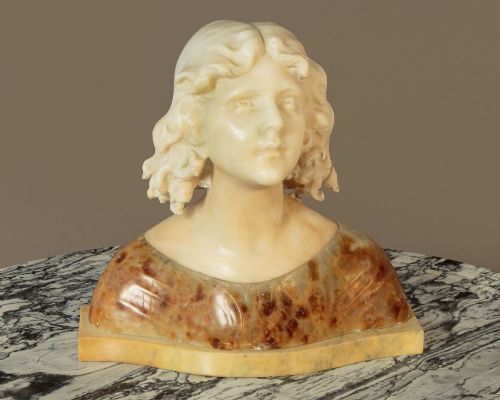


Cream Marble Figure
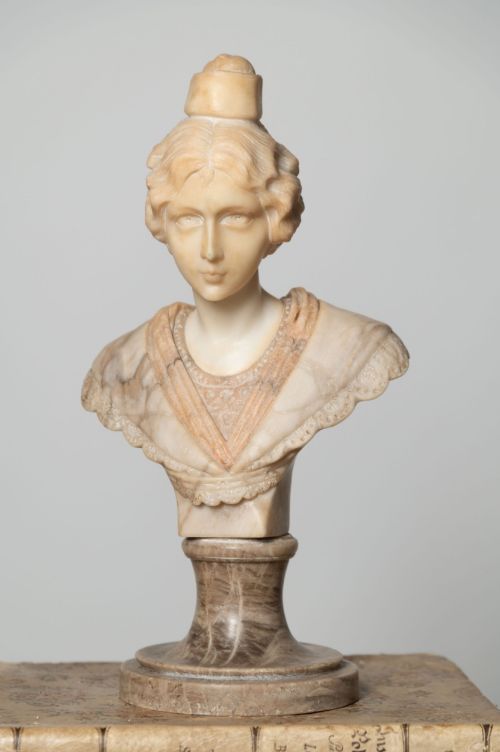
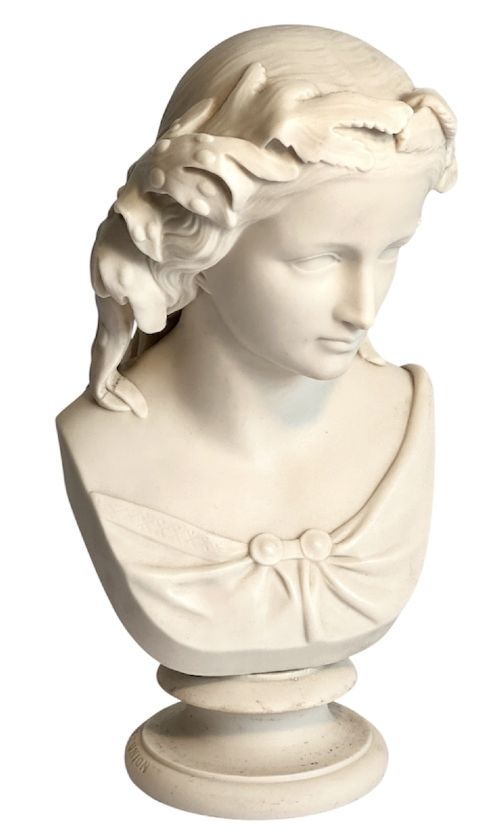
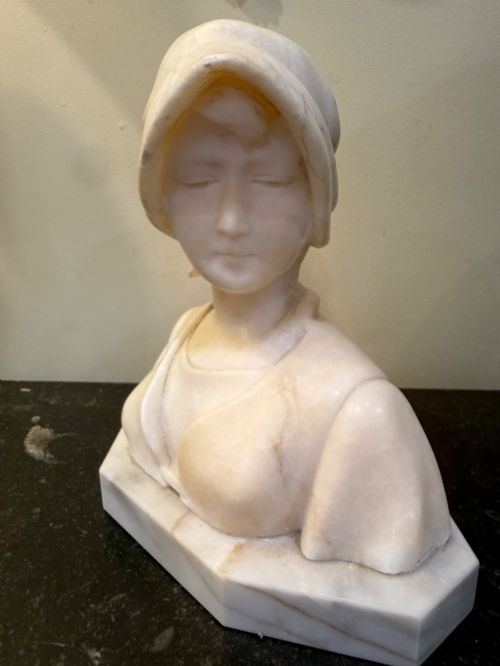
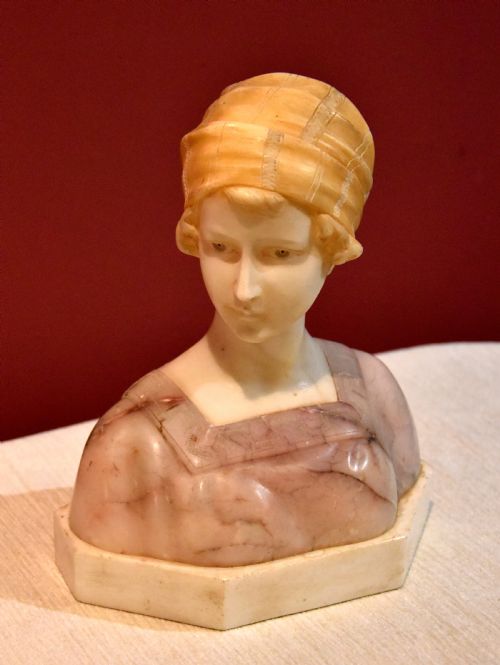
These cream marble figure carvings bring sculptural presence to a room, ranging from classical portrait busts to elegant Art Nouveau studies.
Cream Marble Figure
A cream marble figure encompasses carved stone sculptures, portrait busts, and figurative works predominantly rendered in pale marble, alabaster, and parian porcelain. When you search for cream marble figure, you encounter pieces spanning the nineteenth century through the 1920s, representing Victorian, Art Nouveau, Neoclassical, and Art Deco styles.
The selections on this page are dominated by carved alabaster and marble depictions of young women, goddesses, and literary heroines. Alongside European studio pieces from France and Italy, you will find occasional religious works such as Burmese Mandalay period temple statues.
Most examples function as decorative focal points for mantelpieces, pedestals, and side tables, bringing classical or turn-of-the-century aesthetics into an interior space. Makers ranging from individual sculptors to large commercial potteries contributed to this varied sculptural tradition.
How they were made
Carvers shaped these pieces from natural stone, utilising marble for durable structural integrity and softer alabaster for delicate translucency and fine facial detail. Parian porcelain served as a ceramic alternative, cast in moulds to replicate the smooth finish of carved marble for literary and classical subjects.
Sculptors combined materials by mounting stone figures upon contrasting bases of metal, brass, or wood, or by pairing two-tone alabaster with coloured marble elements. Hand-chasing and polishing brought out the natural grain and varied opacity of the mineral.
Cream Marble Figure Retail Price Guide 2026
Typical asking prices for cream marble figure among the pieces listed under this phrase on Sellingantiques today, from the lower quarter to the upper quarter. They describe what is for sale here now, not the wider market.
Listings feature alabaster, marble, and parian porcelain across Victorian, Art Nouveau, and Art Deco periods.
What varies in quality
The distinction between ordinary production and superior work lies in the sensitivity of the carving and the purity of the stone. Master carvers achieved subtle transitions in expression and drapery that lesser artisans missed.
Signed works by known sculptors carry greater distinction, demonstrating precise anatomy and thoughtful composition. The clarity of the stone, free from heavy natural fissures where not intended, also marks the upper tier of these pieces.
Auguste Henri Carli·Fritz Kochendorfer·Gugielmo Pugi·Copeland
The Cream Marble Figure Glossary
- Alabaster
- A fine-grained mineral, softer than marble, prized for its translucency and suitability for detailed portrait carving. It permits a warm, cream-coloured finish that catches ambient light.
- Parian Porcelain
- A fine-grained white ceramic developed in the nineteenth century to imitate carved marble. It is named after the island of Paros, famous for its classical Greek marble.
- Bust
- A sculpted representation of a person's head, shoulders, and upper chest. Portrait busts immortalised both specific individuals and idealized literary or mythological characters.
- Neoclassical
- A style drawing inspiration from the classical art and culture of ancient Greece and Rome. It emphasises restrained dignity, balanced proportions, and classical drapery.
- Art Nouveau
- A decorative style popular around 1900 characterised by fluid, organic lines and floral motifs. Figures from this period often incorporate flowing hair and naturalistic pool settings.
Cream Marble Figure: Frequently Asked Questions
Where should I place a heavy stone sculpture?
Position heavier pieces on sturdy, level furniture such as heavy sideboards, dedicated pedestals, or reinforced mantelpieces.
Ensure the supporting surface can bear the considerable weight of solid marble or alabaster without sagging.
What is parian ware?
Parian ware is a type of unglazed hard-paste porcelain that mimics the smooth texture and appearance of carved marble.
Developed in Victorian Britain, it allowed factories to issue affordable sculptural groups and portrait busts.
How do I date an antique marble figure?
Examine the style of the carving, costume details, and any signature or foundry marks stamped on the base.
Nineteenth-century pieces often reflect strict classical revivalism, while those from around 1900 display distinct Art Nouveau curves.