
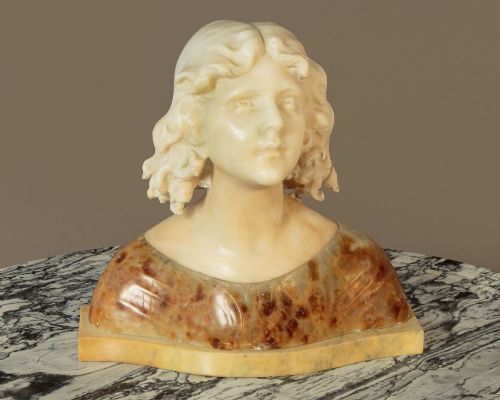


Alabaster Maiden Sculpture
An alabaster maiden sculpture captures female grace in translucent stone, offering a classic decorative focal point for any room.
Alabaster Maiden Sculpture
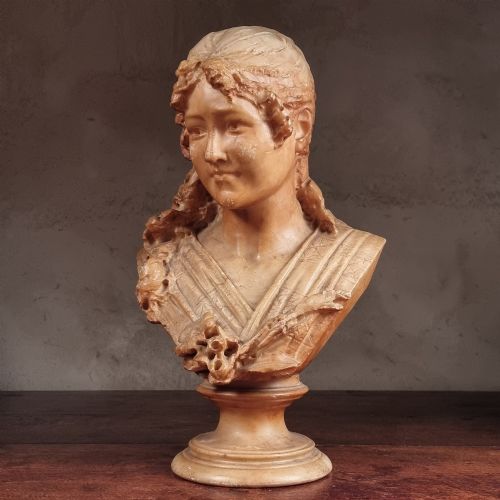
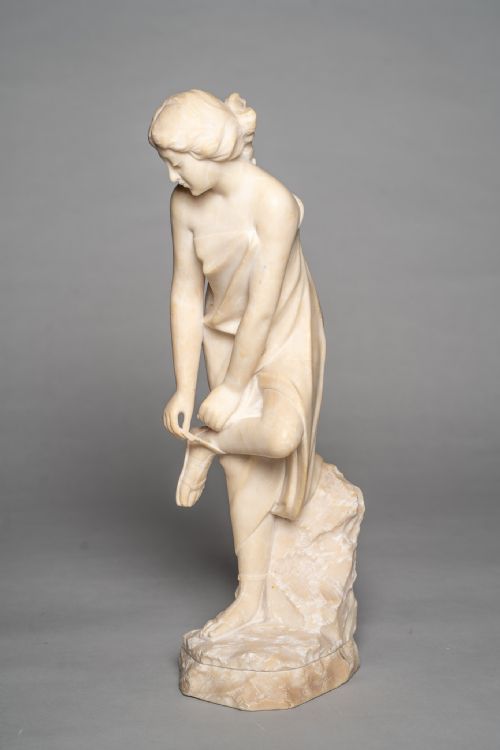
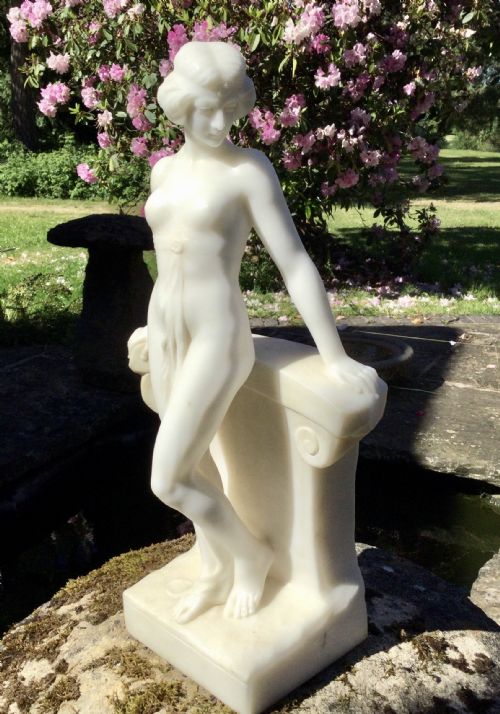
These items comprise carved female figures and busts rendered in soft stone, mostly originating from the nineteenth and early twentieth centuries. An alabaster maiden sculpture typically depicts young women, classical ladies, or allegorical figures such as water carriers and harvest maidens.
The pieces on this page span several distinct aesthetic movements, ranging from Victorian Classical and Neoclassical designs to flowing Art Nouveau examples. You will frequently encounter large Italian carved works dating around nineteen hundred, alongside British and French interpretations from earlier Victorian decades.
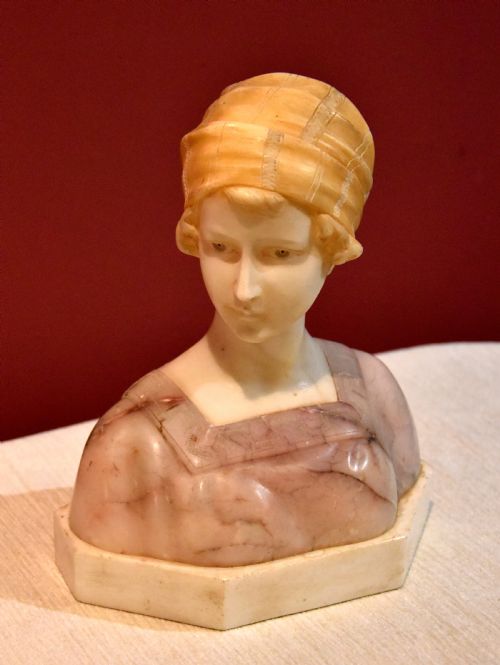
Forms vary from shoulder-length busts to full-length standing or seated figurines, occasionally incorporating contrasting materials like white marble bases or wooden plinths. The subject matter leans heavily towards idealized femininity, rendered either in pure white stone or two-tone variations.
Materials and carving techniques
Sculptors utilised fine-grained gypsum alabaster and marble, working the raw blocks with chisels, rasps, and abrasive powders to achieve smooth drapery and skin textures. Alabaster offers a natural translucency that allows light to penetrate just beneath the surface, mimicking the soft glow of human flesh.
Many works combine carved alabaster elements with supporting bases of contrasting white marble or stone, while others employ two-tone colouration to highlight hair and garments. Surface finishes range from high polishes to matte treatments that accentuate the natural grain of the material.
Victorian sculptors occasionally carved modest wheat sheaves and water pitchers to keep mythological maidens gainfully employed.
Distinguishing quality in the carving
The distinction between standard works and superior examples lies in the finesse of the facial expression, the undercut depth of the hair, and the natural fall of carved drapery. Master carvers managed to impart a lifelike softness to rigid stone, whereas lesser pieces remain stiff and formulaic in posture.
Signatures by established artisans or ateliers elevate a piece, reflecting skilled hand-finishing rather than standard workshop production. The preservation of fragile extremities, delicate fingers, and unblemished surfaces also dictates the standing of an individual sculpture.
A. Gamay·Auguste Henri Carli·Gugielmo Pugi·A. Cipriani
The Alabaster Maiden Sculpture Glossary
- Alabaster
- A soft, workable sulphate mineral known for its fine grain and translucent quality. It absorbs light slightly, giving carved figures a warm, lifelike appearance.
- Art Nouveau
- An international style of art and architecture popular around nineteen hundred. It is characterised by intricate, organic lines, flowing hair, and natural motifs.
- Neoclassical
- A Western cultural movement inspired by the classical art and culture of ancient Greece and Rome. Works in this style emphasise proportion, restraint, and classical drapery.
- Figurine
- A small statuette representing a human or animal figure. In this context, it refers to full-length or seated maiden sculptures rather than portrait busts.
Alabaster Maiden Sculpture: Frequently Asked Questions
Where should I display a bust?
Place your sculpture on a sturdy pedestal, mantlepiece, or heavy wooden console table where it is safe from accidental knocks. Adequate ambient lighting from the side will accentuate the subtle shadows and carved details of the drapery.
Ensure the placement area remains stable and free from heavy vibrations, as these delicate stone figures can easily chip or topple if placed on unstable surfaces.
How do I spot a reproduction?
Examine the material closely for the natural weight, cold temperature, and faint veining characteristic of genuine stone. Modern synthetic resins or cast plasters often feel warmer to the touch and lack the subtle translucency of period alabaster.
Look for tool marks and hand-carved nuances under magnification, as mass-produced modern copies typically show uniform casting seams or machine-tooled perfection.
What does signed mean on these?
A signature carved directly into the base or back of the stone indicates the specific sculptor or studio responsible for the creation. These inscriptions often bear Italian or French names from the nineteenth or early twentieth centuries.
Signatures help attribute pieces to known workshops, though unsigned works of the same period often display an equivalent level of artistic craftsmanship.