
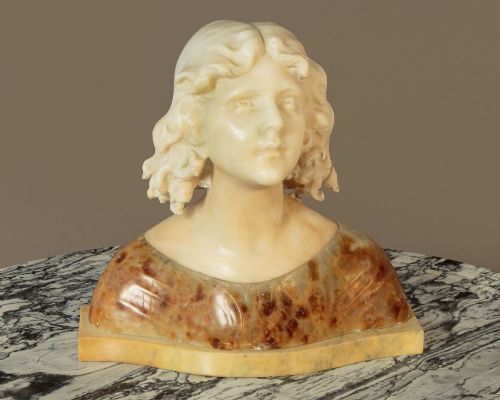


Antique Alabaster Maiden
These antique alabaster maiden figures capture female subjects with remarkable grace, offering collectors classic sculptural forms in translucent stone.
Antique Alabaster Maiden
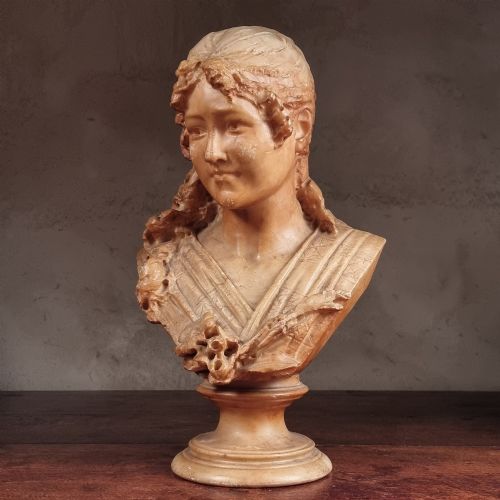
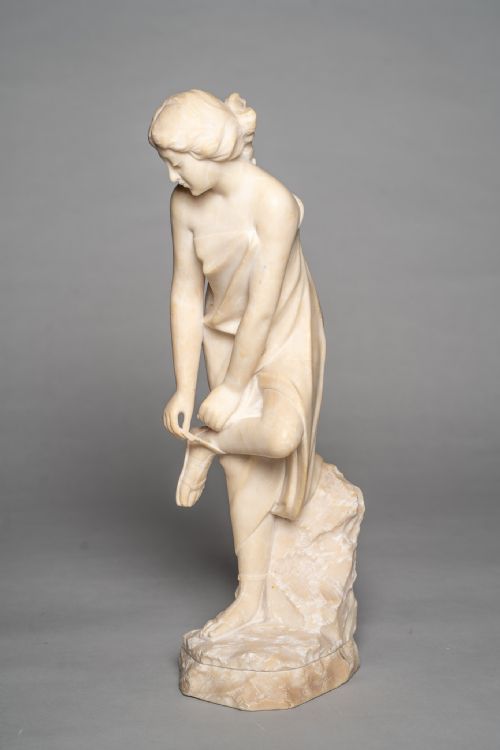
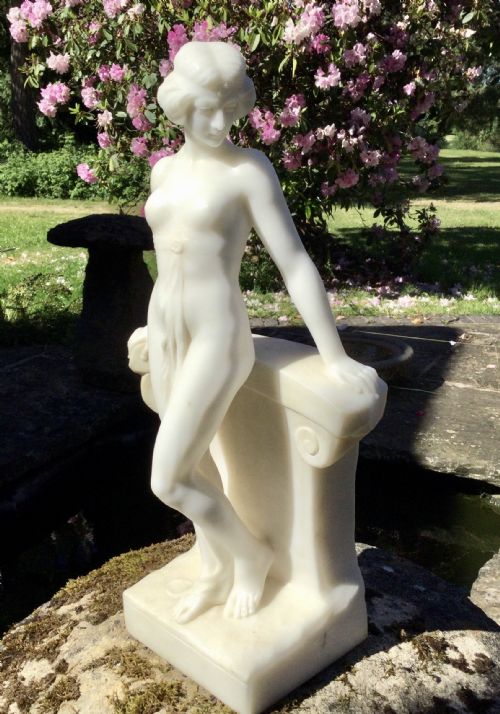
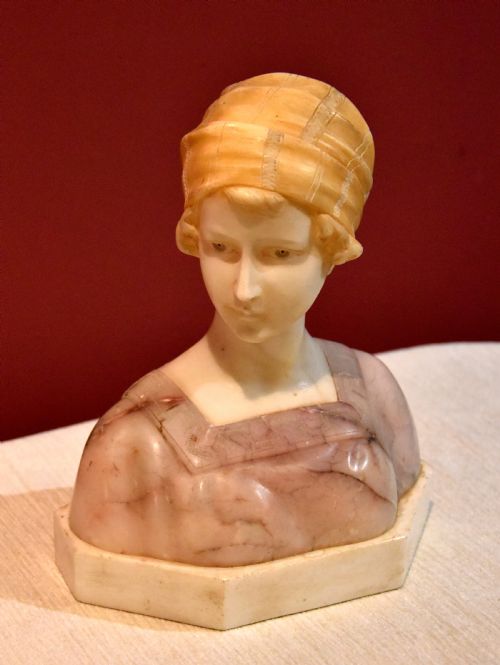
An antique alabaster maiden represents female figures carved from fine gypsum stone, appearing most frequently on this page as Victorian and early twentieth-century busts and full-length sculptures.
These works emerge from 19th Century, 1900, 1910, and 1920 periods, carrying styles such as Art Nouveau, Victorian Classical, Neoclassical, and French Classical Revival.
Collectors encounter both bust formats and standing sculptures depicting young women, sometimes holding attributes like wheatsheaves or standing in pools.
Materials and construction methods
Certain sculptures combine alabaster with white marble or incorporate wood bases, occasionally employing two-tone colour effects within the stone.
Several maidens quietly clutch wheat sheaves or stand knee-deep in stone pools, seemingly indifferent to the passage of a century.
Distinctions in sculptural quality
The finesse of the carving dictates the distinction between standard decorative work and superior artistic output, particularly in the rendering of hair, hands, and facial expressions.
Signatures by known sculptors elevate the standing of a piece, while the clarity and translucency of the stone itself define the upper tier of the range.
A.Gamay·Auguste Henri Carli·Gugielmo Pugi·A.Cipriani
The Antique Alabaster Maiden Glossary
- Alabaster
- A fine-grained, translucent stone favoured by sculptors for its soft appearance and smooth finish. It permits light to penetrate slightly beneath the surface.
- Bust
- A sculpted representation of a person from the chest or shoulders up. This format focuses attention entirely on the facial expression and upper garment detail.
- Neoclassical
- A style drawing inspiration from the classical art and culture of ancient Greece and Rome. It emphasises proportion, restraint, and classical drapery.
- Art Nouveau
- An international style of art and architecture prominent around nineteen hundred. It is characterised by intricate linear designs and flowing organic motifs inspired by natural forms.
Antique Alabaster Maiden: Frequently Asked Questions
How do I clean antique alabaster?
Alabaster is a soft and porous material that dissolves easily in water and absorbs liquids rapidly. Dusting gently with a dry, soft cloth remains the safest method for ongoing maintenance.
Moisture and harsh cleaning agents must be avoided entirely to prevent permanent staining or surface damage to the carved stone.
Where were these sculptures made?
Many of these carved figures originate from Italian workshops where skilled artisans worked with local stone deposits. French studios also produced notable examples during the nineteenth and early twentieth centuries.
Signatures on the base or reverse often point directly to the individual artist or specific regional studio responsible for the carving.
What is the difference between alabaster and marble?
Alabaster is significantly softer than marble and possesses a distinct translucency that allows light to pass just beneath the surface. Marble tends to be harder, heavier, and less translucent.
Sculptors utilised alabaster for works requiring delicate surface detail, whereas marble served for monumental architecture and robust statuary.
How do I identify Art Nouveau features?
Art Nouveau sculptures display flowing organic lines, naturalistic hair styling, and subject matter integrated with natural elements like pools of water or floral motifs. These pieces often date from around nineteen hundred.
Victorian classical pieces, by contrast, maintain stricter adherence to traditional Greco-Roman drapery and formal poses.