
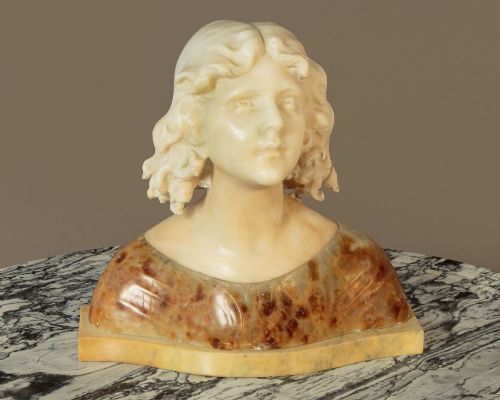


Alabaster Female Statue
An alabaster female statue captures the human form through translucent stone, offering a tangible link to nineteenth and early twentieth-century classical sculpture.
Alabaster Female Statue
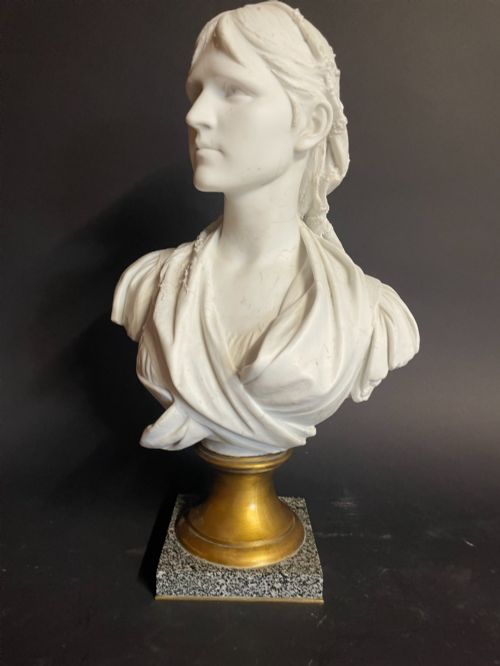
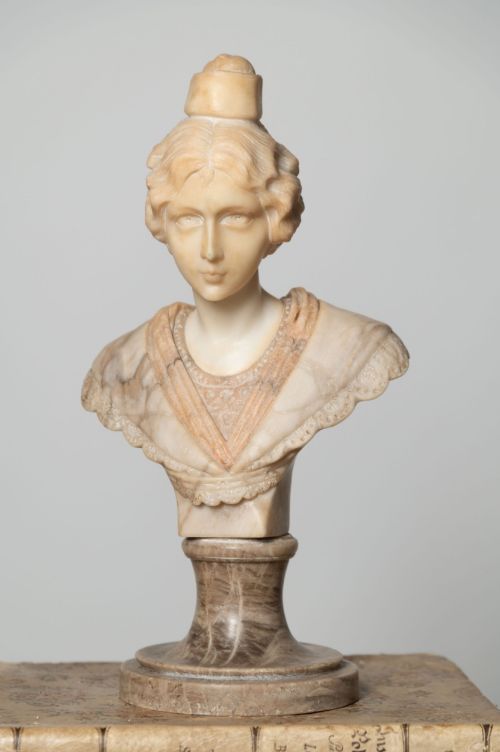
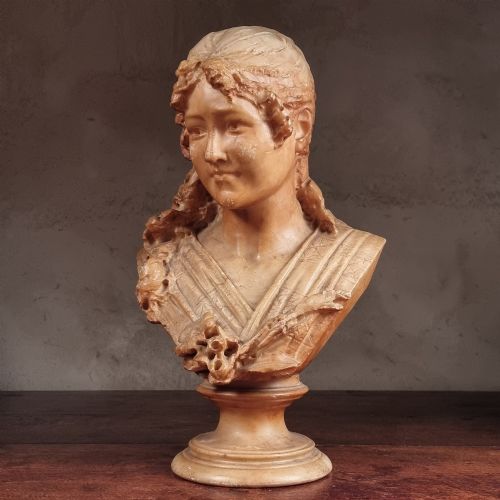
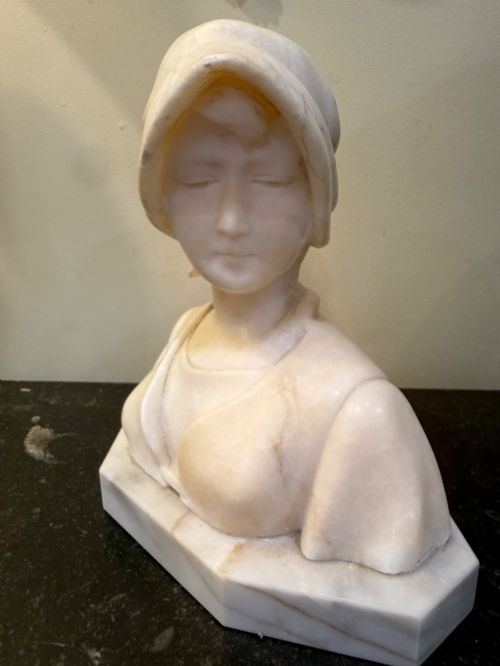
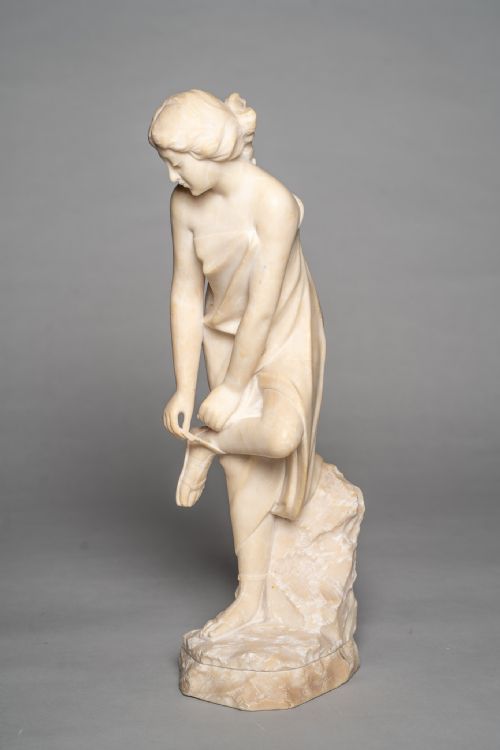
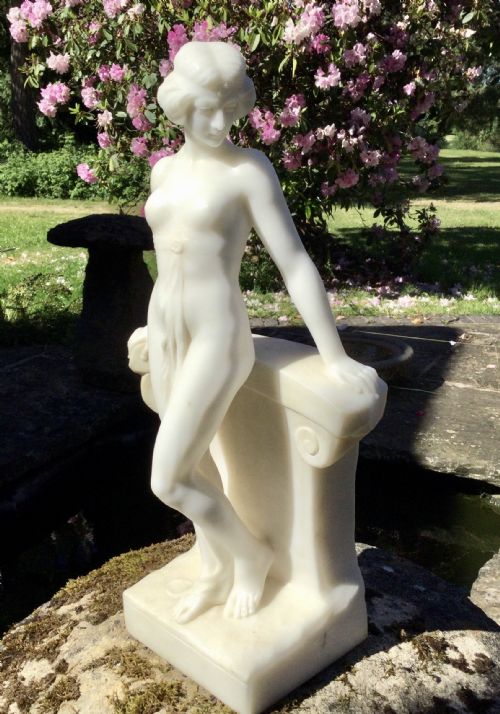
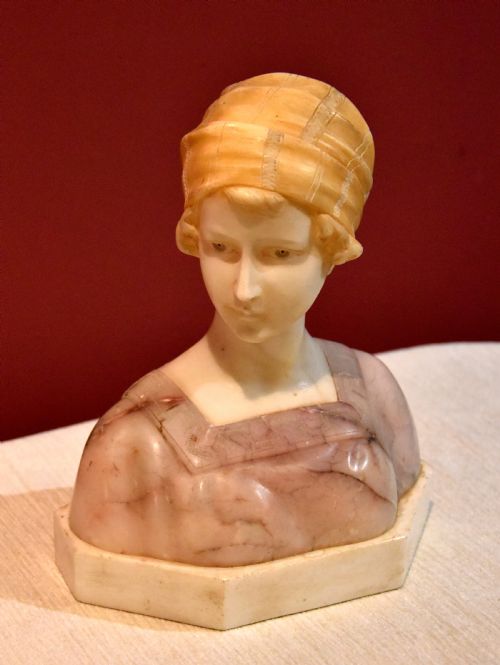
An alabaster female statue represents a distinct category of decorative sculpture found in nineteenth and early twentieth-century households. These works frequently depict mythological figures, allegorical subjects, or idealized portraits of young women.
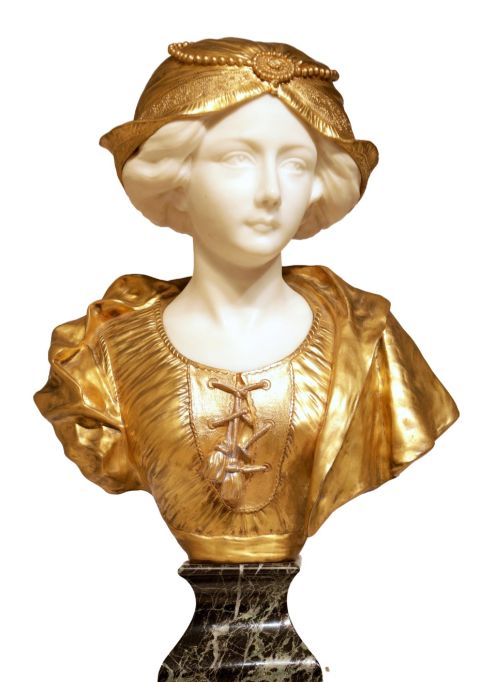
The objects on this page appear primarily as standalone busts, full-length reclining nudes, or figural table lamps and bookends. Most examples originate from Italian and French workshops working during the Victorian, Art Nouveau, and Art Deco periods.
Buyers will encounter subjects ranging from simple portraits of girls to named figures such as Hestia or classical maidens playing musical instruments. The scale varies from intimate cabinet pieces to large monumental sculptures designed for display on pedestals.
Materials and carving methods
Makers shaped these pieces primarily from soft, fine-grained gypsum alabaster or dense marble, occasionally combining the stone with cast bronze, spelter, brass, or ormolu mounts. Alabaster requires careful hand-carving and polishing due to its delicate, translucent nature.
Many sculptures incorporate multi-media elements, pairing carved stone faces and drapery with gilt metal details or contrasting two-tone alabaster. Signatures are often incised directly into the stone base alongside foundry marks on the metallic components.
Several Victorian ladies hold wheatsheaves or lyres, proving that ancient goddesses occasionally moonlit as classical musicians and farm hands.
Evaluating the work
Quality in these sculptures rests upon the sensitivity of the carving, particularly in the rendering of facial expressions, hair texture, and the fall of fabric. Finer pieces demonstrate a master's control over the translucent stone, allowing light to penetrate the surface.
The integrity of the medium and the refinement of the polishing dictate the visual appeal of each piece. Sculptures signed by recognised artists or produced in established Italian and French studios command closer attention for their detailed execution.
Affortunato Gory·Auguste Henri Carli·Fritz Kochendorfer·George Van Der Straeten·Gugielmo Pugi·A. Cipriani
The Alabaster Female Statue Glossary
- Alabaster
- A soft, translucent mineral commonly carved into decorative sculptures and busts. It diffuses light gently when polished.
- Spelter
- A zinc alloy frequently cast as a substitute for bronze in nineteenth-century decorative figures and lamp bases. It often received a bronze-like or gilt finish.
- Ormolu
- Gilded bronze applied as decorative mounts or accents on sculpture bases. The technique involves fusing gold to a bronze base using mercury.
- Patina
- The surface sheen and coloration acquired by metal components through age and handling. It indicates natural ageing rather than applied finishes.
Alabaster Female Statue: Frequently Asked Questions
How should I clean an alabaster female statue?
Alabaster is porous and sensitive to moisture, so cleaning requires only a dry, soft microfiber cloth to remove dust. Water and chemical solvents will damage the polished surface and dissolve the stone.
Keep these sculptures away from direct sunlight and humid environments to preserve the natural translucency and prevent staining over time.
Were these statues originally displayed outdoors?
These pieces are strictly intended for interior display due to the softness of the stone and the delicate nature of mixed media components like spelter or ormolu. Nineteenth and early twentieth-century homes housed them in parlours, libraries, and drawing rooms.
Placing them indoors protects the soluble mineral composition from moisture damage, frost, and atmospheric pollutants that ruin exposed stone.
How do I distinguish alabaster from marble?
Alabaster has a noticeable translucency when held near a light source, whereas marble remains largely opaque with a denser crystalline structure. Alabaster is also significantly softer and can be scratched with a metal implement.
Checking the weight and surface temperature helps confirm the material, as alabaster feels slightly warmer to the touch than cold marble.
What is the difference between Art Nouveau and Art Deco pieces?
Art Nouveau works date from the turn of the twentieth century and feature flowing, organic lines inspired by natural forms like flower stems and long hair. Subjects often include bathing figures and mythological maidens.
Art Deco examples emerge around the 1920s and 1930s, displaying geometric discipline, stylized drapery, and modern dancer motifs. These later pieces frequently combine carved stone with metal bases for lamps and bookends.