
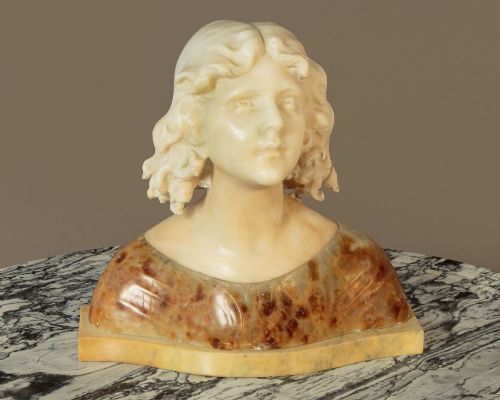


Art Nouveau Stone Figure
An art nouveau stone figure brings fluid lines and natural grace to a room, capturing the spirit of the turn of the twentieth century.
Art Nouveau Stone Figure
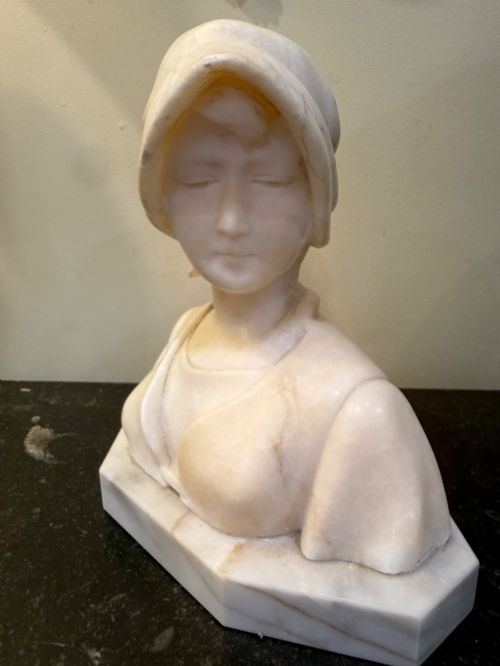
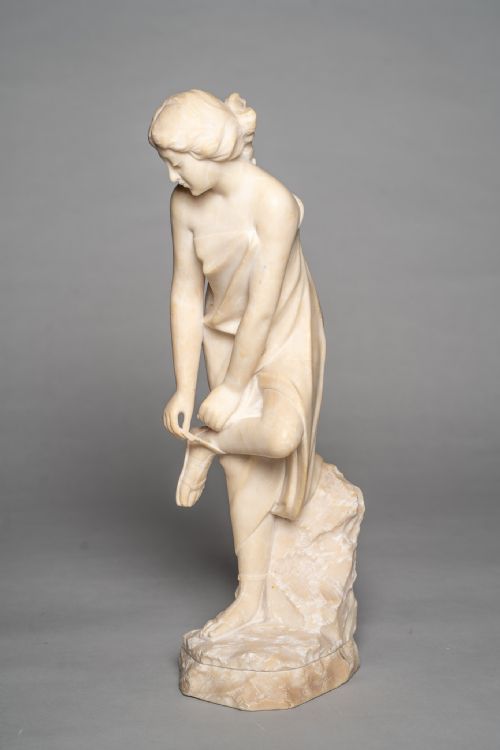
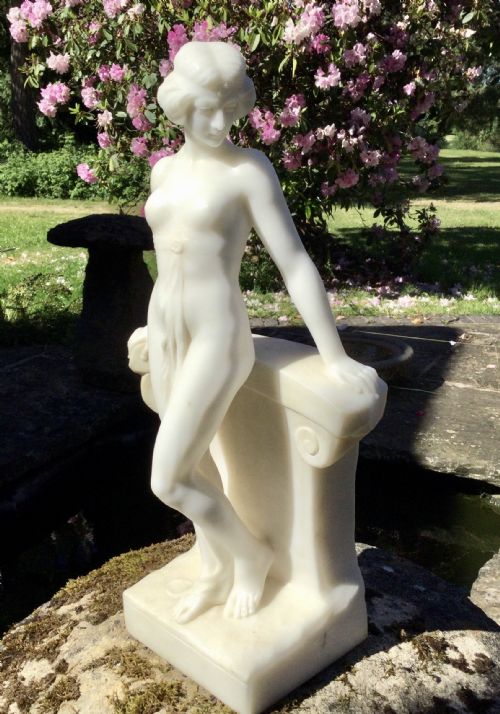
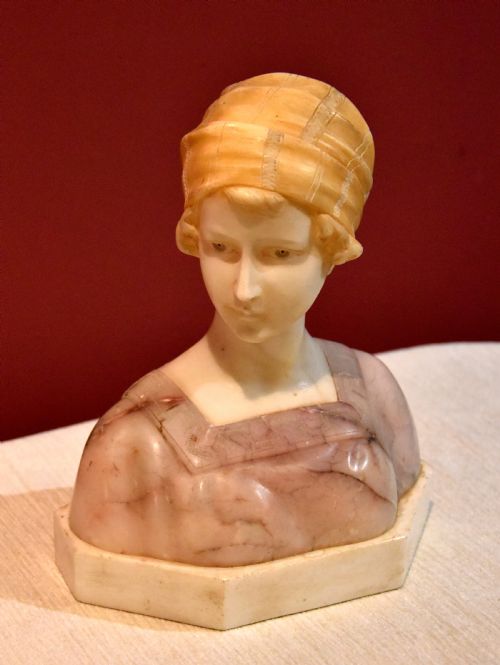
When you search for an art nouveau stone figure, you encounter carved representations of women created during the late nineteenth and early twentieth centuries. These works span distinct aesthetic movements including Arts and Crafts, Belle Epoque, and French Classical Revival. The forms range from portrait busts of young ladies and girls to reclining nudes and full statues of females holding wheatsheafs or playing lyres.
Alabaster and marble dominate the selection on this page, often worked by Italian and French sculptors. Pieces date from the eighteen nineties through the nineteen tens, reflecting the shift toward sinuous curves and organic motifs. Alongside larger sculptures, the category includes figural rings incorporating gemstones like aquamarine and diamond.
Makers recorded in the titles include Guglielmo Pugi, Auguste Henri Carli, Fritz Kochendorfer, R. Lusili, A. Gamay, and Auguste Moreau. These artists utilised soft stone to render flowing hair, draped garments, and serene facial expressions characteristic of the period. Each sculpture records the hand of the carver translating the philosophies of the era into solid material.
How they were made
Sculptors carved these pieces primarily from alabaster and white marble, including Carrara marble. Alabaster offered a fine, translucent quality that allowed artists to suggest the softness of skin and fabric. Craftsmen worked the stone with chisels, rasps, and abrasive powders to achieve smooth surfaces and varied textures across hair, drapery, and flesh.
Certain works combine multiple materials, such as alabaster and marble paired together, or stone mounted with gold and gemstones like diamond and aquamarine in smaller jewellery items. Italian and French workshops employed skilled carving techniques to create two-tone effects and intricate details like musical instruments or wheatsheafs.
Listings feature works created between eighteen ninety and nineteen ten, spanning Art Nouveau, Arts and Crafts, and French Classical Revival styles.
What varies in quality
The distinction between standard works and exceptional pieces lies in the sensitivity of the carving and the nuance of the expression. Master carvers like Pugi or Moreau achieved a lifelike fluidity in hair and drapery that lesser artisans missed. The handling of the stone's translucency and the crispness of signature engravings separate mass production from superior sculptural achievement.
Proportion and composition also dictate standing within the range. Pieces that integrate complex poses, such as reclining nudes or figures standing in pools, demand advanced technical skill compared to straightforward portrait busts. The choice of unblemished stone without intrusive natural flaws elevates the visual impact of the finished sculpture.
Auguste Henri Carli·Fritz Kochendorfer·Auguste Moreau
The Art Nouveau Stone Figure Glossary
- Alabaster
- A soft, fine-grained stone prized for its translucency and ease of carving. Sculptors utilised it extensively for nineteenth-century portrait busts and figures.
- Carrara marble
- A type of white or blue-grey marble quarried in Italy, known for its uniform grain. It provided a durable medium for classical revival and turn-of-the-century portraiture.
- Figural
- Incorporating human or animal forms into the design of an object. This term applies equally to freestanding sculptures and decorative rings.
- Belle Epoque
- A period of French history spanning the late nineteenth century to the First World War, characterised by optimism and artistic innovation. The style influences many figurative carvings of the era.
- Arts and Crafts
- A design movement advocating traditional craftsmanship and simple forms. It runs parallel to the stylistic developments seen in early stone sculptures.
Art Nouveau Stone Figure: Frequently Asked Questions
How do I clean alabaster figures?
Dust alabaster gently with a dry, soft brush or microfiber cloth. Avoid using water, soap, or chemical cleaners, as moisture damages the porous surface of the stone.
Keep these sculptures away from direct sunlight and humid environments to preserve their delicate finish and prevent discoloration over time.
Where should I display a stone bust?
Place stone busts on sturdy pedestals, heavy wooden sideboards, or mantelpieces where they receive stable support and adequate indirect lighting. Ensure the surface is level to prevent any risk of tipping.
Position the piece away from high-traffic walkways to protect delicate protruding elements like fingers or carved drapery from accidental knocks.
How do I identify the period?
Examine the stylistic cues, such as the sinuous curves of Art Nouveau or the classical restraint of the nineteenth-century revival styles. Signatures carved into the base often point to active workshop dates.
Look at the treatment of the hair and clothing, which shifts from Victorian formality in the eighteen nineties to more fluid, naturalistic forms by nineteen ten.
What is the difference between marble and alabaster?
Marble is a hard metamorphic rock formed from limestone, offering high durability and a crystalline structure. Alabaster is a softer mineral that allows for greater translucency and finer detail work.
Alabaster scratches more easily than marble and is sensitive to moisture, making it best suited for indoor display away from damp areas.