




Antique Alabaster Statuette
These antique alabaster statuette finds bring classical presence and fine carving into a room, offering the tactile weight of stone shaped by hand.
Antique Alabaster Statuette
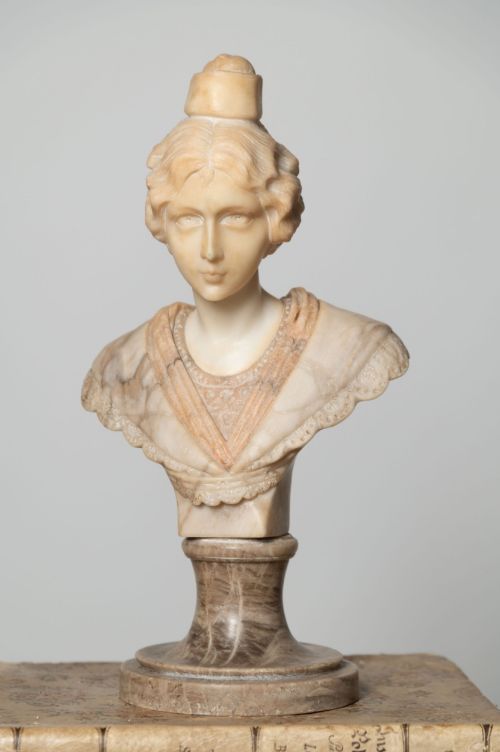
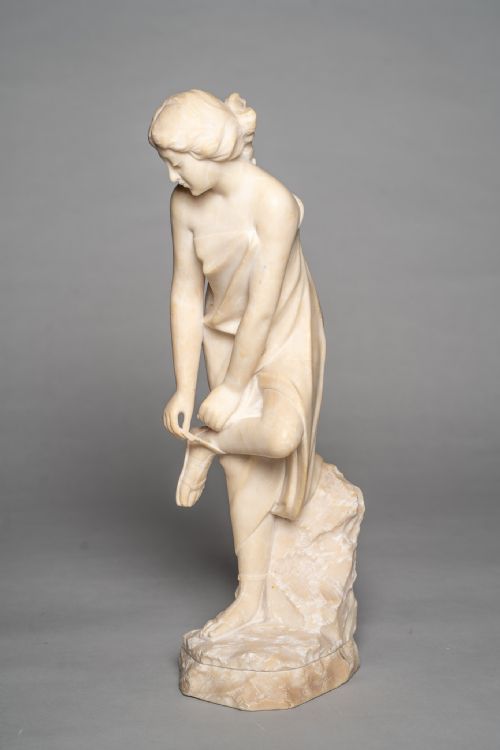
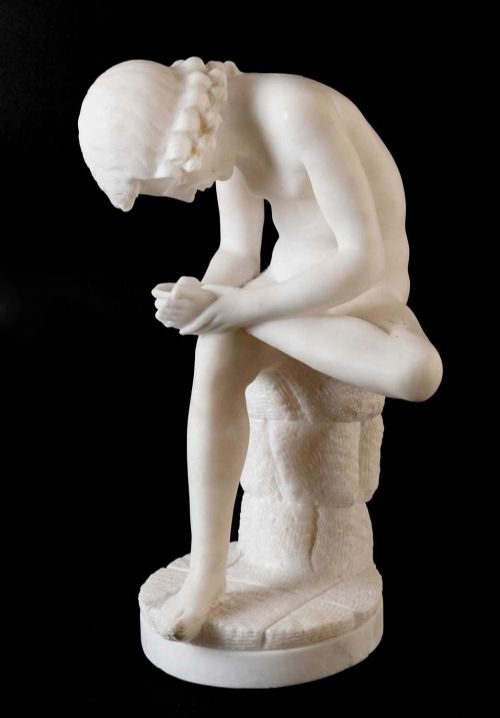
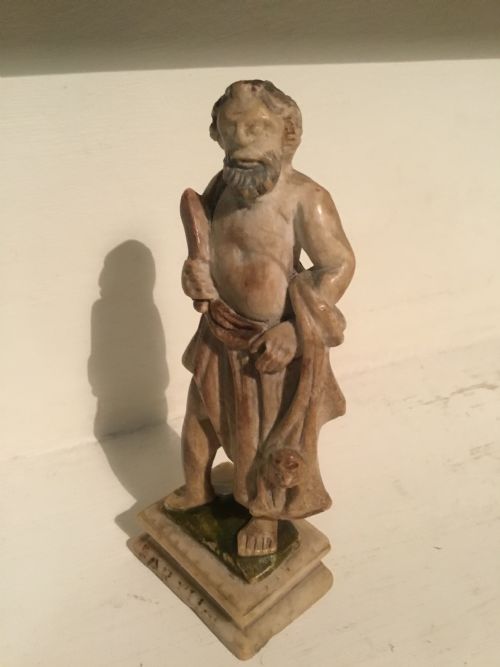
An antique alabaster statuette represents a sculpted figure carved from fine-grained stone, ranging from small cabinet busts to more substantial female figures and classical subjects. When searching for an antique alabaster statuette, a buyer encounters works spanning the nineteenth and early twentieth centuries, alongside earlier Renaissance-inspired pieces. These sculptures frequently depict mythological or allegorical figures, young women bathing, and classical philosophers.
The pieces appearing here lean heavily towards Neoclassical, Art Nouveau, and Art Deco styles, originating from French, Italian, and British workshops. Makers utilised softer stones and marbles alike, mounting some figures on contrasting bases while carving others entirely from a single block. The scale varies from intimate desk ornaments to large gallery sculptures.
How they were made
Makers often combined materials, pairing carved alabaster figures with heavier marble plinths or mounting spelter figural work onto polished stone bases. Surface finishing involved polishing to varying degrees of matte or gloss, highlighting the natural veining inherent in the stone.
Listings span periods from the seventeenth century through to the Art Deco era of the 1930s.
What varies in quality
Quality in these carvings rests entirely upon the sensitivity of the hand that shaped the stone, distinguishing a mechanical reproduction from an expressive portrait. Superior pieces capture the subtle translucency of the material, rendering flesh and fabric with convincing fluidity.
The distinction also lies in the crispness of the undercutting and the finish applied to recessed areas where rough tool marks might otherwise remain. Signatures by known sculptors elevate certain works, while anonymous studio pieces rely solely on their sculptural merit and stone quality.
A.Gamay·Fritz Kochendorfer
The Antique Alabaster Statuette Glossary
- Alabaster
- A fine-grained, translucent stone prized for centuries by sculptors aiming to mimic the softness of human skin. It is softer than marble and susceptible to moisture.
- Neoclassical
- A style drawing inspiration from the classical art and culture of ancient Greece and Rome. It emphasises balance, restraint, and heroic or mythological subject matter.
- Spelter
- A zinc alloy commonly utilised as a cheaper alternative to bronze for figural casting during the nineteenth and early twentieth centuries. It is frequently patinated to resemble bronze.
- Undercutting
- A sculptural technique where material is removed beneath a projection to create deep shadows and a sense of three-dimensional detachment. It demands great skill in brittle stones.
- Grand Tour
- A cultural journey undertaken by wealthy young Europeans through France and Italy to absorb classical antiquity. Travellers frequently purchased small statuettes as souvenirs.
Antique Alabaster Statuette: Frequently Asked Questions
Are these figures solid stone?
Most pieces listed are carved directly from solid blocks of alabaster or marble, displaying natural veining throughout. Some later twentieth-century or mixed-media compositions incorporate stone bases supporting metal figures.
Examining the underside or unpolished recesses often reveals the uniform crystalline structure of the mineral. Heavier statues usually combine a stone figure with a matching or contrasting plinth.
Where were these sculptures made?
Production centred primarily in European workshops, with Italian and French studios dominating the export market during the nineteenth century. Grand Tour travellers frequently bought these carvings directly in Rome or Florence.
British and German sculptors also produced notable figural works, often exhibiting them in academies or supplying domestic drawing rooms with classical subjects.
How do I date an alabaster statuette?
Dating relies heavily on stylistic markers, costume details, and the prevailing aesthetic movements of the period, such as Art Nouveau curves or Neoclassical rigidity. Tool marks left on the underside can also indicate whether the carving predates modern mechanical saws.
Signatures or foundry marks help narrow the timeline when associated with recorded artists. Comparing the patina and wear patterns with documented examples from the same decade provides further clarity.