


Cream Ceramic Statuette
These cream ceramic statuette selections bring nineteenth-century and twentieth-century sculptural charm into your home through finely modelled porcelain, parian, and earthenware figures.
Cream Ceramic Statuette
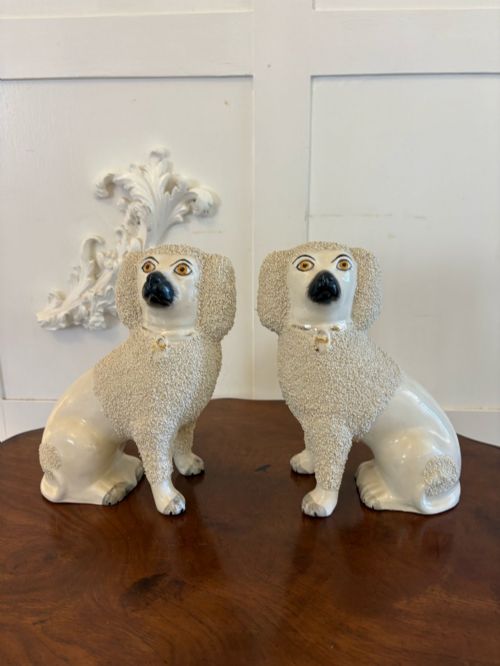
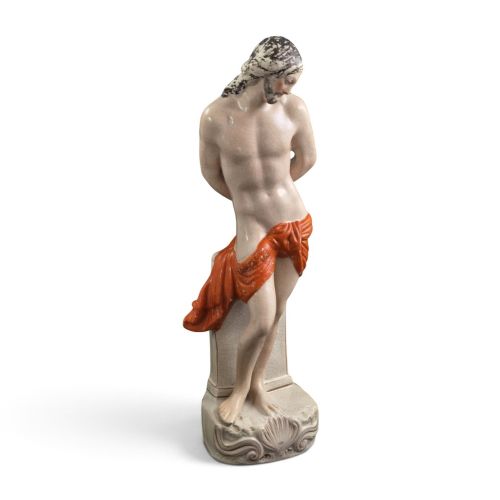
A cream ceramic statuette represents a diverse array of nineteenth-century and twentieth-century decorative figures, ranging from Victorian poodles and classical maidens to Art Deco nudes. These pieces capture historical taste through various ceramic bodies, displaying subjects from religious scenes to pastoral pairings and exotic character studies.
You will encounter pieces originating from major British and continental potteries, spanning periods from mid-Victorian production to the 1930s. The selection on this page demonstrates the wide domestic appeal of small-scale sculpture across successive decades of design innovation.
Materials and Manufacture
Makers utilised porcelain, parian ware, and earthenware, often applying delicate glazes, enamel touches, and occasional gilding or gold leaf details. Bisque porcelain provided a smooth, unglazed matte surface suited to classical forms, while gloss glazes protected more functional or brightly coloured earthenwares.
Modelling techniques required skilled hands to shape complex figural compositions before kiln firing. Factories such as Royal Worcester and Royal Dux employed specialised modellers to achieve the intricate drapery, facial expressions, and architectural bases seen across these statuettes.
Assessing Craftsmanship
The complexity of the subject matter and the ambition of the pose influence the overall character of the statuette. Well-executed bases and balanced proportions indicate greater care during the initial design and firing stages.
Royal Worcester·Royal Dux·James Hadley·B. Rezl
The Cream Ceramic Statuette Glossary
- Bisque Porcelain
- Unglazed white porcelain fired to a matte, porous finish that resembles marble and highlights sculptural detail.
- Parian Ware
- A fine-grained biscuit porcelain developed in the nineteenth century to imitate carved marble for classical figures.
- Earthenware
- Porous pottery fired at lower temperatures, requiring a glazed surface to become impervious to liquids.
- Gilding
- The application of gold leaf or gold powder to ceramic surfaces for decorative emphasis.
- Enamel
- Opaque vitreous material fused to pottery during firing to add permanent surface colour.
Cream Ceramic Statuette: Frequently Asked Questions
How do I clean my ceramic statuette?
Dust the surface gently using a soft, dry brush to prevent accumulation in intricate crevices. Avoid harsh chemical cleaners that might damage delicate enamel or gilding.
For unglazed bisque porcelain, use a slightly damp cloth with mild soap only if necessary, ensuring the piece dries thoroughly afterwards.
Are these figures glazed?
Finishes vary considerably depending on the material and period of manufacture. Some pieces utilise traditional glossy glazes over earthenware or porcelain bodies, while others remain entirely unglazed.
Unglazed surfaces, such as bisque porcelain and parian ware, offer a matte texture intended to highlight sculptural contours.
How can I tell the period of a statuette?
Dating relies on stylistic clues such as Victorian classical revival motifs, Art Nouveau curves, or geometric Art Deco forms. Maker marks, registry numbers, and specific ceramic bodies like parian ware also provide chronological context.
Examining the base and the method of manufacture helps align the piece with documented production eras.