
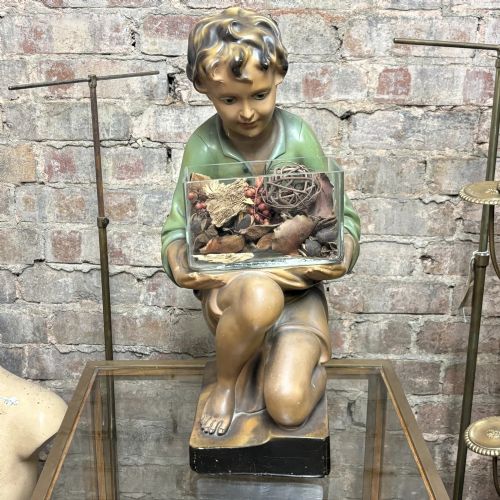


Art Deco Figural Statue
An art deco figural statue brings sculptural elegance and distinct period character to a room.
Art Deco Figural Statue
An art deco figural statue embodies the distinctive sculptural forms of the early twentieth century, capturing human figures, dancers, and animals with stylised dynamism. When exploring this selection, buyers encounter pieces ranging from freestanding bronzes and terracotta works to functional items like table lamps and table lighters incorporating statuary.
The objects span from the nineteen-tens through the nineteen-forties, with a strong concentration of pieces originating from the nineteen-twenties and nineteen-thirties. Forms vary from single female figures and dancers to groups such as mother and child, often mounted on bases of marble, onyx, or alabaster.
Materials and construction
Casting and carving define these pieces, utilising durable metals such as bronze and spelter alongside patinated metal finishes. Spelter appears frequently as an accessible alternative to bronze, often paired with stone bases like onyx or alabaster to anchor the composition.
Makers also employed terracotta, porcelain, glass, and carved alabaster to achieve varied textures and translucency in figural forms. Surface treatment involves hand painting or patination to accentuate the linear details characteristic of the style.
Sculptures capture unexpected companions, pairing elegant dancers with frogs, clowns, and faithful dogs.
Judging quality in figural works
The quality of the mounting and the choice of base material contribute significantly to a piece's integrity. Heavier stones like marble and onyx provide substantial weight and balance that enhance the overall presence of the statuette.
P. Sega·Alexandre Kelety·C Neuhaus·Bruno Zach·Marion Willis Stanfield
The Art Deco Figural Statue Glossary
- Spelter
- A zinc alloy commonly utilised as a cost-effective substitute for bronze in period statuary. It takes patination well to simulate heavier metal finishes.
- Patinated metal
- Metal treated with chemical solutions to produce a specific surface colour or aged appearance. This finish protects the underlying material while defining the sculptural contours.
- Alabaster
- A fine-grained, translucent stone used for carving statues and lamp bases. Its soft nature allows for delicate sculptural detail.
- Candelabra
- A branched candlestick holder designed to support multiple candles. In this category, such objects incorporate figural statuary into their structural design.
Art Deco Figural Statue: Frequently Asked Questions
What materials make up an art deco figural statue?
These works utilise a diverse range of materials, most notably bronze, spelter, terracotta, and carved alabaster. Many figures are mounted upon heavy bases fashioned from marble or onyx.
Additional elements include glass and hand-painted porcelain, particularly in pieces that serve a dual function as lamps or lighters.
How do I distinguish bronze from spelter pieces?
Bronze objects offer greater weight, durability, and a warm metallic resonance, whereas spelter is a softer zinc alloy that often relies on applied patination to mimic bronze. Examining the underside or areas of wear can reveal the lighter, greyish metal beneath a spelter finish.
Signatures and foundry marks are more commonly found cast directly into bronze editions, pointing to more careful production standards.
Where were these sculptures made?
The pieces originate from various European centres of decorative arts production during the early twentieth century. France and Italy are particularly prominent sources for figural castings and carved alabaster works.
English workshops and studios also contributed to the diverse array of lamps and decorative objects found within this period style.
How were functional figural items used?
Many figural pieces combined aesthetic display with practical utility in domestic interiors. Sculptural groups frequently incorporated fittings to function as table lamps, table lighters, inkwells, or bookends.
This integration allowed households to display modern artistic forms while serving everyday functional requirements on desks and mantelpieces.