


Mother and Child Sculpture
A mother and child sculpture captures domestic devotion and maternal bonds, rendered across centuries in bronze, marble, and terracotta.
Mother and Child Sculpture
When you search for mother and child sculpture, you encounter figures spanning the nineteenth century through the Art Deco era and mid twentieth century. These pieces range from classical bronzes and Grand Tour subjects to French nineteenth-century groups and tribal works.
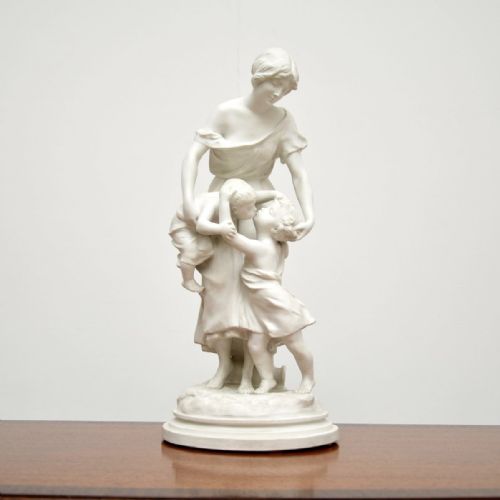
The versions most frequently met on this page include bronze figures, French bisque porcelain, and spelter castings. Formats vary from tabletop groups and statuettes to wall plaques and larger carved wooden or stone figures.
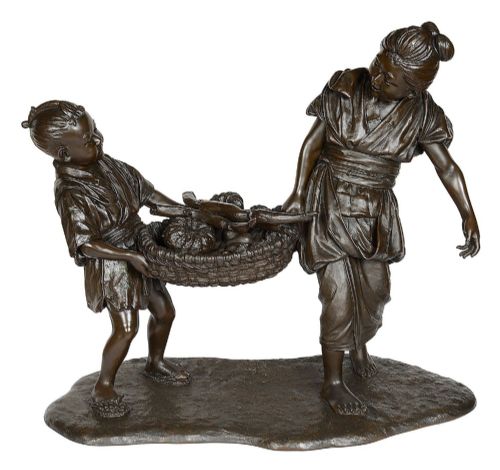
Origins stretch across European ateliers, including French and Austrian foundries, alongside Japanese bronzes and African tribal pieces. The stylistic range covers Realism, Neoclassical Revival, Art Nouveau, and Art Deco.
Materials and construction methods
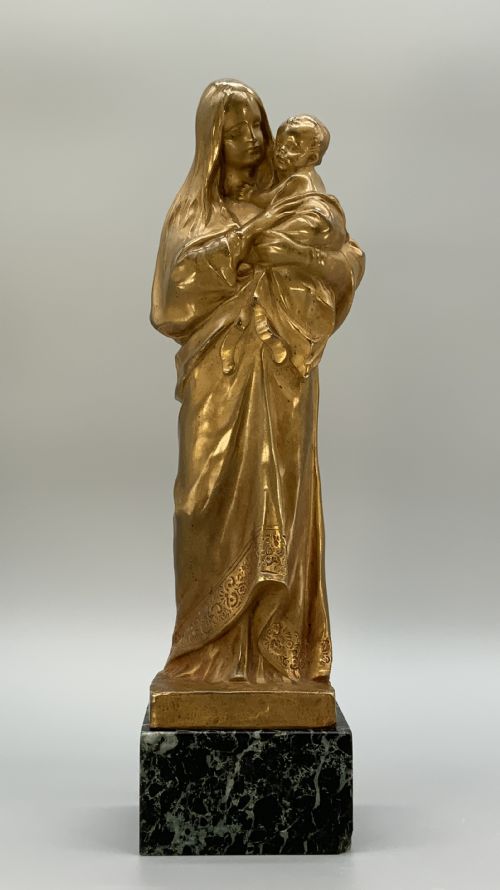
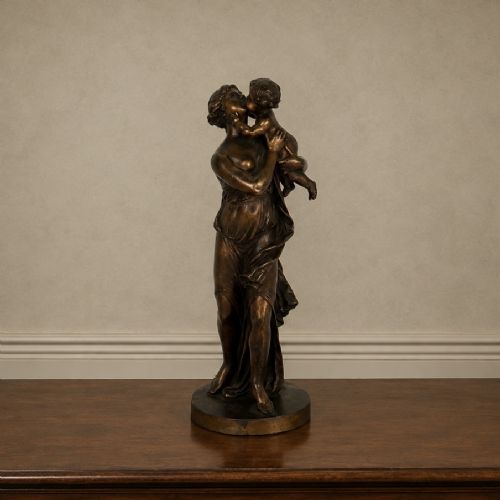
Foundries utilised traditional lost-wax casting or sand casting for metal pieces, resulting in substantial bronze and gilt bronze groups. Patination applied to the metal surface creates dark patinas or silvered finishes.
Ceramic pieces rely on bisque porcelain or terracotta, fired and finished with minimal glaze to highlight sculptural detail. Carved figures demonstrate direct reduction from wood, marble, and onyx.
A horse calmly drinks water while a mother and child observe the scene nearby.
Assessing quality in sculptural groups
The richness of the patination and the integrity of the base material distinguish superior works from standard commercial foundry output. Signed pieces by recorded makers generally exhibit greater anatomical precision and decorative finish.
Hans Müller·Antonio Merente·Luca Madrassi·P. Sega·Auguste Moreau·Lucien Madrassi·Xavier Raphanel·Carrier·B. Rezl·Daum
The Mother and Child Sculpture Glossary
- Patina
- The surface coloration and texture developed naturally over time or applied chemically by the foundry. A deep, undisturbed dark patina often indicates age and proper maintenance.
- Spelter
- A zinc-based alloy commonly utilised as a less expensive alternative to bronze during the late nineteenth and early twentieth centuries. It frequently received a bronze-like coating to imitate heavier metal.
- Bisque porcelain
- Unglazed porcelain that presents a matte, marble-like surface texture. It was favoured for nineteenth-century figurative works to show delicate flesh tones and facial expressions.
- Lost-wax casting
- A metalworking method where a molten metal is poured into a mould that has been created by means of a wax model. This technique allows for intricate detail and undercut forms.
- Grand Tour
- The traditional trip of Europe undertaken by upper-class European young men of means in the eighteenth and nineteenth centuries. Souvenirs included small classical bronzes and architectural models.
Mother and Child Sculpture: Frequently Asked Questions
How do I identify bronze from spelter?
Bronze is heavier, colder to the touch, and magnetic properties differ, though a magnet alone is not definitive. Examining the underside often reveals the lighter, greyish metal of spelter beneath a worn patination.
Foundry marks and chiselling detail also help distinguish a genuine bronze casting from a softer spelter replica.
Where should I display a heavy sculpture?
Heavy bronze and marble pieces require a stable, level surface capable of supporting significant weight. A sturdy sideboard, console table, or dedicated column works best.
Keep pieces away from direct heat sources and strong sunlight to protect patinas and delicate wooden or ceramic surfaces.
How do I clean an antique bronze?
Dust gently with a soft, dry microfibre cloth to remove surface particles. Avoid chemical cleaners, water, or brass polishes which strip the original patina.
Professional conservation wax can be applied very sparingly if protection against atmospheric moisture is required.
What is Art Deco style in sculpture?
Art Deco sculpture emerged during the interwar period, characterised by streamlined forms, stylised drapery, and geometric simplification. Figures often display dynamic poses and modern material combinations.
Works from this era frequently utilise spelter or silvered bronze alongside contrasting marble bases.