
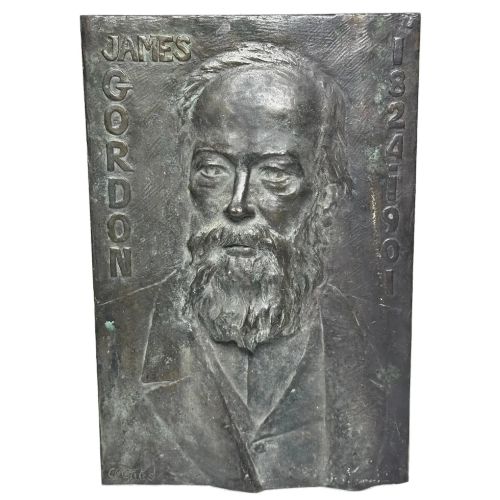

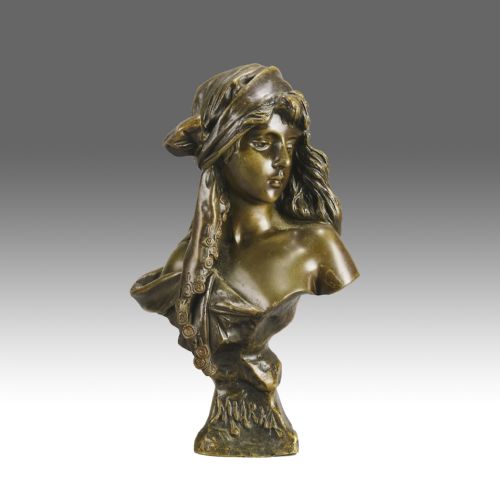
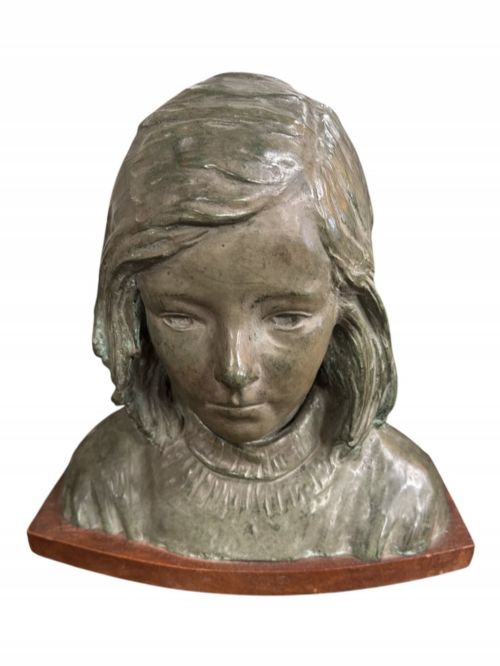
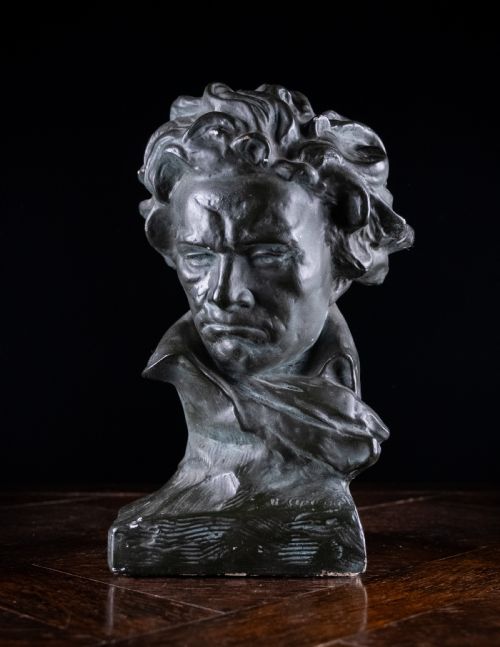


Cast Bronze Portrait Bust
A cast bronze portrait bust captures a specific human likeness in metal, bringing immediate character and historical weight to a room.
Cast Bronze Portrait Bust
When searching for a cast bronze portrait bust, you encounter sculptural likenesses of historical figures, literary icons, and unidentified sitters created across the nineteenth and twentieth centuries. These pieces emerge from periods spanning the Georgian era, Victorian times, Edwardian years, and the Art Deco and Art Nouveau movements. The most frequent examples on this page are French and British works from the late nineteenth century, often cast in patinated bronze and mounted on marble bases.
The subjects range from classical poets like Dante and Lord Byron to young women styled with flowing hair typical of Art Nouveau designs. Alongside solid bronze, the listings include variants in cast metal, bronzed metal, and patinated plaster. Forms extend from substantial freestanding sculptures down to functional bookends and wall-mounted relief plaques.
How they were made
The primary material across these works is bronze, often shaped through traditional casting methods and finished with a distinct patina. Many sculptures combine this metalwork with heavy marble bases that provide structural stability and visual contrast. Makers also utilised brass, cast metal, and painted or patinated plaster to achieve similar sculptural effects.
Composers, poets, and historical figures populate these metal studies, allowing Ludwig van Beethoven and William Shakespeare to share shelf space.
What varies in quality
The distinction between ordinary and exceptional pieces rests in the sharpness of the casting and the sensitivity of the modelling. Superior works retain crisp details in the hair, eyes, and facial expressions, whereas lesser examples lose definition in the finishing stages. The quality of the underlying metal and the richness of the applied patina also determine the visual depth of the bust.
Association with a documented sculptor elevates a piece, as seen in signed works by named artists. Furthermore, the selection of supporting materials, such as a heavy, well-fitted marble plinth rather than a simple wooden base, marks the difference between standard foundry output and high-grade sculpture.
Emmanuel Villanis·Georges-Charles Coudray·Sir Thomas Brock·Alajos Strobl·Georges Van Der Straeten·Leonhard Posch·J C De Blezer·Emile Laporte·Antonio Merente
The Cast Bronze Portrait Bust Glossary
- Patina
- A thin surface layer that forms naturally on bronze through oxidation or is applied artificially by the foundry. This chemical treatment alters the colour of the metal, ranging from deep brown to green.
- Plinth
- A heavy block or base upon which the portrait bust rests. These are frequently fashioned from black or veined marble to support the weight of the metal.
- Relief
- A sculptural technique where the portrait figure projects from a flat background rather than existing in the round. These are often mounted as plaques.
- Cast metal
- A generic term for non-precious alloy compositions poured into moulds. It offers a heavier, more rigid alternative to hollow bronze casting.
- Art Nouveau
- A decorative style prevalent around nineteen hundred characterised by fluid, organic lines. Busts from this movement frequently incorporate flowing hair and natural motifs.
Cast Bronze Portrait Bust: Frequently Asked Questions
How do I clean a bronze bust?
Dust the surface gently with a soft, dry cloth to remove accumulated particles. Avoid harsh chemical cleaners that can strip away the original patina.
Apply a very thin layer of microcrystalline wax if the metal requires protection, but leave aged patinas undisturbed.
What is the difference between bronze and bronzed metal?
True bronze is an alloy primarily composed of copper and tin, valued for its durability and capacity for fine casting detail. Bronzed metal typically refers to an iron, zinc, or brass base given a surface coating to mimic the appearance of solid bronze.
Checking the weight, magnetism, and underside of the piece usually reveals the true composition of the material.
Are these busts solid metal?
Most traditional portrait busts are cast hollow to save material and reduce overall weight. The walls of the metal retain an even thickness established during the foundry process.
Smaller pieces like bookends or relief plaques may be solid cast due to their compact dimensions.
How do I identify the period of a bust?
Examine the style of the clothing, hairstyle, and any lettering on the base. Art Nouveau pieces from eighteen ninety to nineteen hundred feature flowing organic lines, whereas Victorian works often present formal attire and strict realism.
Foundry marks and signatures provide additional clues to the active dates of the maker.