

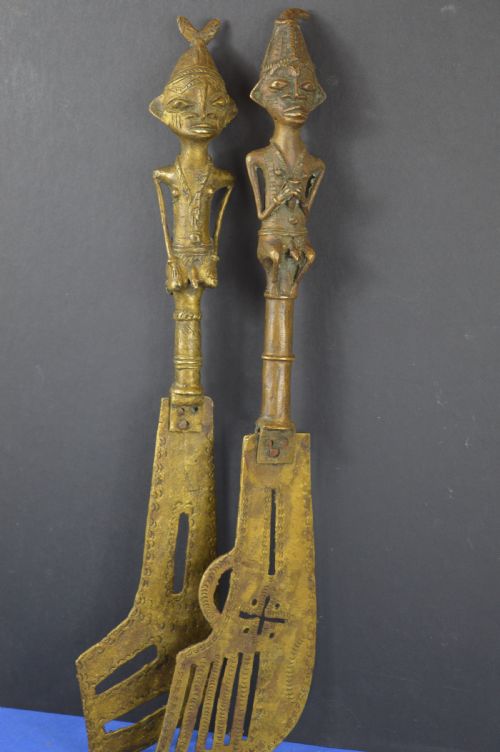


African Bronze Sculpture
African bronze sculpture brings remarkable presence to a room, offering expressive figures and powerful forms cast across centuries.
African Bronze Sculpture
When you search for african bronze sculpture, you encounter substantial figures and ritual objects originating primarily from West Africa. The selections here include striking busts, standing warriors, equestrian statues, and ceremonial staffs.
You are most likely to meet pieces produced during the early to mid-twentieth century, alongside nineteenth-century examples. These works manifest distinct regional styles such as Yoruba tribal art and Benin traditions.
The sculptural forms range from Janus figures and maternity statues to large king statues and masks. Each piece carries cultural significance and demonstrates remarkable sculptural ambition.
Materials and construction
These pieces are cast primarily in bronze, brass, and copper alloy, sometimes accompanied by elements of wood, leather, and fibre. The primary metal casting relies on traditional techniques that yield heavy, solid forms.
Selected pieces incorporate additional surface treatments, such as remnants of gilding on alloy figures. The combination of durable metals with organic materials like stone or wood creates textural contrast.
Judging quality in the cast
Weight and presence distinguish the finest examples, particularly among large statues and busts. The handling of the metal surface and the integrity of the casting matter more than mere scale.
The African Bronze Sculpture Glossary
- Bronze
- An alloy consisting primarily of copper, traditionally combined with tin. It forms the durable foundation for many significant West African sculptures.
- Copper alloy
- A metal mixture containing copper alongside other elements such as zinc or tin. This term describes various cast metal compositions found in traditional tribal works.
- Janus figure
- A sculptural representation featuring two faces looking in opposite directions. These figures often appear on ritual staffs and devotional objects.
- Tribal art
- Artistic production originating from indigenous communities, particularly across Africa. This category encompasses ceremonial figures, masks, and status objects.
African Bronze Sculpture: Frequently Asked Questions
What is an African bronze sculpture?
These works are cast metal figures, busts, and ceremonial staffs originating from West African traditions. They encompass historical pieces made from bronze, brass, and copper alloy.
Many depict rulers, warriors, or spiritual figures with distinct regional characteristics. Their creation spans from the nineteenth century through the mid-twentieth century.
How were these sculptures used?
Many of these pieces served ceremonial, ritual, or dynastic functions within their communities of origin. Staffs and statues often signified status, authority, or ancestral connection.
Others held specific symbolic roles in spiritual practices or court life. Their physical presence commanded respect during communal gatherings and ceremonies.
How do I display them at home?
Due to their substantial weight and striking presence, these sculptures require sturdy support and adequate space. Placing a large bust or standing warrior on a dedicated plinth allows the form to dominate the room.
Keep them away from direct heat sources and moisture to protect any secondary materials like wood or leather. Simple, uncluttered surroundings help highlight the metalwork.
How can I tell the periods apart?
Nineteenth-century examples often display specific patination and wear associated with prolonged ritual use. Twentieth-century pieces frequently exhibit larger scales and distinct modernist or traditional tribal styling.
Examining the casting technique and the composition of the metal alloy provides further clues to age. Stylistic conventions also shift between nineteenth-century works and mid-century productions.