


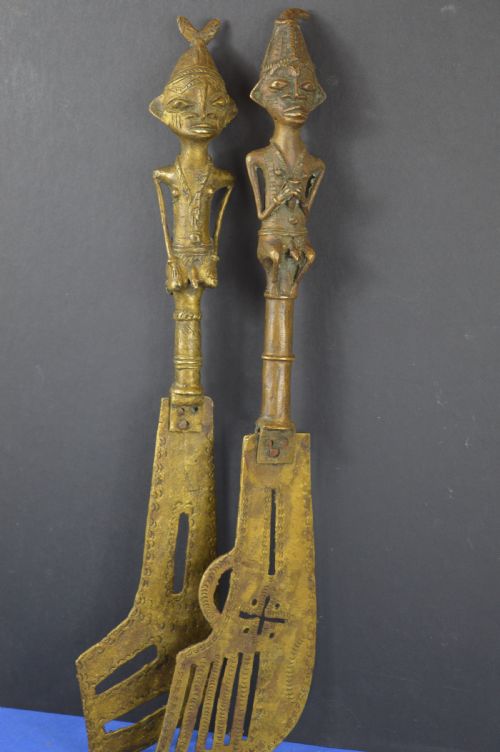


Bronze Tribal Sculpture
Bronze tribal sculpture brings together cast metal figures and ritual statuary from African, Indian, and American traditions spanning the Victorian era to the mid-twentieth century.
Bronze Tribal Sculpture
Bronze tribal sculpture encompasses figurative works, portrait busts, ceremonial staffs, and statues rooted in regional traditions. Buyers searching this phrase encounter substantial cast metal objects originating from West African kingdoms, Indian folk art, and Orientalist workshops.
Objects date from the nineteenth century through the 1950s, representing both traditional ceremonial items and later bronzes produced for collectors. These pieces vary widely in scale, from intimate ritual objects to heavy statues exceeding seventy centimetres in height.
What varies in quality
The integrity of the patina and the handling of secondary materials like wood or pigment distinguish finer pieces from simpler commercial output. Heavier castings and substantial scale often correlate with greater sculptural presence and ambition.
Listings feature periods spanning from the Victorian era through 1950, utilising bronze, brass, copper alloy, wood, and cold-painted pigment.
Franz Bergman
The Bronze Tribal Sculpture Glossary
- Lost-wax casting
- A metalworking method where a molten alloy is poured into a mould created by replacing a wax model. This technique allows for intricate detail in complex sculptural forms.
- Patina
- The surface coloration and texture developed through age, handling, or intentional chemical treatment of bronze. It provides a visual record of the metal's history.
- Janus figure
- A sculpture featuring two faces looking in opposite directions. These figures often hold symbolic or ritual significance in tribal art.
- Cold-painted pigment
- Colour applied to metal surfaces after casting, without subsequent firing. This method appears on Orientalist bronzes and specific sculptural works.
Bronze Tribal Sculpture: Frequently Asked Questions
How old are these sculptures?
The pieces span from the nineteenth century through the mid-twentieth century, encompassing Victorian works and mid-century productions.
Dating relies on stylistic evidence, casting techniques, and documented periods associated with specific regional traditions.
Where do these bronzes originate?
Origin points include West African kingdoms such as Benin, Yoruba, and Ashanti, alongside Indian folk art and European foundries.
Each region utilises distinct iconographic traditions and casting methods that define the character of the sculpture.
What materials are used?
The primary material is bronze, alongside brass and copper alloy.
Some pieces incorporate supplementary elements like wood, leather, fibre, and cold-painted pigment to complete the form.
How should I display them?
Due to their substantial weight and size, these sculptures require sturdy support surfaces such as heavy tables or dedicated plinths.
Stable indoor environments away from direct moisture help preserve the integrity of the metal and any applied pigments.