

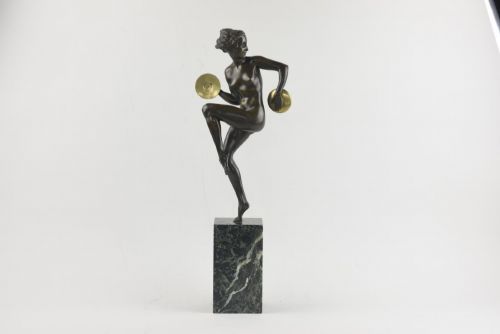
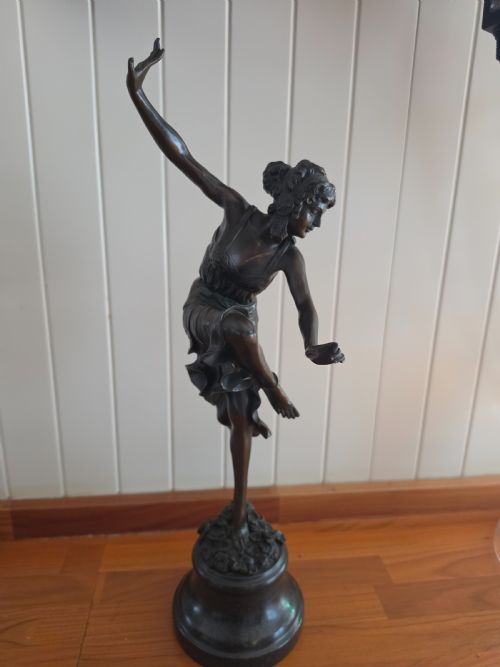



Classical Art Deco Figurine
A classical art deco figurine captures the stylised movement and mythological grace of the early twentieth century, offering a striking display of sculptural craft.
Classical Art Deco Figurine
A classical art deco figurine embodies the sculptural forms of the early twentieth century, drawing heavily on French modernist and neoclassical traditions. These pieces frequently depict dancers, mythological figures, and animals such as the dancer of thyrsus or Europa and the bull.
The objects appearing here span from the Edwardian era through the nineteen-twenties and nineteen-thirties. Sculptures and table lamps form the primary selections on this page, integrating functional lighting with figural art.
Originating predominantly from French workshops, these works merge ancient motifs with modern geometric styling. Buyers encounter figures cast in metal or carved in glass, often mounted upon substantial stone bases.
How they were made
Makers utilised casting techniques to shape bronze and brass into dynamic figural poses. Surfaces were frequently cold painted, silvered, or patinated to enhance the visual depth of the metal.
Alternative media such as frosted glass and plaster were also employed, with Baccarat producing translucent lamp components. These delicate elements required skilled moulding to achieve the frosted texture characteristic of the period.
Marble served as a heavy foundational base for many metal sculptures, providing both structural stability and a contrasting texture to the polished or patinated figures above.
Aristide Maillol famously inspired sculptors to capture the quiet gravity of a kneeling girl in bronze.
What varies in quality
The refinement of the casting and the crispness of the chisel work distinguish superior examples from standard production. Artisans who paid meticulous attention to anatomical detail and facial expression achieved a greater sense of life in the finished subject.
The choice and finish of the base material contribute significantly to the overall presence of the piece. High grade veined marble paired with expertly applied patination or cold paint elevates the sophistication of the sculpture.
Pierre le Faguays·Aurore Onu·C J R Colinet·Aristide Maillol·Eugène Désiré Piron·Albert Hussmann·Claire Colinet·R Henn·B Rezl·Mario Korbel
The Classical Art Deco Figurine Glossary
- Cold Painted
- A method where paint is applied to a bronze object without being fired at high temperatures. This technique allows for intricate polychrome details on garments and hair.
- Patination
- The chemical treatment applied to metal surfaces to alter their colour and texture. It protects the bronze while giving it an aged or deliberate finish.
- Frosted Glass
- Glass that has been treated to scatter light, creating a translucent appearance. Baccarat utilised this technique extensively for decorative lamps and figurines.
- Spelter
- A zinc alloy frequently used as a cost-effective substitute for bronze. It requires careful finishing to simulate the weight and appearance of more precious metals.
Classical Art Deco Figurine: Frequently Asked Questions
What is a classical art deco figurine?
A classical art deco figurine is a sculptural work from the early twentieth century that combines ancient mythological or human forms with modern design aesthetics. These pieces often portray dancers or historical figures in stylised poses.
They reflect the artistic output of European workshops during the nineteen-twenties and nineteen-thirties, executed primarily in bronze, glass, and plaster.
How were these figures used?
These figures served primarily as decorative ornaments for mantelpieces, sideboards, and architectural interiors. Some examples incorporated functional elements, doubling as table lamps.
Their purpose was to display sophisticated taste and modern artistic flair within a domestic setting.
How do I live with bronze and glass?
Bronze sculptures require minimal upkeep, needing only occasional dusting with a dry cloth to preserve their patinated surfaces. Avoid using harsh chemical cleaners that might strip the original finish.
Frosted glass lamps should be handled with care during cleaning, keeping them away from areas prone to heavy vibrations or knocks.
How can I tell the period apart?
Dating relies on stylistic markers and material combinations typical of specific decades between nineteen-ten and nineteen-thirty. Edwardian and early pieces often show softer transitional curves, whereas nineteen-thirty works embrace sharper geometric lines.
Signatures from recorded artists and foundry marks also assist in placing the creation within its proper era.