




1920s Ceramic Figure
A 1920s ceramic figure brings unmistakable period character to a room, captured in glazed earthenware, porcelain, and terracotta.
1920s Ceramic Figure
A 1920s ceramic figure encompasses a diverse range of figurines, decorative objects, and sculptures produced during the early twentieth century. These works capture the artistic shifts of the era, spanning distinct aesthetic movements and international workshops.
Buyers encountering this selection will find examples originating from prominent European factories and English studios alike. The forms vary widely from domestic animals and botanical subjects to human figures reflecting contemporary style.
The periods represented stretch across the 1920s and 1930s, alongside pieces echoing Edwardian sensibilities. This creates a varied grouping where whimsical animal models sit alongside formal neoclassical studies.
How they were made
Makers utilised traditional ceramic bodies including porcelain, earthenware, and terracotta to form the core of each figure. These materials were shaped through moulding or studio modelling before undergoing high-temperature kiln firing.
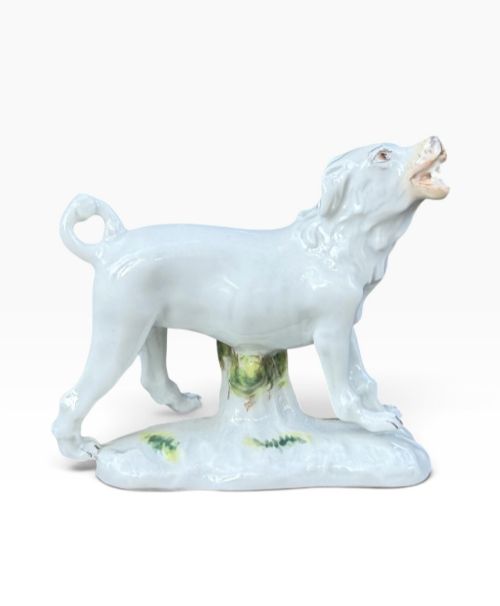
A porcelain dog immortalised in glaze sits patiently among the figures, waiting out the last century.
What varies in quality
The artistic ambition behind the model dictates much of its distinction, separating mass-produced decorative wares from finely modelled studio pieces. Sensitivity in the initial sculpting phase determines the liveliness and anatomical conviction of the final form.
Application of glaze and enamel dictates the visual richness of the surface. Precision in hand-painting and the successful control of kiln temperature during firing separate standard commercial output from exceptional factory and studio achievements.
Charles Vyse·Royal Worcester·Royal Dux·B. Rezl·Fasold and Stuach
The 1920s Ceramic Figure Glossary
- Terracotta
- A porous, brownish-red earthenware clay that is fired at a relatively low temperature. It serves as a primary material for sculptural models before receiving surface finishes.
- Enamel
- A durable, vitreous composition applied to ceramics as a liquid or powder and fired to fuse with the glaze. It provides vibrant, opaque colour on the surface of figurines.
- Gilt
- A thin layer of gold applied to the surface of ceramic pieces to add metallic highlights. This technique enhances decorative details on clothing, bases, or surrounding ornaments.
- Flapper
- A cultural archetype of the 1920s characterising independent young women of the period. Ceramic representations frequently capture the liberated fashion and dynamic posture associated with this style.
- Studio Pottery
- Ware produced by individual artists working independently from large industrial factories. These pieces often emphasise unique sculptural forms and experimental glazing techniques.
1920s Ceramic Figure: Frequently Asked Questions
What defines an art deco ceramic figure?
An art deco ceramic figure typically displays stylised geometric forms, streamlined silhouettes, and sharp contours typical of design from the interwar period. These pieces often portray dancers, fashionably dressed women, or dynamic animals.
Palettes range from stark monochrome finishes to vibrant enamels that accentuate the modernity of the subject matter. The overall aesthetic rejects Victorian clutter in favour of clean, rhythmic lines.
How do I identify studio pottery figurines?
Studio pottery figurines are distinguished by the individual touch of the maker, often showing hand-modelled characteristics rather than uniform factory casting. Artists working independently frequently employed unique glazes and terracotta bodies.
Signatures, monograms, or specific studio stamps incised into the clay base frequently help identify the maker. These pieces stand apart from mass-produced commercial output through their distinct sculptural interpretation.
Where were these ceramic figures made?
These ceramic figures originate from workshops, potteries, and major porcelain factories across Europe and Asia. German, English, French, and Japanese kilns all contributed distinct regional styles to the era's output.
European factories ranged from large commercial enterprises producing refined porcelain to smaller regional potteries working in terracotta. Japanese kilns contributed traditional forms alongside export wares tailored to international tastes.
How should I display ceramic figures safely?
Ceramic figures should be placed on stable, level surfaces away from heavy foot traffic or areas prone to sudden temperature fluctuations. Direct sunlight can fade delicate enamel colours over extended periods.
Displaying pieces within enclosed cabinets protects the glazed or painted surfaces from dust accumulation and accidental knocks. Gentle dusting with a soft, dry brush is sufficient for routine maintenance.