


Cream Anatolian Rug
A cream anatolian rug brings centuries of weaving heritage into a room, offering warm ivory grounds and intricate tribal motifs underfoot.
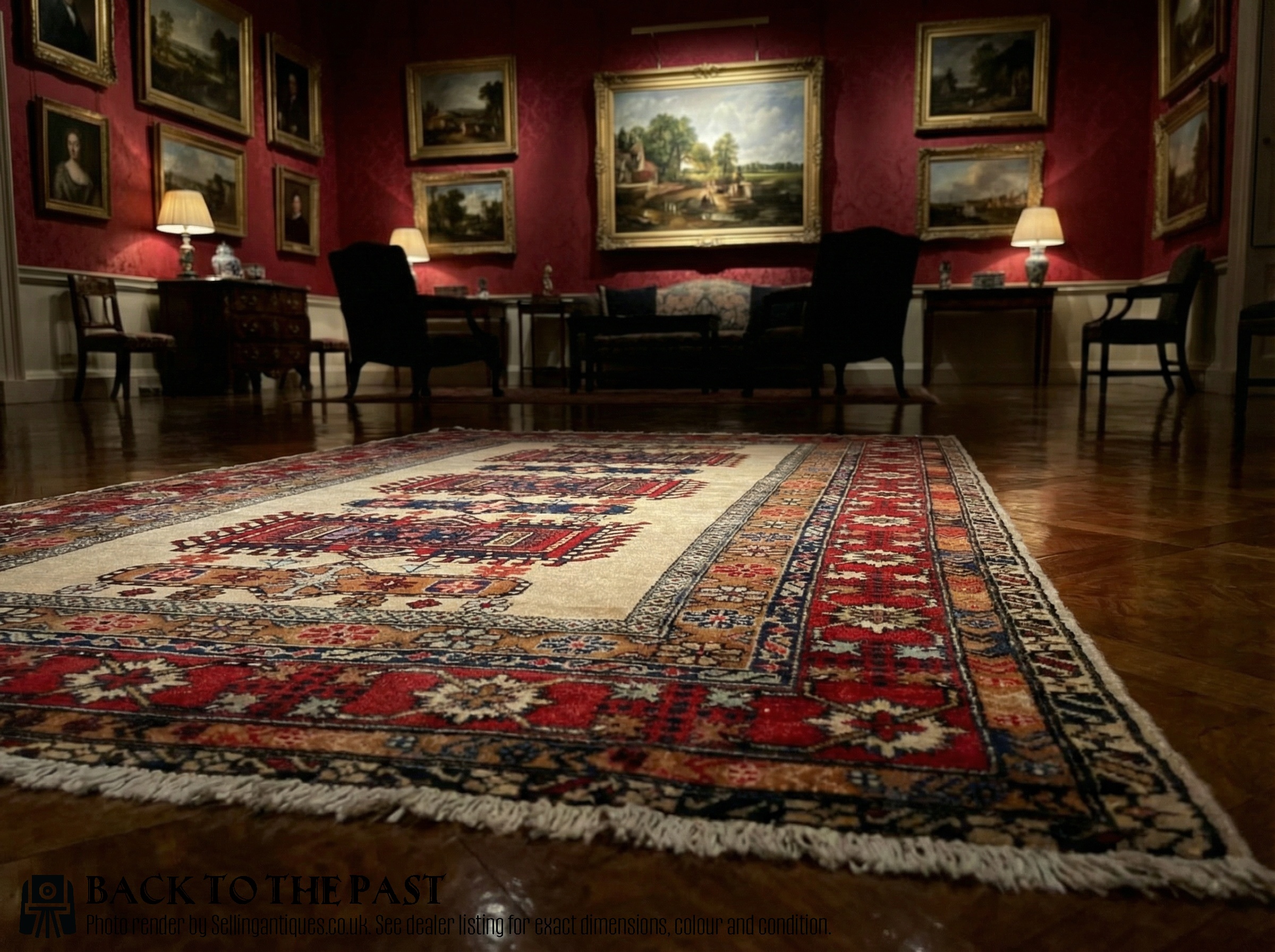
Cream Anatolian Rug
A cream anatolian rug forms part of a rich tradition of village and tribal weaving originating from Anatolia and the broader Ottoman region. These pieces frequently appear in forms such as prayer rugs, village carpets, and smaller scatter rugs dating from the nineteenth and early twentieth centuries.
The aesthetic centres on pale ivory or cream fields paired with geometric or floral borders, often executed in styles designated as Anatolian, Ottoman, or tribal. Examples span centuries of regional design, reflecting specific weaving centres like Milas, Konya, Ghiordes, and Ushak.
How they were made
Makers constructed these rugs using wool and hand-spun wool fibres for the pile, frequently paired with cotton foundations for structural stability. Weavers knotted the pile by hand, creating dense surfaces designed to withstand heavy daily use.
Natural dye traditions supplied the palette for the patterned fields and borders, yielding soft tones that mellow gracefully over decades. Artisans worked within distinct regional traditions, employing characteristic knot counts and loom techniques particular to specific towns and nomadic groups.
Current listings feature pieces dated across the nineteenth and early twentieth centuries, spanning periods from eighteen-hundred up to nineteen-thirty.
What varies in quality
The refinement of the weave heavily influences the character of each piece, with denser knotting allowing for sharper delineation of geometric and floral motifs. Finer examples display meticulous control over the layout of the ivory ground and the symmetry of the border guards.
The harmony and preservation of the palette also distinguish individual pieces, as does the clarity of design attributed to specific weaving regions like Ushak or Ghiordes. Older nineteenth-century examples often demonstrate superior material selection in the hand-spun wool compared to later twentieth-century productions.
The Cream Anatolian Rug Glossary
- Prayer rug
- A textile featuring a distinct mihrab or arch design indicating the direction of prayer. These formats often display concentrated symbolism in the field.
- Ivory ground
- The pale background colour dominating the central field of the rug. This light tone provides contrast for darker geometric or floral motifs.
- Hand-spun wool
- Yarn produced by twisting sheep fleece by hand rather than via industrial machinery. This material yields subtle variations in texture and dye absorption.
- Mihrab
- The arched niche design depicted on prayer rugs, representing the direction towards Mecca. It serves as the primary focal point of the central field.
Cream Anatolian Rug: Frequently Asked Questions
How do I date an old rug?
Dating relies on assessing the materials, dye types, and structural characteristics visible in the weave. Experts examine the handling of the hand-spun wool and the specific regional motifs.
Stylistic markers tied to nineteenth-century production centres also help narrow down the period of manufacture.
Where were these rugs made?
These textiles originate from various towns and nomadic regions across Anatolia and the Ottoman Empire. Specific areas like Milas, Konya, Ghiordes, and Ushak developed distinct local styles.
Village weavers and tribal groups each contributed their own traditional patterns to the regional corpus.
What materials are used?
The pile consists predominantly of wool and hand-spun wool, providing a durable and textured surface. Foundations frequently utilise cotton for warp and weft threads.
Natural dyestuffs supplied the range of colours found in the historical examples.
How do I care for my rug?
Gentle vacuuming without a rotating brush helps remove embedded dust from the wool pile. Professional cleaning suited for antique textiles preserves the integrity of the fibres.
Placing the rug out of direct sunlight prevents the natural dyes from fading over time.