


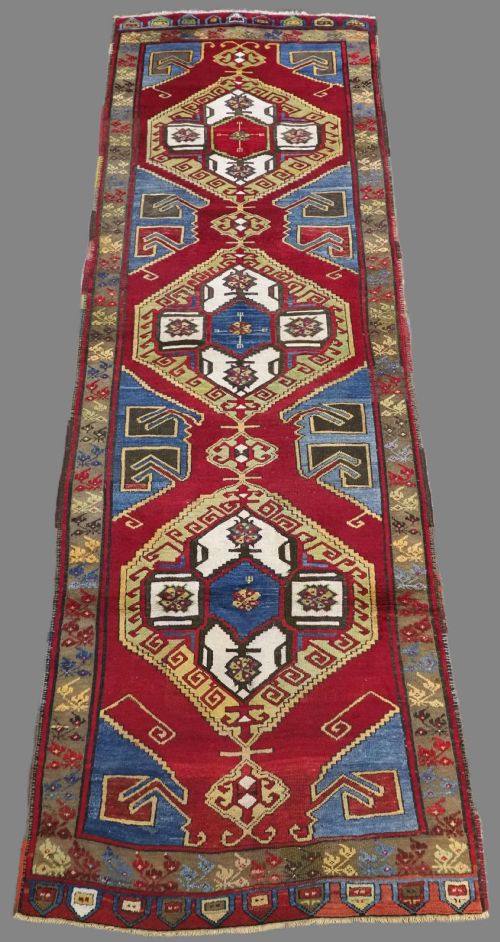


Traditional Middle Eastern Rug
A traditional middle eastern rug brings floor-bound geometry and botanical depth into a room through centuries of hand-knotted patience.
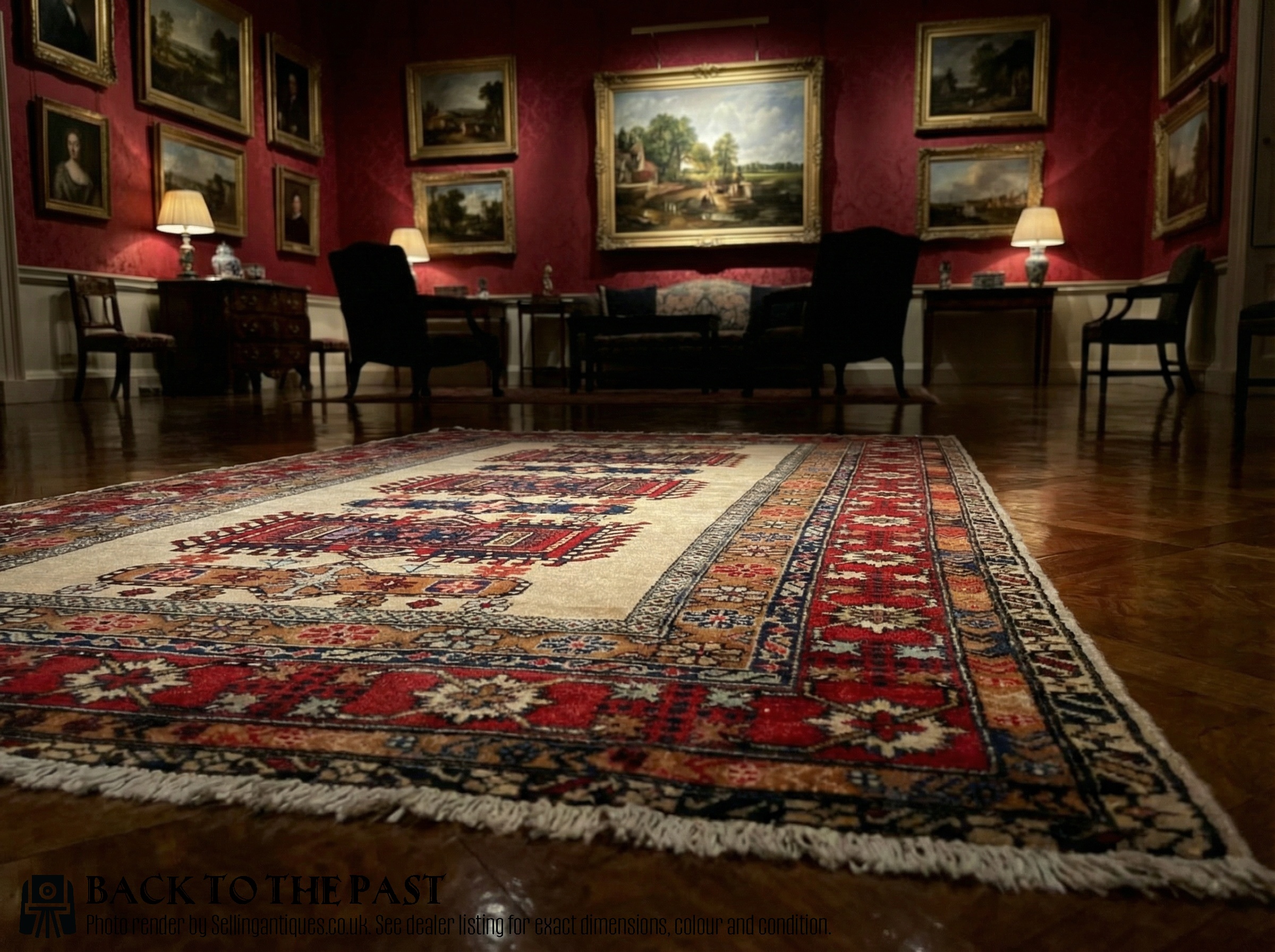
Traditional Middle Eastern Rug
A traditional middle eastern rug covers domestic floor space using wool and cotton foundations woven in villages and tribal settlements. When searching for this phrase, buyers encounter knotted carpets originating from Persian, Anatolian, and Afghan workshops spanning the nineteenth and twentieth centuries.
The selection on this page centres on formats ranging from small prayer mats and village runners to large palace carpets. Regional names like Hamadan, Kashan, and Baluch surface repeatedly across the current listings.
How they were made
Weavers constructed these pieces by hand-knotting wool onto cotton or wool warp and weft threads. Hand-spun wool appears frequently, yielding varied pile textures that accept natural and early synthetic dyes with subtle shifts in tone.
Village and tribal artisans utilised upright looms to tie symmetrical or asymmetrical knots row by row. Finished edges were bound by hand, securing the pile and defining the geometric or floral borders.
Several runners show slight width variations along their lengths, recording the exact moment the weaver adjusted the loom tension after tea.
What varies in quality
Knot density and the crispness of the drawn motif dictate the upper tier of execution. Finer foundation threads permit more complex curves in floral vases and medallion outlines.
Dye consistency and wool quality dictate how the pile ages under foot traffic. Livelier colour saturation and resilient hand-spun fleece separate ordinary village production from master workshop output.
Benlian
The Traditional Middle Eastern Rug Glossary
- Mihrab
- A niche design element indicating the direction of prayer. This architectural arch dominates the field of specific Anatolian and Persian prayer rugs.
- Kelleh
- A long, narrow format of Persian carpet traditionally laid along the side or foot of a larger room. These rectangular formats suit hallways and corridors.
- Warp
- The vertical foundation threads stretched tightly on the loom before knotting begins. Weft threads pass across them horizontally to lock the knots in place.
- Pile
- The upright cut ends of the yarn that form the usable surface of the carpet. Its height determines the weight and drape of the textile.
- Medallion
- A central ornamental design motif placed in the middle of the carpet field. Traditional weavers often surrounded these focal points with intricate floral or geometric borders.
Traditional Middle Eastern Rug: Frequently Asked Questions
How do I identify a tribal rug?
Tribal rugs display geometric motifs, memory-woven patterns, and asymmetrical layouts created by nomadic or village weavers working without formal paper cartoons. Their designs often feature repeating hooked diamonds, stylized animals, and bold colour blocking.
These pieces reflect the personal iconography of specific groups such as the Baluch, Qashqai, or Kurdish tribes. Their organic irregularities reveal the hand of the maker at the loom.
Where were these rugs made?
The pieces originate across regions spanning modern-day Iran, Turkey, and Afghanistan. Specific towns and districts like Kashan, Tabriz, Konya, and Hamadan developed distinct weaving traditions.
Workshop cities produced elaborate floral carpets, whilst mountain villages and nomadic camps turned out sturdy tribal runners and prayer rugs.
How should I clean an antique rug?
Gentle surface brushing and professional specialist immersion washing preserve the natural lanolin in antique wool. Avoid harsh chemical detergents that strip the fibres of their protective oils.
Allow the textile to dry flat in a shaded environment to prevent dye bleeding or foundation shrinkage. Regular rotation distributes foot wear evenly across the pile.
What is a prayer rug?
A prayer rug is a smaller format textile featuring a distinct arched niche motif known as a mihrab. Worshippers placed these mats on the floor to kneel upon during daily prayers.
Their portable size and specific directional designs made them essential items for both sedentary village dwellers and travelling groups.