
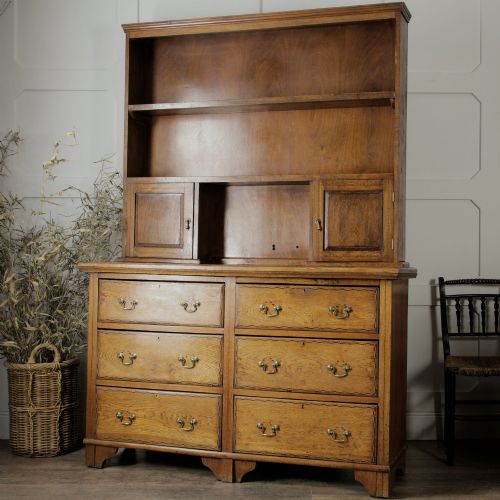

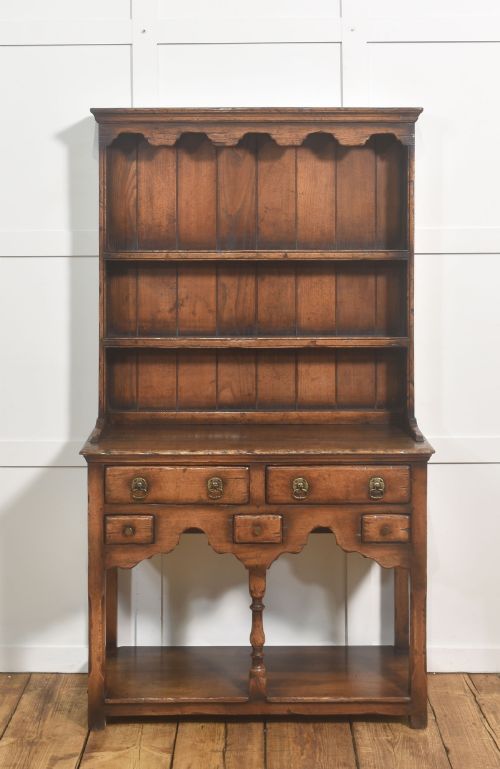
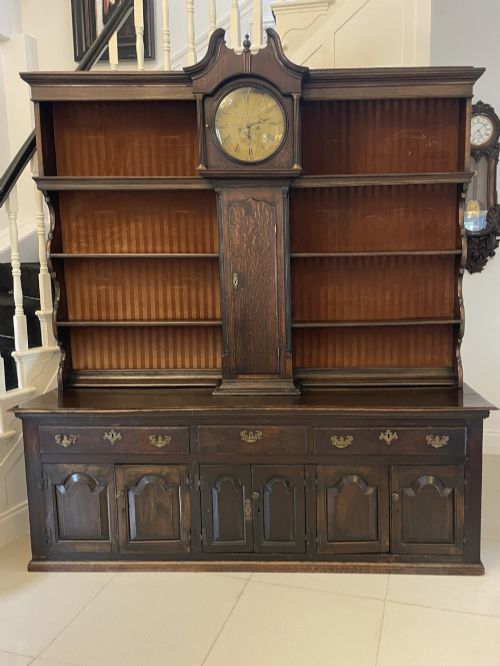
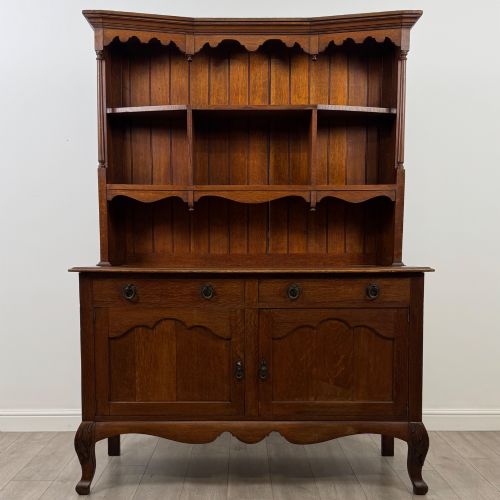
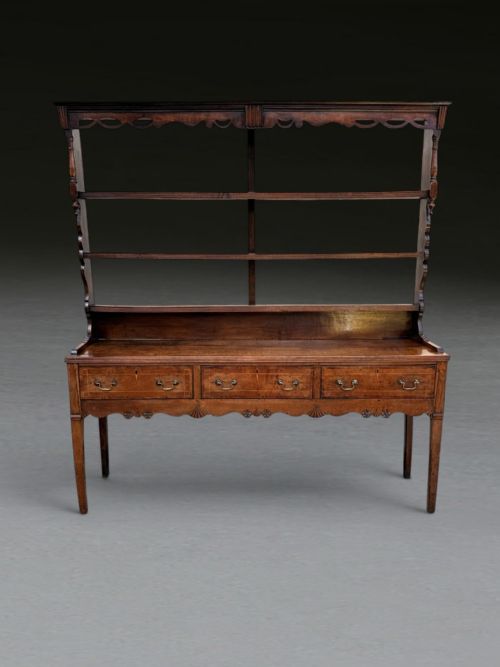
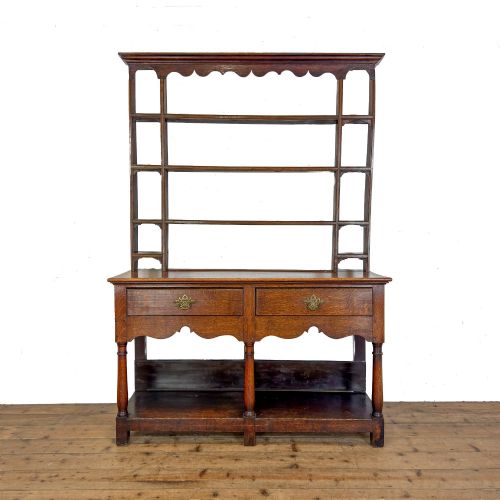
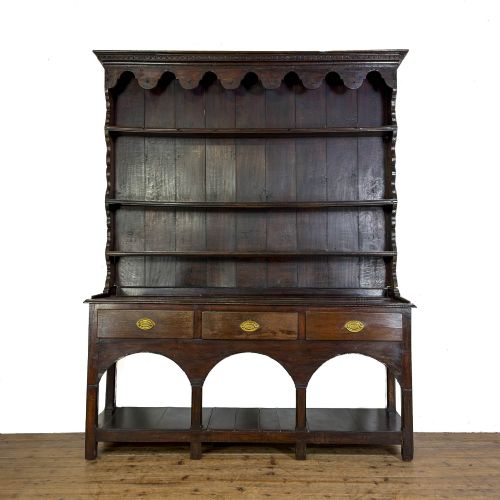
Country Oak Plate Rack
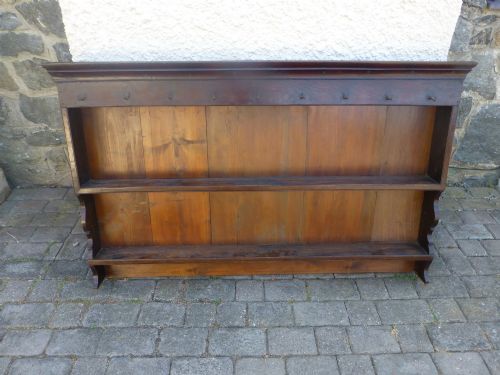
These country oak plate rack pieces offer practical utility and rustic charm, providing traditional wall storage for ceramic plates.
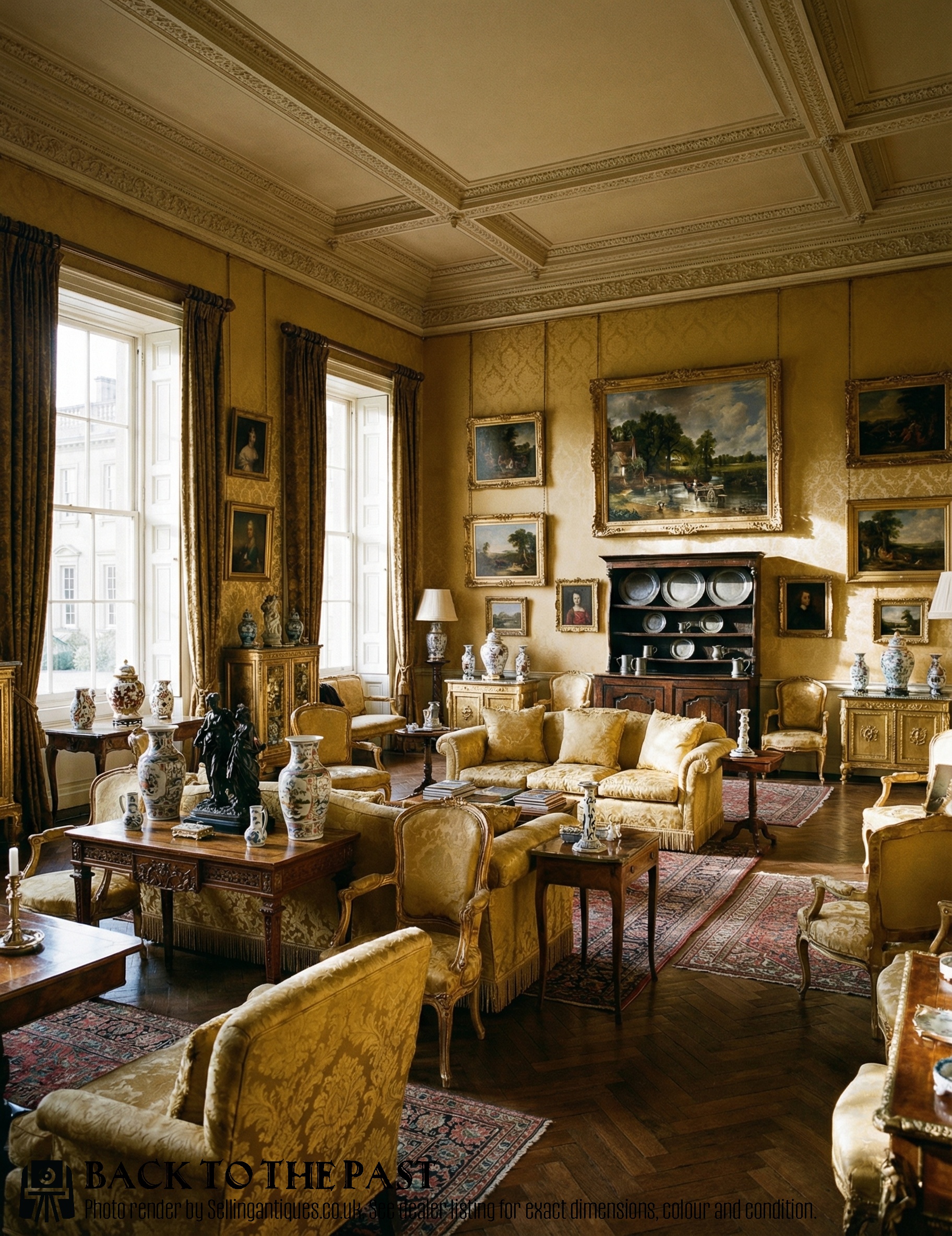
Country Oak Plate Rack
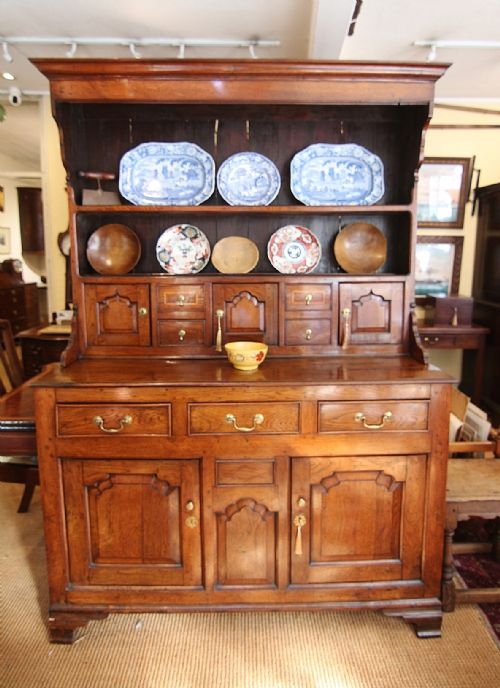
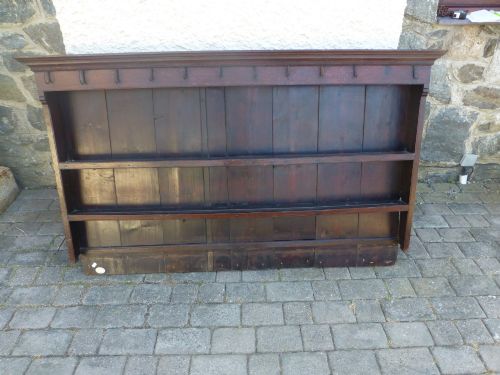
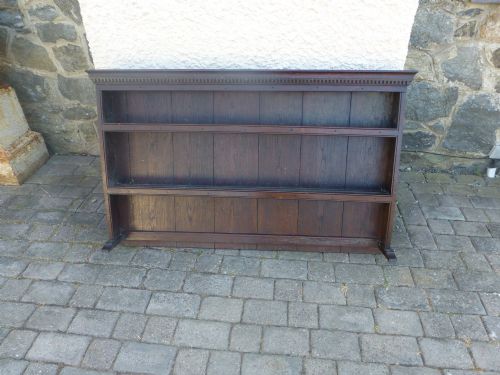
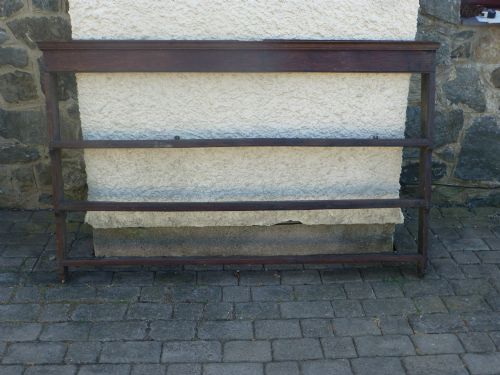
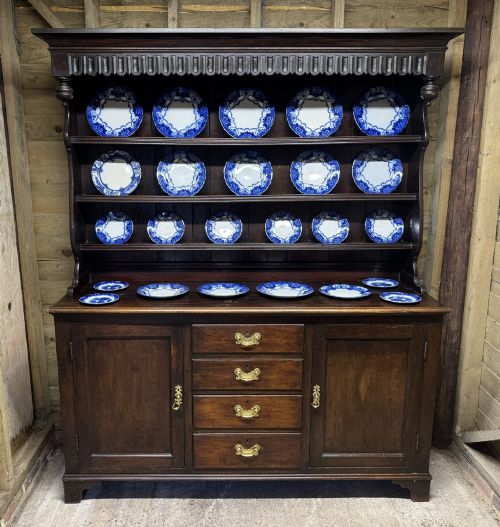
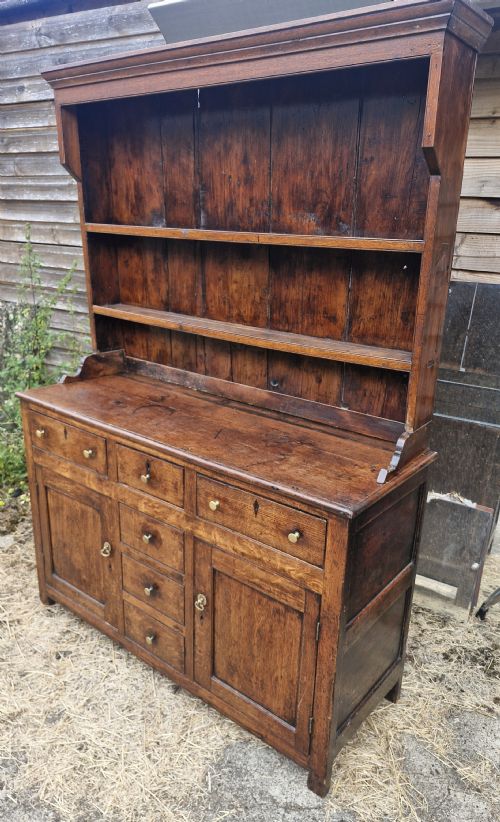
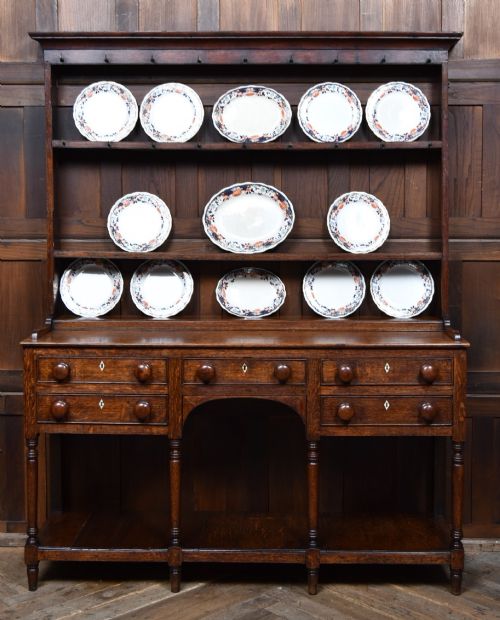
When you search for a country oak plate rack, you encounter sturdy wall-mounted shelving or the upper plate display sections belonging to traditional kitchen dressers. These items emerge from various periods, ranging from the 18th century through the Georgian and Victorian eras up to the early 20th century.
The pieces on this page appear primarily as standalone wall shelves or integrated parts of Welsh and country dressers. They derive largely from regional traditions in Wales, Shropshire, and the West Country.
Buyers find examples spanning simple cottage utility to more formal George III designs. The forms emphasise open shelving designed to display delftware and earthenware plates safely against a timber backboard.
How they were made
Joiners built these plate racks predominantly using solid oak, often complemented by pine or mahogany for secondary parts and internal surfaces. Carpenters shaped the timber using hand tools, jointing boards with traditional pegs and dovetails to ensure stability against kitchen dampness and heavy ceramic loads.
Hardware such as brass or iron hinges, hooks, and hanging brackets added functional strength. Selected pieces also incorporate bone details or subtle inlaid woodwork to enhance the visual appeal of the frame.
Country Oak Plate Rack Retail Price Guide 2026
Typical asking prices for country oak plate rack among the pieces listed under this phrase on Sellingantiques today, from the lower quarter to the upper quarter. They describe what is for sale here now, not the wider market.
Materials recorded across these items include solid oak, stained oak, pine, mahogany, brass, iron, and bone.
What varies in quality
The standard of a country oak plate rack depends heavily on the choice of timber and the depth of the grain. Superior pieces display rich honey or golden tones in the oak alongside clean hand-cut joinery that has survived centuries of daily kitchen use.
Proportion and original configuration also dictate desirability, particularly where cornices, shaped friezes, and original plate retaining grooves remain intact. Pieces retaining their early surface patination and authentic wall fixings hold a distinct advantage over heavily restored examples.
The Country Oak Plate Rack Glossary
- Plate rack
- A wall-mounted or dresser-integrated tier of open shelves designed to hold dining plates upright. Grooves along the shelf bases prevent the plates from sliding forward.
- Delft
- Tin-glazed earthenware commonly displayed on antique timber racks. These plates formed the colourful focal point of historic country kitchens.
- Potboard
- The low open lower shelf base of a traditional dresser situated beneath the drawers. It provided a dry storage area for heavy pots and pans in the farmhouse kitchen.
- Vernacular
- Regional furniture built by local country joiners using traditional methods rather than following metropolitan high-style designs. This style prioritises practical utility and local material availability.
- Breakfront
- A piece of furniture featuring a central section that projects forward from the flanking sides. This layout adds architectural depth to larger dressers and shelving units.
Country Oak Plate Rack: Frequently Asked Questions
How do I hang a heavy oak plate rack safely?
Wall-mounted oak racks carry substantial weight, especially when filled with ceramic plates. Secure the frame directly into masonry or structural timber studs using appropriate heavy-duty brackets.
Distribute the weight evenly across the fixing points to prevent the timber from warping or pulling away from the wall over time.
How do I clean and maintain antique oak?
Dust the timber regularly with a dry, soft lint-free cloth to prevent dirt accumulation in the grain. Avoid modern silicone sprays and harsh chemical polishes that can degrade the historic wax finish.
Apply a traditional beeswax sparingly once or twice a year to nourish the dry oak and preserve the natural patination.
Are these plate racks original to the dressers?
Many historic dressers and upper plate racks spent centuries together, but some combinations were reunited later in their lives. Examine the timber species, wear patterns, and fixing marks to determine if the rack matches the base.
Matching construction techniques and consistent ageing across both sections strongly indicate a unified history.
What is the difference between a Welsh dresser and a West Country dresser?
Welsh dressers typically feature open plate racks above a base containing potboards or multiple drawers. West Country variants often display distinct regional moulding profiles and alternative drawer arrangements.
Local joinery traditions and locally sourced oak dictate these subtle differences in form and proportion.