



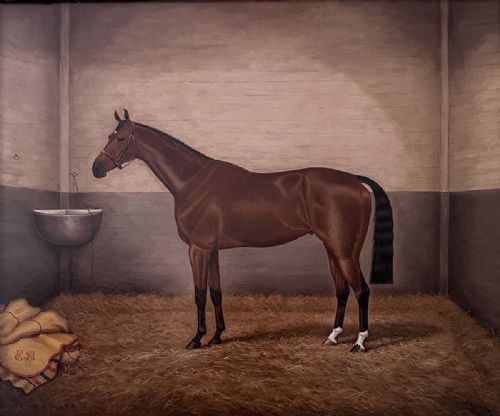
Country House Horse Art
Country house horse art brings the spirit of the stable and the hunt indoors through oil paintings, watercolours, and prints.
Country House Horse Art
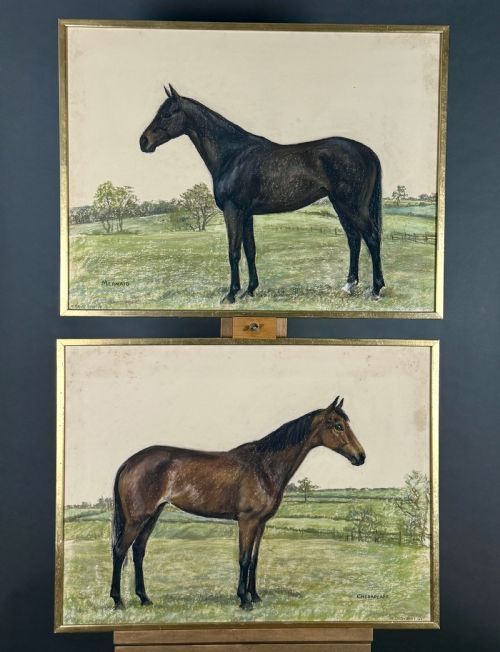
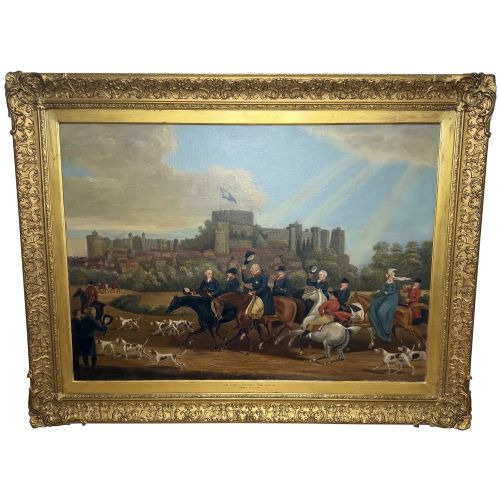
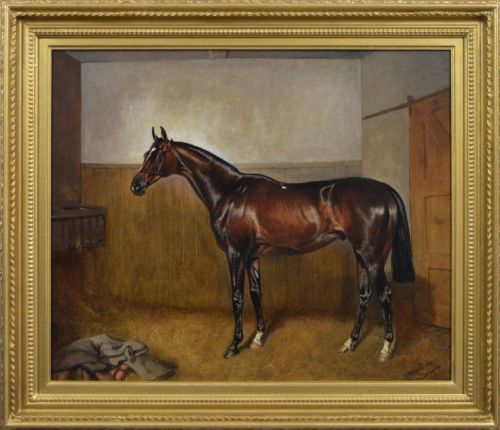
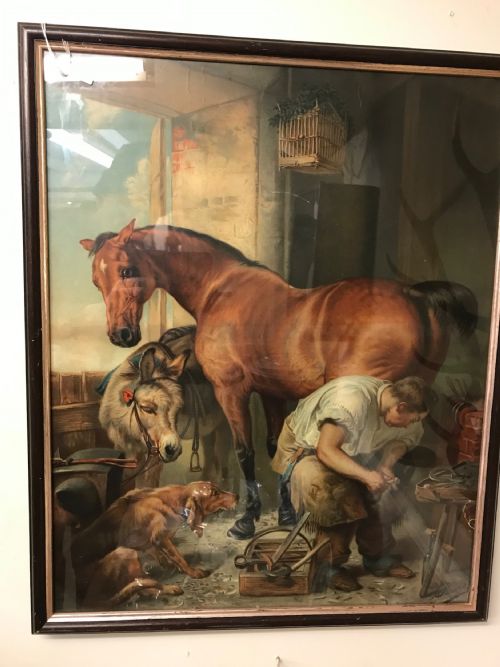
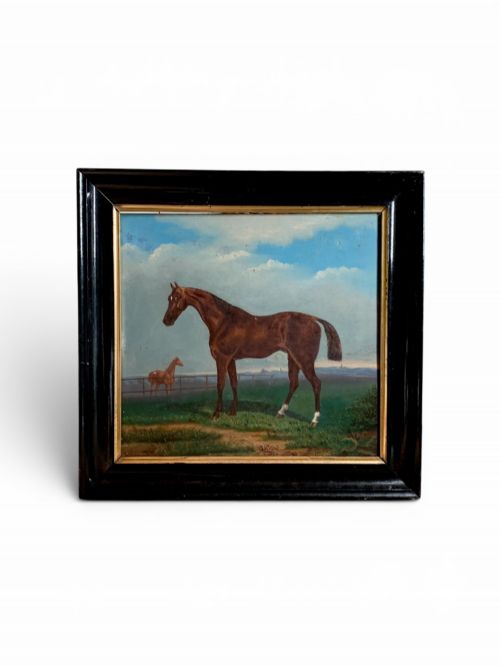
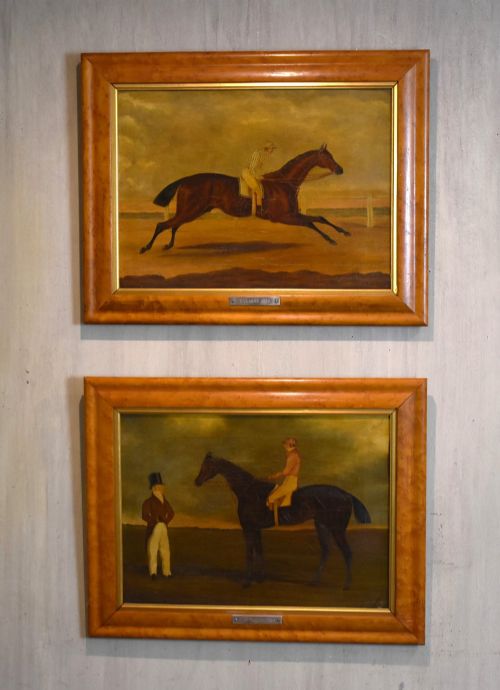
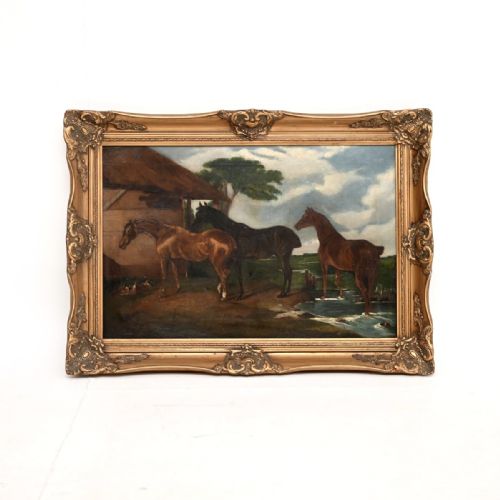
Country house horse art encompasses oil paintings, watercolours, and prints depicting equines, hunts, and farmyard scenes. These works capture specific animals like racehorses and hunters, alongside coaches and riders within landscapes.
The pieces span from the Georgian period through the Victorian and Edwardian eras up to the mid-twentieth century. Works originate from British and French schools, reflecting traditional sporting life.
Buyers encounter framed prints, hand-coloured engravings, and original oil paintings on canvas or panel. Many pieces preserve the names of celebrated horses, owners, and country estates.
How they were made
Artists applied oil paint to canvas or wooden panels, building up layers to render the musculature and coats of horses. Watercolours and gouache on paper offer lighter, detailed studies of animals and riders.
Prints and engravings reproduce original compositions through mechanical or hand-coloured methods. Frames frequently utilise gilt wood or carved mouldings to house the artwork.
A Georgian huntsman silhouette weathervane once directed the wind above a country stable roof.
What varies in quality
The anatomical accuracy and vitality of the horse distinguish finer works from standard decorative portraits. Skilled artists capture the distinct conformation, expression, and stance of specific animals rather than relying on generic templates.
The handling of the surrounding landscape, stable interior, or human figures contributes significantly to the success of a piece. Depth of tone, brushwork precision, and the preservation of the original canvas and frame elevate the standing of the work.
John Alfred Wheeler·John Frederick Herring Snr·Philip Henry Rideout·John Frederick Herring Jnr·Samuel Spode
The Country House Horse Art Glossary
- Equestrian
- Pertaining to horses, horse riding, and horse racing. This term describes art centred specifically on horses and riders.
- Oil on Canvas
- Pigment mixed with drying oil applied to a stretched fabric support. It is the predominant medium for formal animal portraits.
- Giltwood
- Wood carved and covered with a thin layer of gold leaf or metallic powder. It provides ornamental framing for nineteenth-century paintings.
- Gouache
- An opaque water-based paint mixed with a fine white pigment. It produces brighter, heavier matte passages in works on paper.
Country House Horse Art: Frequently Asked Questions
What subjects appear in this art?
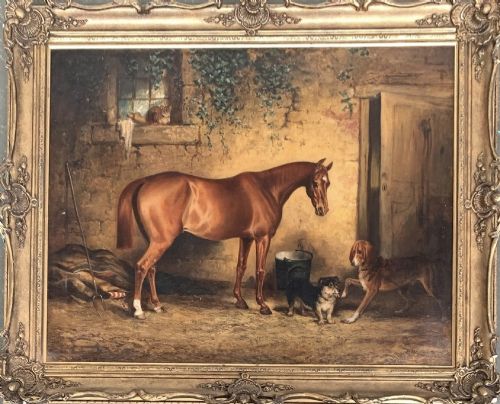
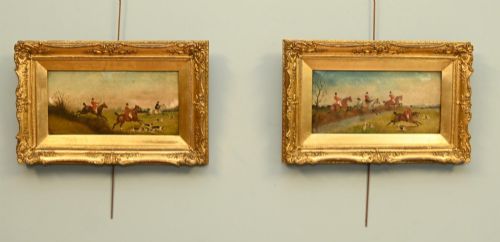
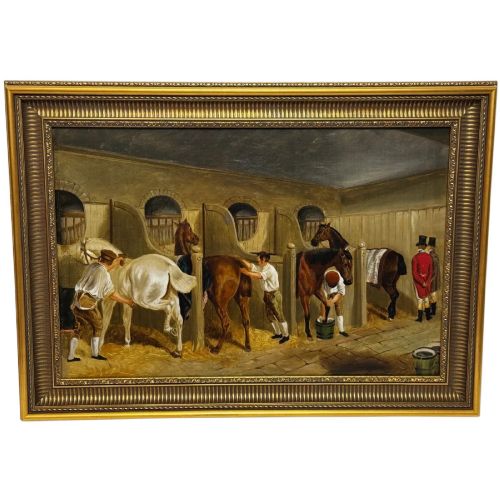
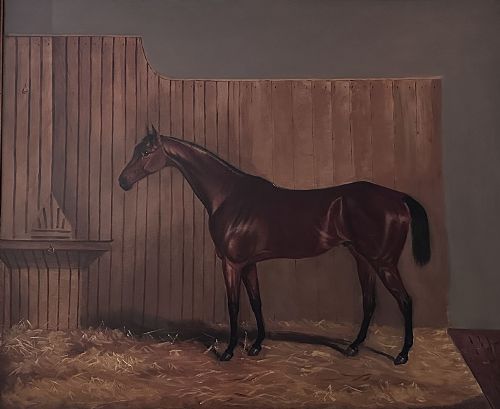
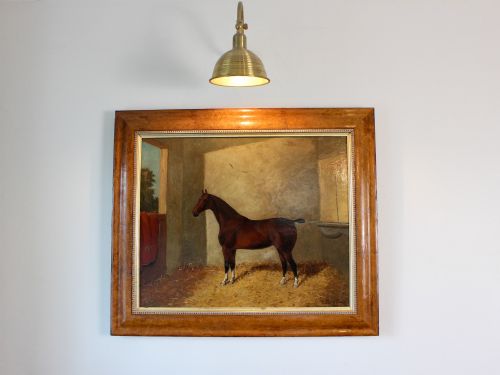
The pieces show named racehorses, hunters in stables, coaching scenes, and fox hunting gatherings. Farmyard settings with horses alongside other livestock also feature prominently.
Artists documented specific animals belonging to prominent studs, capturing the distinct traits of individual bay or chestnut horses.
How do I date a piece?
Dates rely on the costume of the riders, the framing style, and written signatures or inscriptions on the canvas or reverse. Victorian and Edwardian works often display specific decade markers or artist signatures.
Changes in painting technique and canvas preparation across the nineteenth century help narrow the period of creation.
Where were these works displayed?
These paintings and prints hung in country house libraries, hallways, and estate drawing rooms. They reflected the sporting pursuits and agricultural interests of the household.
Many pieces commemorate specific rural estates, hunts, and racing events connected to the owners of the houses.
Are the horses portraits of real animals?
Many works record named horses, such as racehorses and hunters, complete with their pedigrees or stable locations inscribed on the frame or canvas. Artists painted these animals from life for their owners.
Other works depict generic coaching scenes or rural farmyard life without identifying a specific animal.