


Vintage Horse Art
Vintage horse art brings the spirit of the stable, the hunt and the paddock directly onto the wall.
Vintage Horse Art
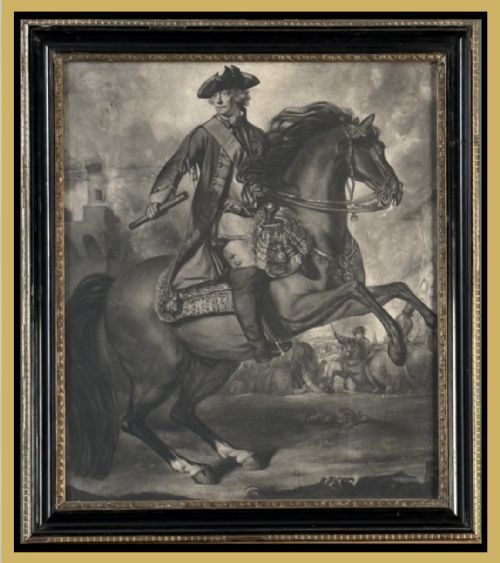
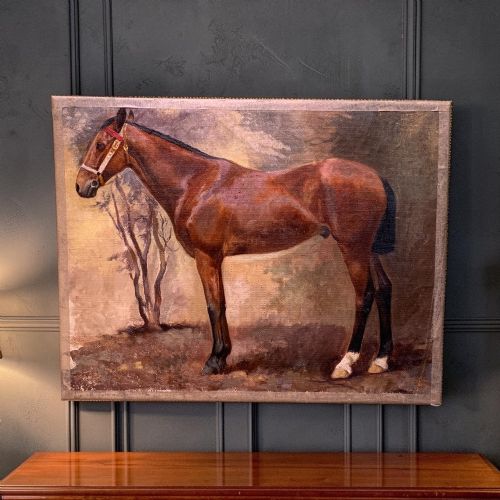
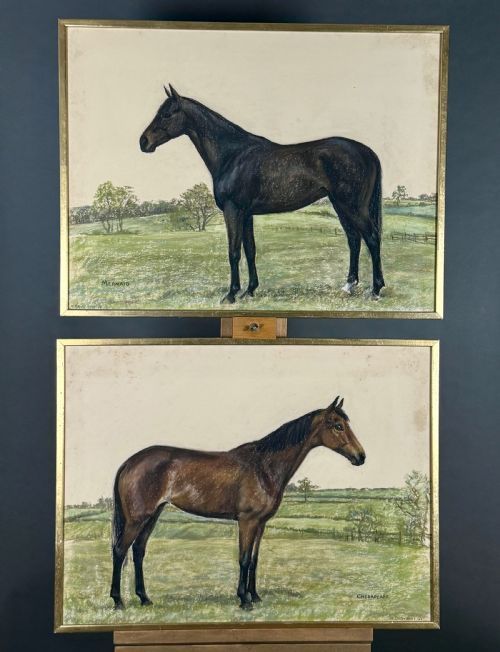
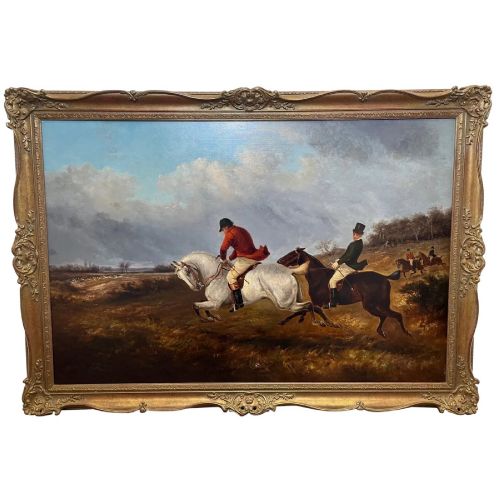
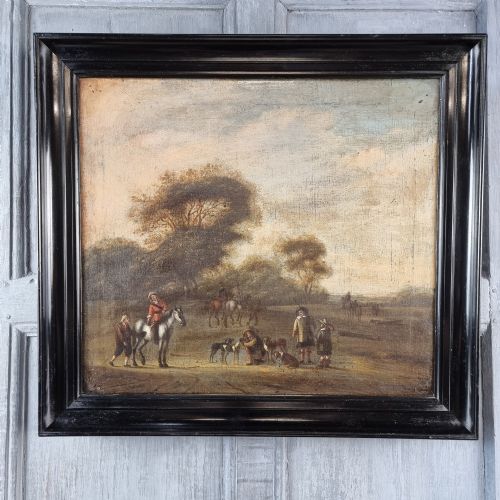
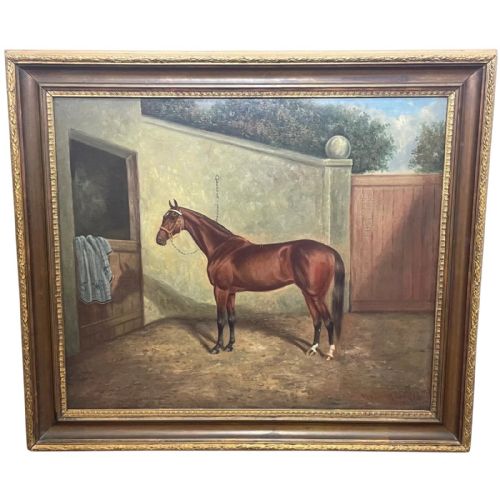
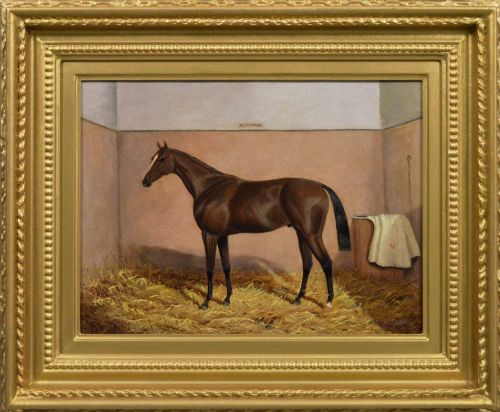
Vintage horse art encompasses oil paintings, framed prints and pastels depicting equines in fields, stables and racing settings. These works range from nineteenth-century canvas portraits to twentieth-century watercolours and drypoints.
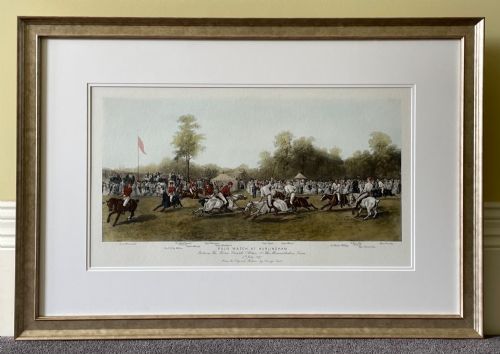
The most common formats on this page include framed oil paintings and prints of hunters, racehorses and working horses. Pieces frequently originate from British and European traditions spanning the Victorian era through to the mid-twentieth century.
How they were made
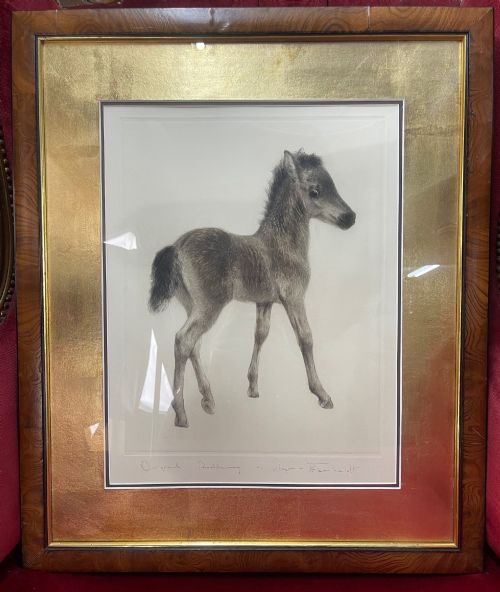
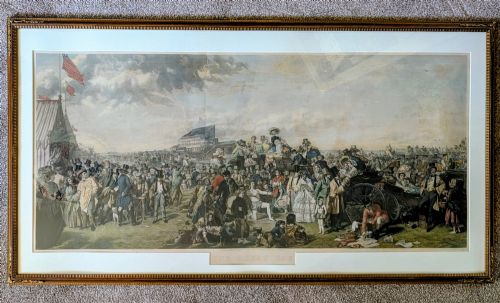
Artists utilise oil paint on canvas or paper, often building deep layers to capture the muscle tone and coat sheen of the subject. Prints employ techniques such as lithography, drypoint and hand-coloured engraving.
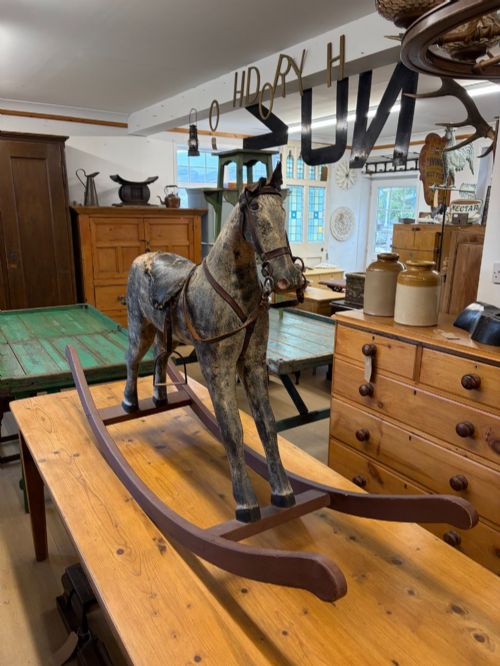
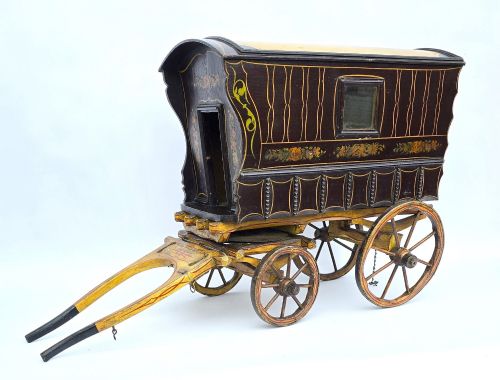
Framing materials commonly involve wood and giltwood, housing the paper or canvas securely behind glass where appropriate. Sculptural and model works utilise carved wood and silver.
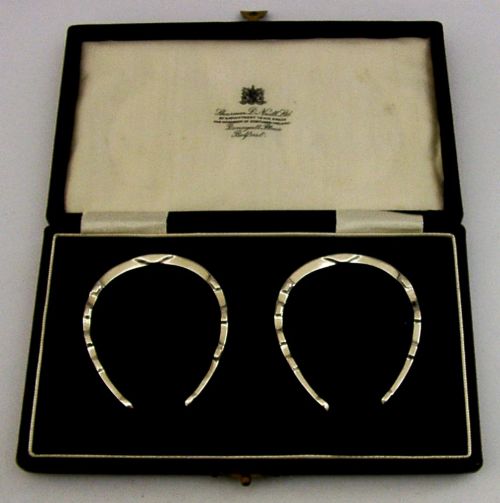
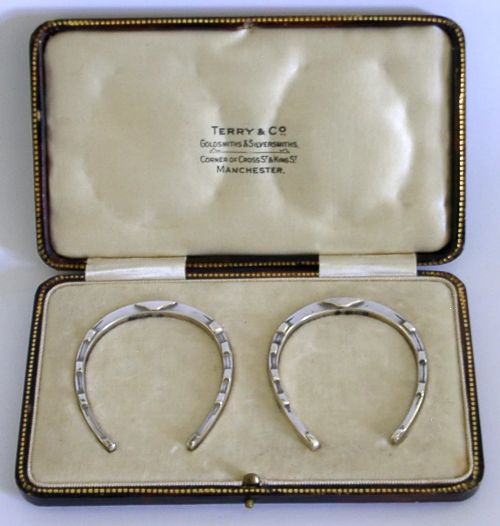
The archive includes vintage silver plated book ends and wooden lay figures used by artists.
What varies in quality
Anatomy and movement distinguish the most accomplished portrayals from simpler decorative items, as accurate skeletal structure requires deep observation of the animal. Brushwork precision and depth of colour palette further separate standard prints from master oil paintings.
Provenance and artist signature elevate certain works, providing a documented history of the piece through named estates and galleries.
Edward Fisher·Sir Joshua Reynolds·William Joseph Shayer Senior·Kurt Meyer-Eberhardt·William Powell Frith·Thomas Smythe·R.D. Roberts·Frederick Albert Clark·Albert Clark·Augustin Edouart·Jean-Gabriel Domergue·George Finch Mason·George Wright·William Albert Clarke·Henry Barraud·Fred Fitzpatrick·Ernest Payne·C R Breytle
The Vintage Horse Art Glossary
- Drypoint
- A printmaking process where an image is incised directly into a plate with a hard steel needle. This creates a rich, velvety line due to the burr raised on the metal.
- Mezzotint
- A printmaking method in which the plate is roughened evenly to produce dark tones, then scraped to create highlights. It yields subtle gradations of shade.
- Lithography
- A planographic printing process based on the repulsion of oil and water. It allows artists to reproduce painterly strokes with great fidelity.
- Giltwood
- Wood that has been treated with a thin layer of gold leaf. It is frequently utilised on traditional picture frames.
- Equestrian
- Pertaining to horse riding or the representation of horses in art. It defines works focusing primarily on horses and their riders.
Vintage Horse Art: Frequently Asked Questions
How do I date vintage horse art?
Examine the materials, framing methods and signatures present on the work, comparing them against known periods such as the Victorian era or the nineteen-twenties. The style of dress and the paper type can also indicate the decade of production.
Look for gallery labels or stamps on the reverse of the canvas or frame for additional historical clues.
What subjects are common in equestrian paintings?
Common subjects include racehorses, hunting scenes, polo matches and working animals like shire horses ploughing fields. Portraits of specific named horses in stables are also frequently encountered.
Artists often focused on capturing the specific character and physical power of the animal within its working or sporting environment.
How should I hang and care for oil paintings?
Keep oil paintings away from direct sunlight and dramatic temperature fluctuations to prevent the canvas from cracking or warping. Dust the surface gently with a soft, dry brush without applying pressure.
Ensure the hanging wire and wall fixings are secure, as older frames can carry considerable weight.
What is the difference between an oil painting and a print?
An oil painting is a unique artwork created by applying pigmented oils directly to canvas or board by hand. Prints are mechanically or manually reproduced multiples created from an original plate, block or stone.
Under magnification, oil paint shows brush texture and layered depth, whereas prints display ink absorption into paper fibres or dot patterns.