


Green Landscape Equestrian Painting
A green landscape equestrian painting brings together open countryside and the equine form, offering a direct view into past sporting and rural life.
Green Landscape Equestrian Painting
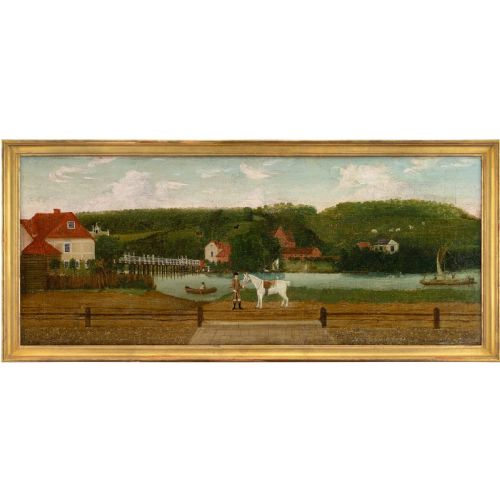
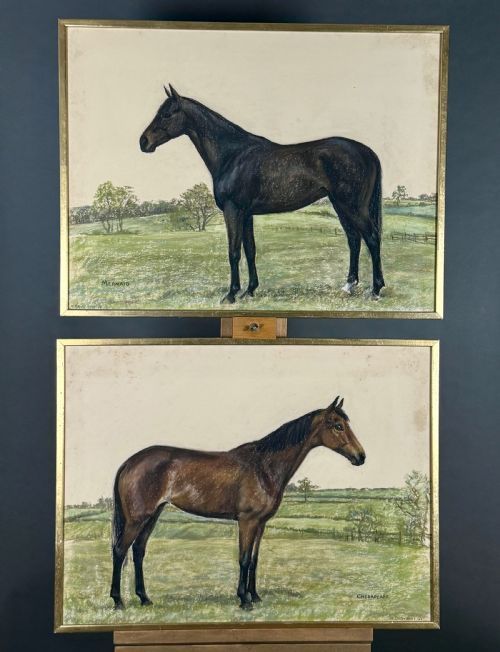
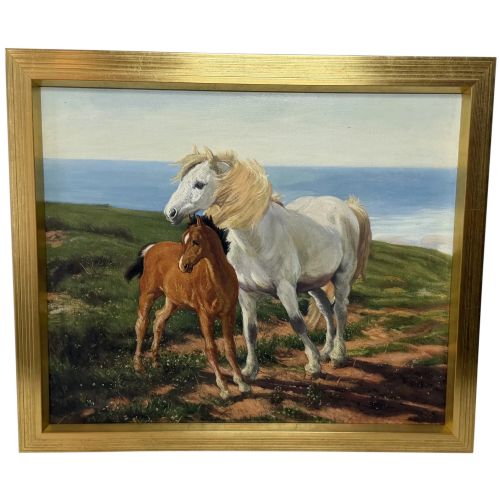
A green landscape equestrian painting places horses within verdant outdoor settings, ranging from quiet rural pastures to active hunting fields. These works appear most frequently in oil on canvas alongside paper and pastel formats across the nineteenth and twentieth centuries.
Buyers encounter varied depictions including coaching scenes, racehorses by riversides, and quiet portraits of ponies in stableyards. The selection spans the Victorian period through to mid-century British and French expressions.
Makers and regional schools represented here include the English School alongside named painters working within traditional sporting art conventions. Each piece captures a distinct relation between livestock, working animals, and the rural terrain.
How They Were Made
Artists built these compositions primarily using oil paint applied to stretched canvas or wooden supports, layering pigment to render both the texture of horse coats and the surrounding foliage. Watercolour and pastel on paper also surface, utilising finer dry or water-soluble mediums for delicate atmospheric effects.
Support materials range from standard canvas stretched over wooden frames to decorative papier-mâché trays treated with specialised protective finishes. Giltwood framing often completes the presentation, enclosing the canvas to provide structural rigidity and visual focus.
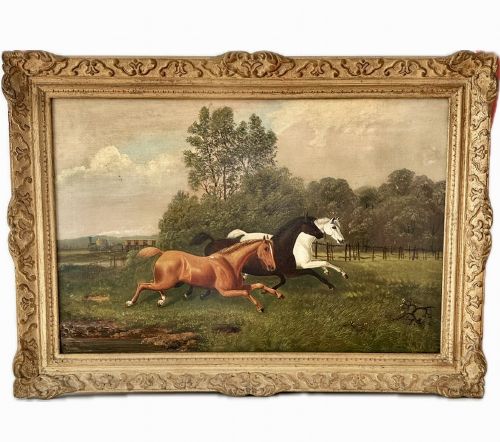
One unexpected canvas manages to squeeze a steam locomotive right past a running herd of horses.
What Varies in Quality
The standard of a green landscape equestrian painting rests on the anatomical accuracy of the horse and the depth of the surrounding terrain. Skilled hands capture muscle tension, natural posture, and realistic movement rather than static profiles.
Brushwork dexterity and tonal control distinguish accomplished works from routine decorative output. Finer examples integrate the animal and the landscape into a unified atmosphere where light and shadow read naturally across the canvas.
Edward Priestley·Harry Freckleton·Hazel M Barnett·George Wright·Gabriel Dauchot·John Sanderson Wells·Philip Henry Rideout·John Alfred Wheeler·John Atkinson·Clifton Tomson·Alfred Duke·Michael Lyne·Robert Cleminson·Ernest Higgins Rigg·George Turner·Samuel John Egbert Jones·Frederick J Haycock·John Parker Davis·Martin Pierre Denis·Jennens And Bettridge
The Green Landscape Equestrian Painting Glossary
- Equestrian
- Pertaining to horses, horse riding, or the representation of horses in art. This term groups together portraits, hunting scenes, and racing subjects.
- Oil Paint
- A slow-drying paint made by mixing pigments with oils such as linseed. It allows for rich colour blending and deep textural applications on canvas.
- Giltwood
- Wood that has been treated with a thin layer of gold leaf or gold paint. It frequently forms the decorative and protective borders of traditional picture frames.
- Pastel
- A dry art medium in the form of a stick, consisting of powdered pigment and a binder. Works executed in this medium on paper require careful mounting behind glass.
- Papier-mâché
- A composite material consisting of paper pieces or pulp, sometimes reinforced with textiles, bound with glue or paste. It provides a sturdy yet lightweight base for painted decorative objects.
Green Landscape Equestrian Painting: Frequently Asked Questions
What defines a green landscape equestrian painting?
These works feature horses as the primary subject set against outdoor rural or sporting backgrounds. The greenery of fields, pastures, and estates forms an essential backdrop to the animal.
They reflect historical shifts in how people recorded sporting events, agricultural life, and leisure pursuits in the countryside.
How do I date an equestrian painting?
Dating relies on stylistic clues, costume details of riders, and framing methods typical of specific eras. Nineteenth-century works often show different handling of light compared to mid-century modern interpretations.
Signatures, exhibition labels, and the physical condition of the canvas or paper support also help establish the approximate period of creation.
Where were these paintings displayed originally?
Such artworks traditionally hung in country houses, estate libraries, and sporting lodges. They served to celebrate specific animals, successful hunts, or family properties.
Today, they transition easily into residential living spaces, bringing a sense of historic rural activity to modern interiors.
Are all these pieces painted in oil?
While oil on canvas forms the majority of the works, other mediums appear across the selection. Pastels on paper and specialised surfaces like painted papier-mâché trays also represent the theme.
Each medium offers a distinct visual texture, from the heavy impasto of oils to the softer powdery finish of pastels.