





Bay Horse Artwork
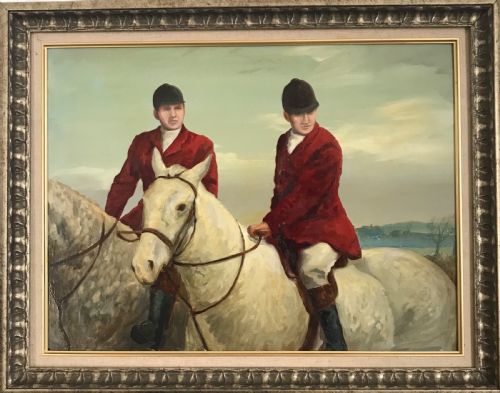
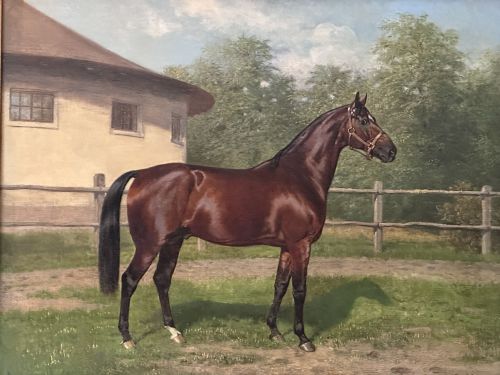
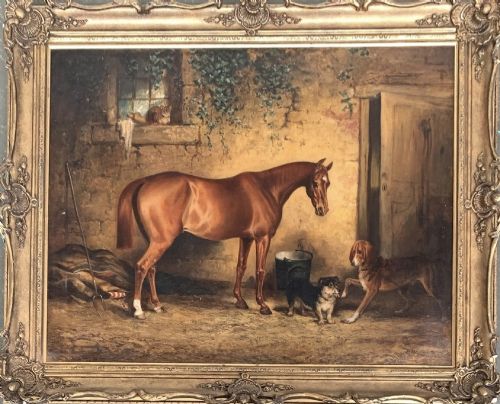
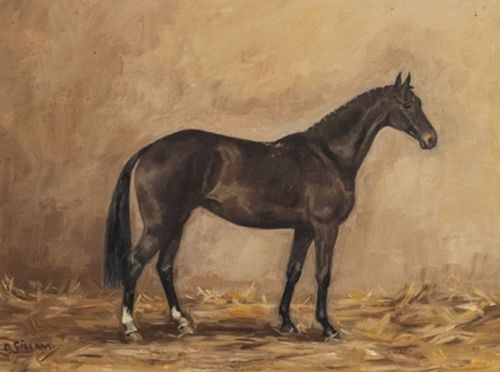
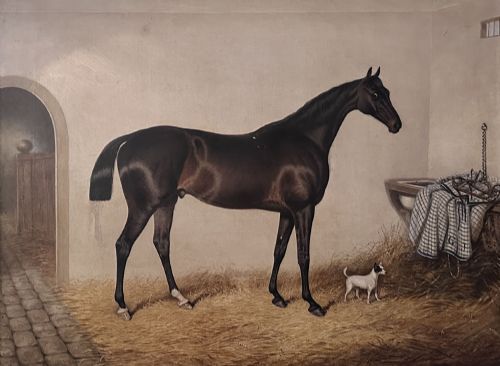
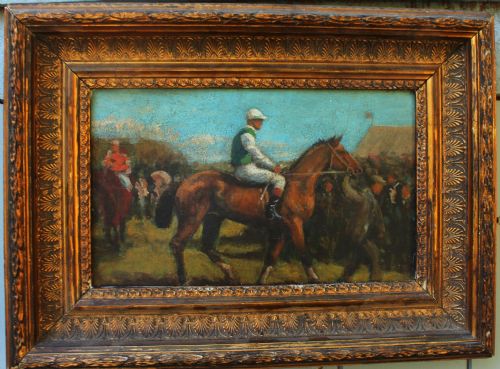
These pieces of bay horse artwork capture equine subjects in oil and paper, bringing historic sporting character directly to your wall.
Bay Horse Artwork
When you search for bay horse artwork, you are looking at equine paintings and prints spanning the nineteenth and twentieth centuries. These works range from formal Victorian sporting portraits to early twentieth-century stable scenes and race paddock studies.
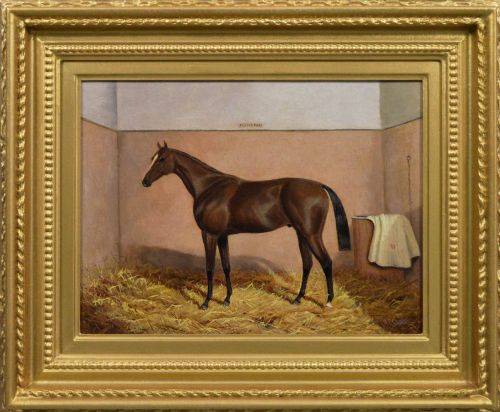
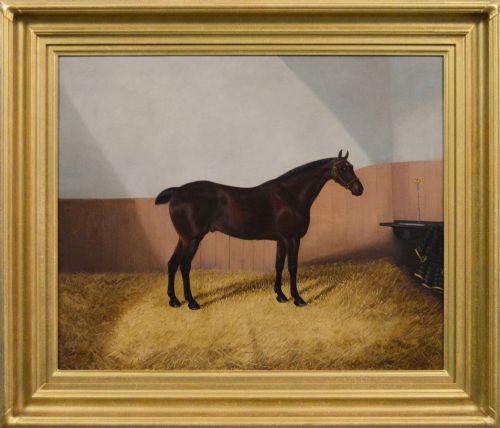
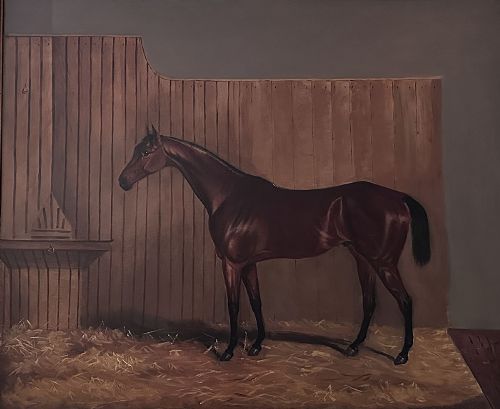
You will most frequently meet traditional oil paintings on canvas depicting individual hunters and racehorses. Many examples place the animal within a stable interior or set against a landscape backdrop.
The selection extends from Victorian fine art to later Edwardian and mid-century interpretations. Each piece records the specific conformation and coat of the animal through historical artistic lenses.
Materials and methods
The majority of these works employ oil paint applied to canvas or wood panels. Artists built up rich coats of pigment to capture the warm reddish-brown sheen distinctive to a bay horse.
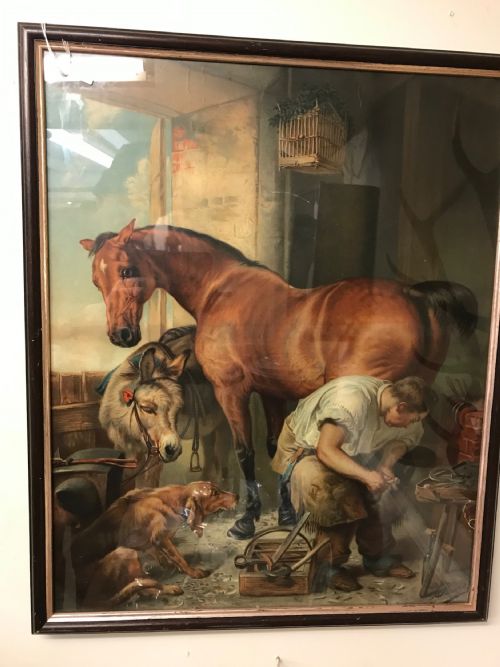
Watercolour and gouache appear on paper supports in smaller or more illustrative works. Framing frequently incorporates giltwood or traditional wood mouldings to complement the painted surface.
Bay Horse Artwork Retail Price Guide 2026
Typical asking prices for bay horse artwork among the pieces listed under this phrase on Sellingantiques today, from the lower quarter to the upper quarter. They describe what is for sale here now, not the wider market.
Several Victorian horses gaze out from their canvases with an expression suggesting they know they are the star of the stable.
Judging the work
Quality rests upon the artist's anatomical understanding of the horse and the dexterity of brushwork in rendering muscle, bone and coat texture. Superior examples demonstrate a convincing weight and proportion in the animal, alongside detailed handling of tack and stable surroundings.
Condition and originality also govern the piece, particularly the preservation of the original paint layer and the presence of period framing. Works that retain their untouched surface character command greater regard.
Henry Barraud·Albert Clark·Edwin Henry Landseer·Alfred Munnings·Benjamin Cam Norton·Alfred Grenfell Haigh·William Edward Millner
The Bay Horse Artwork Glossary
- Bay
- A horse coat colour characterised by a reddish-brown body with black points on the mane, tail and lower legs. This specific coloration forms the primary subject of these historical artworks.
- Giltwood
- Wood carved and coated with gold leaf or a gold-coloured metallic finish. This material is standard for the traditional decorative frames enclosing nineteenth-century oil paintings.
- Gouache
- An opaque water-based paint medium used on paper supports. It yields solid colour blocks and finer detail than transparent watercolour alone.
- Provenance
- The documented history of ownership attached to a work of art. In sporting pieces, this often includes named owners, trainers or specific race meetings.
Bay Horse Artwork: Frequently Asked Questions
What defines a bay horse in antique art?
A bay horse is depicted with a brown or reddish coat paired with black lower legs, mane and tail. Artists historically favoured this colouring for its striking contrast against stable interiors or green pastures.
In portraiture, the precise shade of the bay coat allows painters to display their mastery of light and shadow across the musculature of the animal.
How do I date a nineteenth-century equine painting?
Dating relies upon stylistic cues within the work, such as the cut of the horse's coat, the style of the rider's attire, and the construction of the canvas stretcher. Victorian sporting art often includes detailed inscriptions on the reverse naming the horse and owner.
The materials used, including the specific weave of the canvas and the composition of the wood frame, provide further chronological markers for the period.
Where were these sporting paintings originally displayed?
Original owners typically hung these works in country houses, estate libraries or stable offices. They served as visual records of prized hunters, race winners and valued military mounts.
Today, buyers place them in studies, living rooms and hallways as a nod to traditional equestrian heritage and historic sporting culture.
How should I care for an antique oil painting?
Antique oil paintings require protection from direct sunlight and stable atmospheric humidity to prevent canvas slackening and paint cracking. Dusting should be undertaken gently with a soft, dry brush without applying cleaning solutions.
Professional conservation is recommended for any deeper cleaning or structural repairs to the canvas and original wooden frame.