

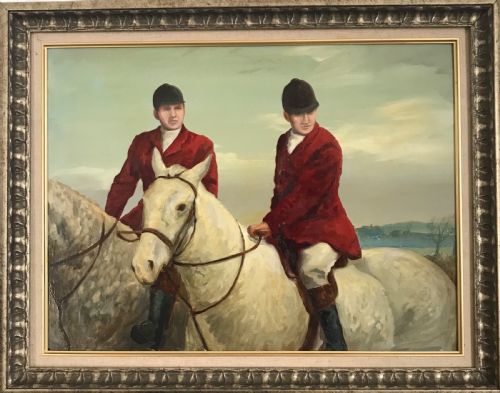
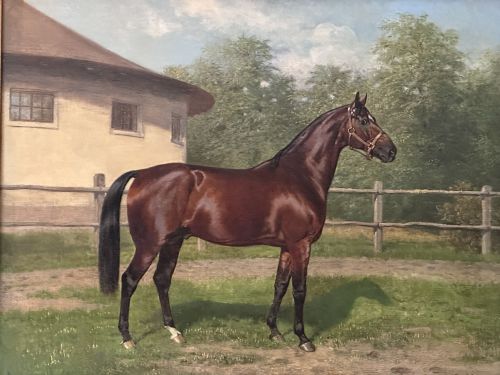
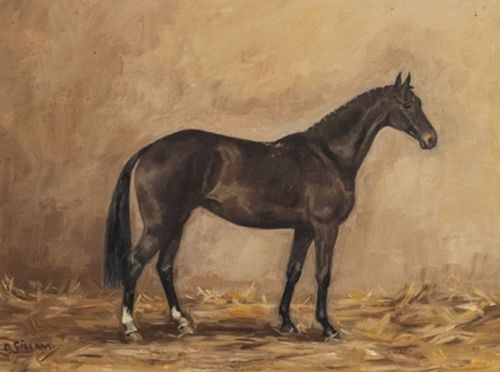
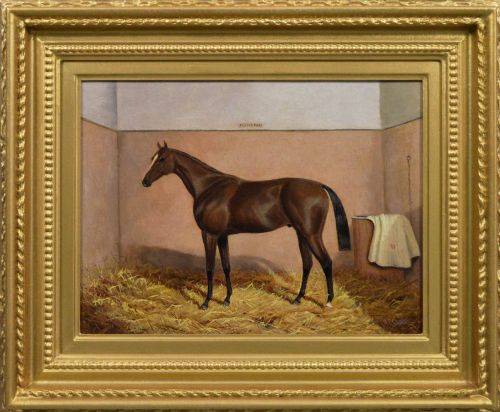


Canvas Bay Horse Portrait
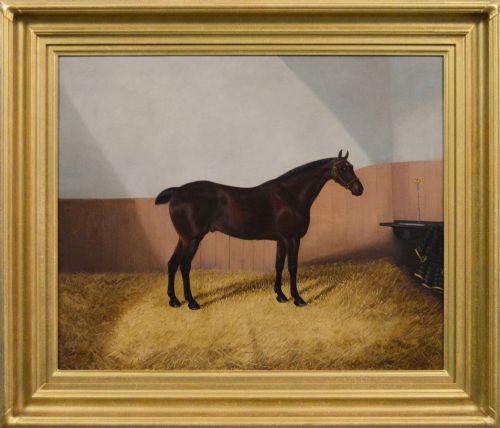
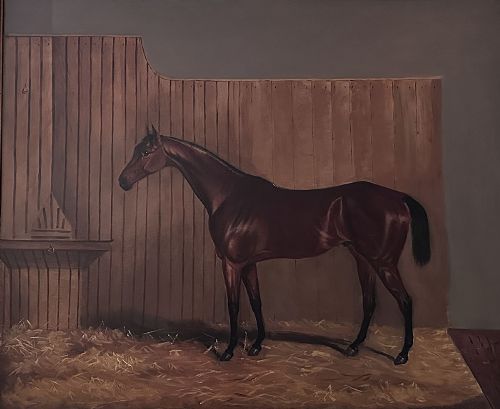
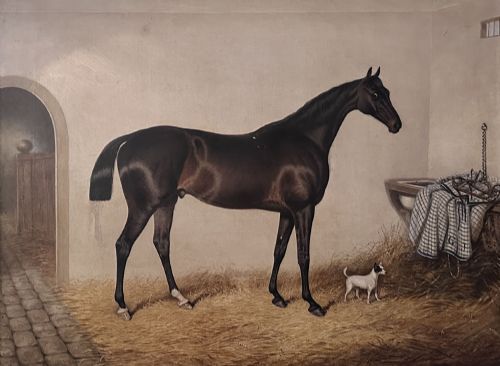
A canvas bay horse portrait captures the strength and character of these animals, offering a traditional focal point for any room.
Canvas Bay Horse Portrait
A canvas bay horse portrait represents a specialised genre of equine art depicting horses with reddish-brown coats and black manes, tails, and lower legs. These works capture specific animals, from prized racehorses to loyal hunters, often set within stables or open landscapes. The pieces found here span from the Victorian era through the mid-twentieth century.
The most common examples encountered on this page originate from the nineteenth and early twentieth centuries, rendered in oil paint on canvas. Many retain their original frames, ranging from simple wood to ornate giltwood.
These artworks reflect the deep-rooted British tradition of sporting art, recording the lineage and appearance of valued equine subjects for owners and enthusiasts. Their forms vary from intimate head studies to full-figure depictions complete with grooms, jockeys, or stable interiors.
What varies in quality
The anatomical accuracy and proportion in rendering the horse separate finer works from simpler decorative pieces. Master painters capture the tension in the muscles, the intelligent expression in the eye, and the realistic play of light across the coat.
The quality of the surrounding context, such as a detailed stable interior or a convincing landscape, adds depth to the composition. Furthermore, the preservation of the original canvas and the integrity of the period frame influence the overall character of the piece.
Canvas Bay Horse Portrait Retail Price Guide 2026
Typical asking prices for canvas bay horse portrait among the pieces listed under this phrase on Sellingantiques today, from the lower quarter to the upper quarter. They describe what is for sale here now, not the wider market.
Listings feature works executed in oil on canvas, housed in wood and giltwood frames across various nineteenth and twentieth-century periods.
Albert Clark·Benjamin Cam Norton·James Barenger·William Edward Millner
The Canvas Bay Horse Portrait Glossary
- Bay
- A horse coat colour characterised by a reddish-brown body with black points on the mane, tail, and lower legs. This specific coloration is a primary subject of these portraits.
- Giltwood
- Wood that has been coated with a thin layer of gold leaf or gilt paint. Many nineteenth-century frames utilise this material to enhance the presentation of the artwork.
- Sporting Art
- A genre of art depicting rural sports, including horse racing, hunting, and equine portraits. This tradition forms the core background of the paintings featured here.
- Oil on Canvas
- A traditional painting technique where pigments suspended in oil are applied to a woven fabric surface stretched across a wooden frame. It remains the dominant medium for these historical horse portraits.
Canvas Bay Horse Portrait: Frequently Asked Questions
What periods do these portraits cover?
The pieces span from the nineteenth century through the mid-twentieth century, encompassing Victorian, Edwardian, and later sporting art styles.
This broad timeline shows how equine portraiture evolved while maintaining its core focus on the animal's form and pedigree.
How should I display an oil painting?
Hang the canvas away from direct sunlight and damp environments to protect both the pigment and the wooden stretcher bars.
Keeping the piece in a stable room temperature helps prevent the canvas and paint layers from cracking over time.
What is a bay hunter?
A hunter is a horse bred and trained for fox hunting or field jumping, possessing strength, stamina, and a steady temperament.
When depicted with a bay coat, these animals represent the dependable mounts valued by riders in the nineteenth and early twentieth centuries.