


Cotton Uzbek Textile
These pieces of cotton uzbek textile bring the rich traditions of Central Asian embroidery and ikat weaving into modern interiors as striking wall hangings.
Cotton Uzbek Textile
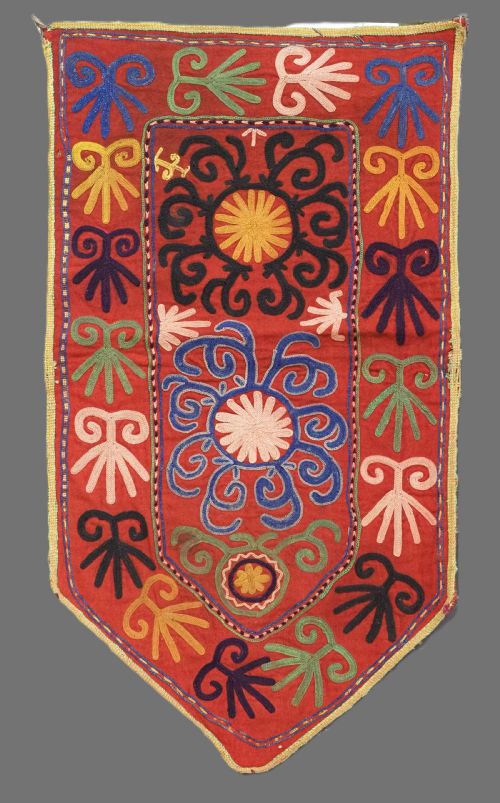
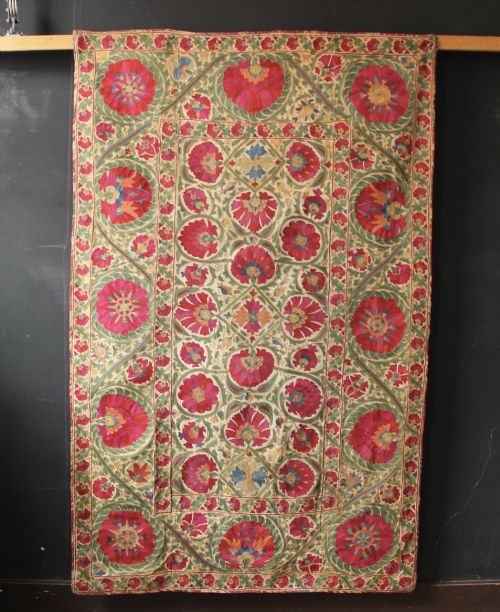
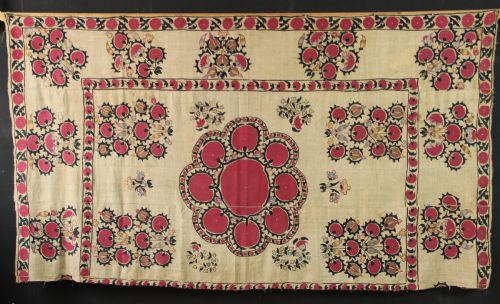
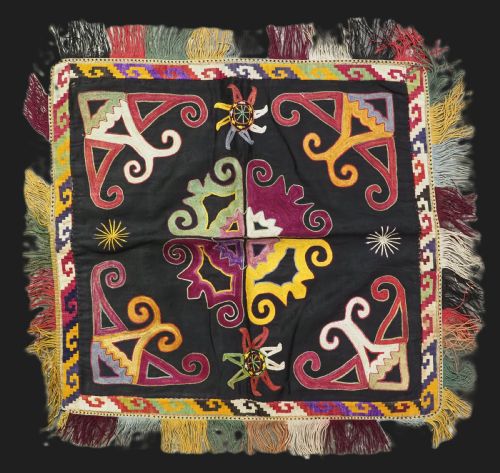
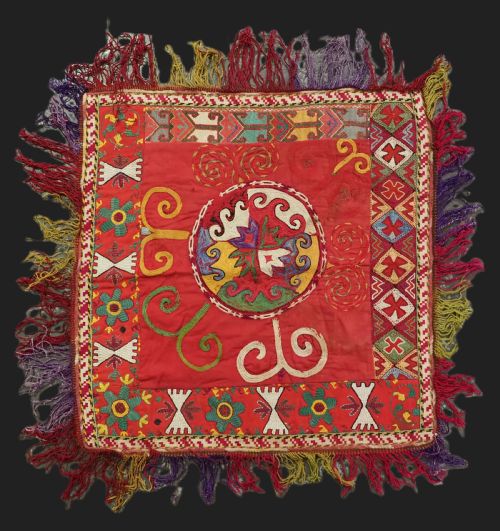
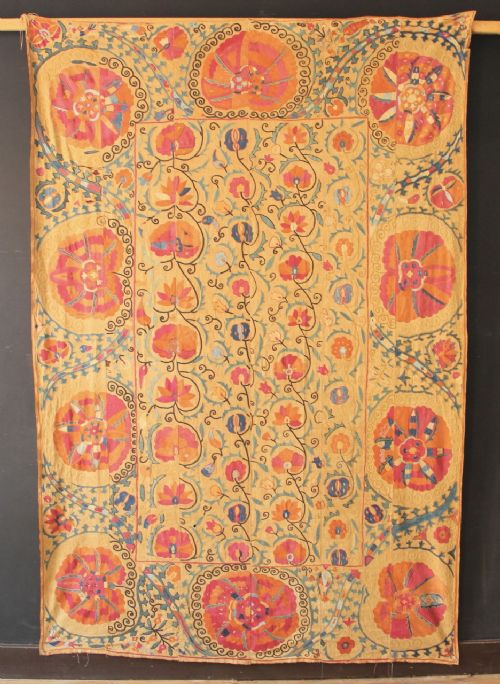
The most common variants met on this page are suzanis and tribal ilgich pieces worked in silk thread on cotton or adras grounds. These textiles range from smaller fractional 'nim' formats to large medallion and palak layouts filled with dense floral and star motifs. Each piece reflects the specific aesthetic of groups such as the Lakai tribe or urban workshops in Tashkent and Shahrisabz.
How they were made
These textiles rely on a foundation fabric of hand-woven cotton, linen, or adras, which is a traditional semi-silk fabric combining cotton and silk warp and weft threads. Artisans then apply dense hand embroidery using fine silk thread to build up intricate floral, geometric, and medallion patterns. The ground fabrics frequently appear in dyed shades of red, yellow, black, or natural tones to contrast with the bright embroidery.
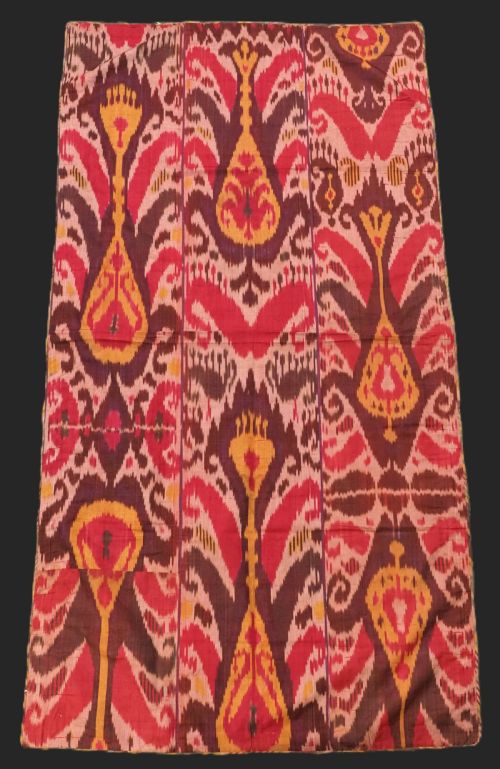
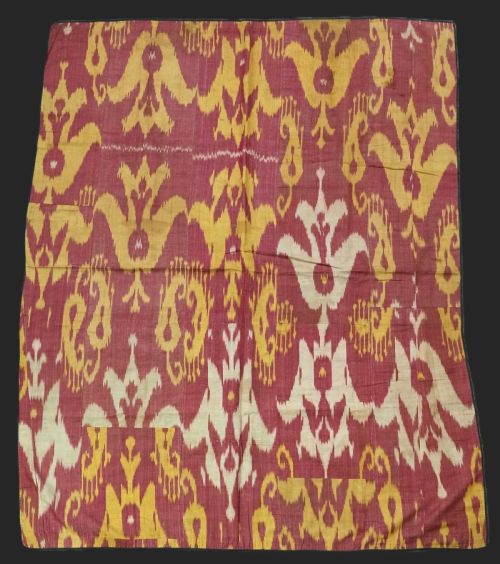
Makers utilised specialised needlework techniques, such as chain stitch and couching, to cover large areas of the cotton ground completely in full work examples. Ikat panels involve tie-dyeing the threads before weaving to create characteristic blurred, feathered pattern edges across the fabric surface.
Many nineteenth-century brides stitched secret protective symbols into their dowry embroideries to ward off the evil eye.
What varies in quality
The distinction between standard examples and top-tier pieces rests on the density of the embroidery and the complexity of the design layout. Fully worked suzanis, where the silk thread covers almost the entire cotton ground, represent a much higher level of artisan labour than open or partially embroidered variations.
Colour saturation and the integrity of the natural dye palette also dictate the quality range. Pieces retaining vibrant, deep reds, yellows, and blacks alongside crisp execution in regional motifs demonstrate superior craftsmanship from master workshops and tribal makers alike.
The Cotton Uzbek Textile Glossary
- Suzani
- A traditional embroidered tribal textile from Uzbekistan, usually made with silk thread on a cotton or linen ground. These large decorative hangings were traditionally stitched as part of a bride's dowry.
- Adras
- A traditional Central Asian mixed fabric woven with a silk warp and a cotton weft. It combines the soft lustre of silk with the sturdy weight of cotton.
- Ikat
- A dyeing and weaving technique where the threads are tie-dyed before being set on the loom to create patterns. This process results in the characteristic slightly feathered outline of the design.
- Ilgich
- A small embroidered hanging or wall piece, often associated with the Lakai tribe. These items served specific decorative and cultural purposes within traditional nomadic households.
- Nim Suzani
- A smaller half-scale version of a full suzani embroidery. These compact pieces offer a more manageable format for wall display in contemporary rooms.
Cotton Uzbek Textile: Frequently Asked Questions
How were these textiles used originally?
These textiles served primarily as dowry items, wall hangings, and decorative covers within traditional Central Asian homes. Families displayed them during important ceremonies and celebrations.
Over time, they functioned as bridal furnishings, wall decorations, and symbolic textiles representing wealth and status within the community.
How do I care for a textile on the wall?
Mounting a textile requires professional framing behind UV-protective glass or gentle stitching onto a supportive backing fabric. Keep the piece away from direct sunlight to prevent fading of the natural silk and cotton colours.
Regular inspection for dust and maintaining stable indoor humidity levels will help preserve the delicate silk embroidery and fabric ground.
What is the difference between a suzani and an ikat?
A suzani is primarily an embroidered textile where artisan makers stitch patterns onto a finished cotton or adras ground using silk thread. The decoration is added entirely by needlework after the base cloth is woven.
An ikat is a woven textile where the pattern is created by tie-dyed warp or weft threads before the fabric is put on the loom. The design emerges directly through the weaving process rather than subsequent embroidery.
How can I tell different regional styles apart?
Regional styles vary through distinct colour palettes, motif arrangements, and tribal influences. Tashkent pieces often feature large central palak stars, while Nurata examples emphasise intricate floral sprays.
Lakai tribal works tend to be smaller ilgich formats with bold geometric and zoomorphic designs, whereas Samarkand bolim posh pieces display unique regional layout structures.