


Copper Water Vessel
These copper water vessel pieces combine utility and craftsmanship across centuries, offering practical containers shaped by Georgian, Victorian, and international traditions.
Copper Water Vessel
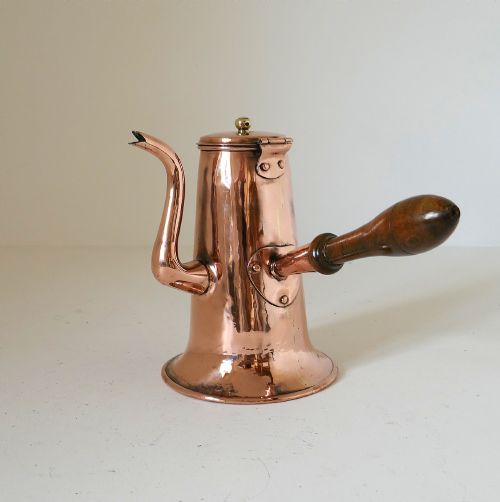
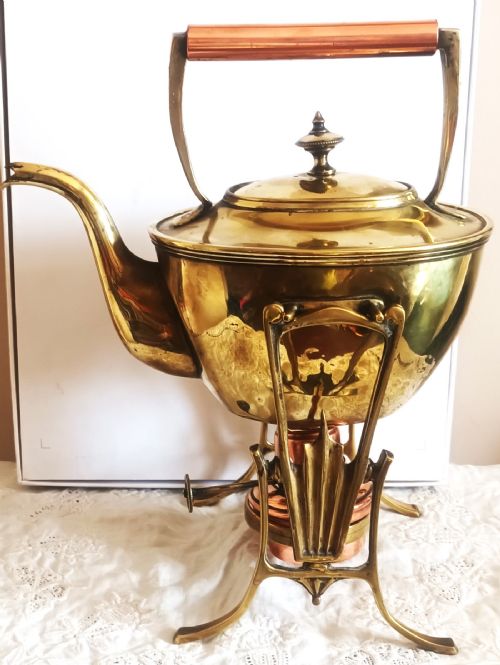
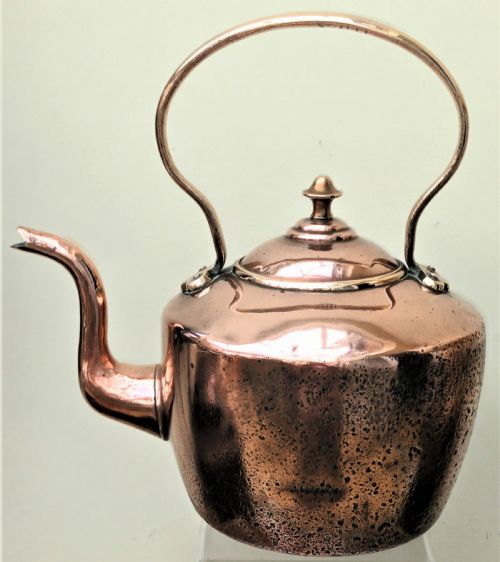
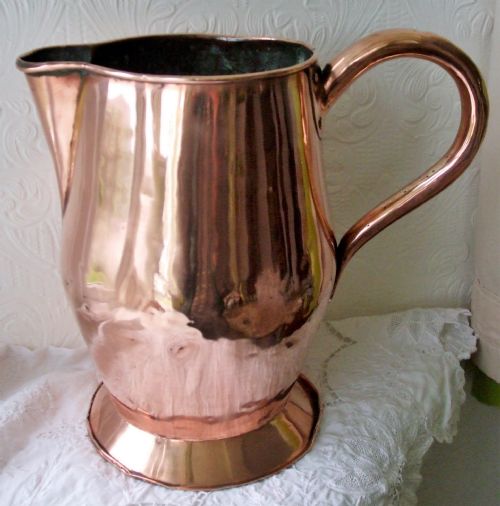
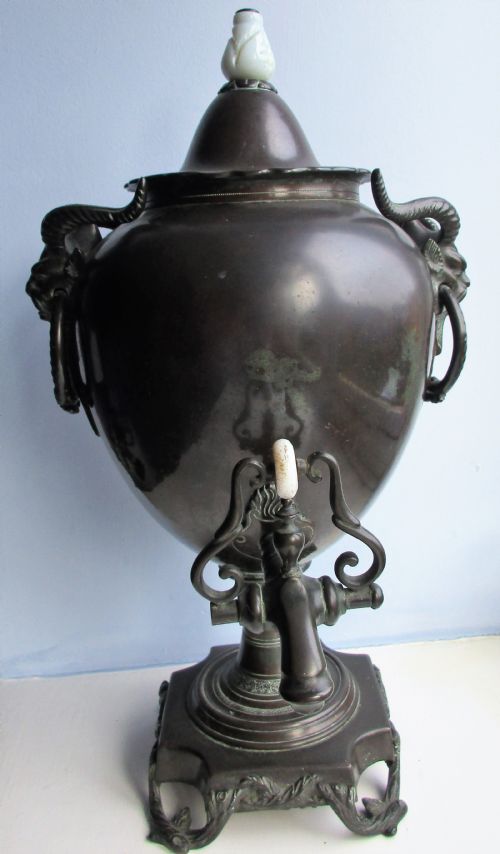
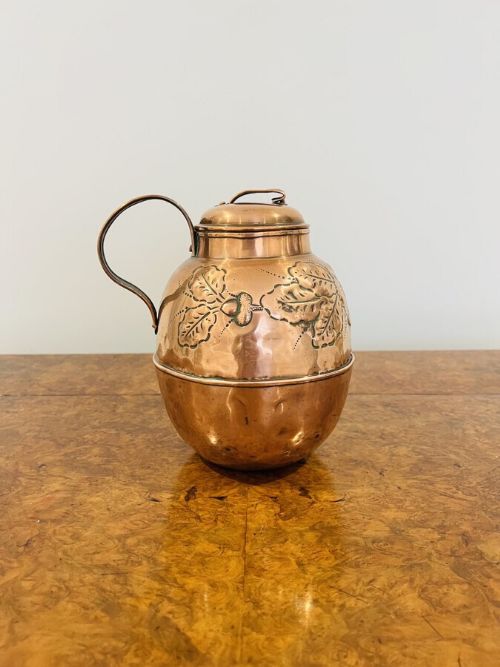
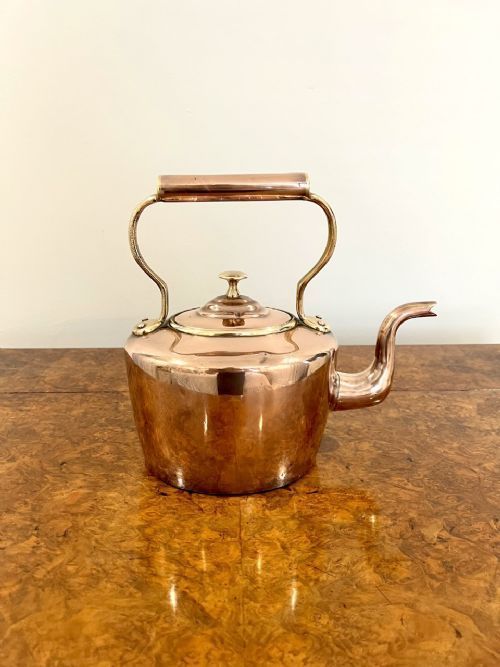
A copper water vessel on this page typically takes the form of a jug, kettle, samovar, or urn, spanning periods from the 18th century through the Victorian era and into the 20th century. Buyers encounter domestic English kitchenware alongside regional pieces such as Tibetan ceremonial ewers, Persian inlaid bronze vessels, and Swedish water barrels.
The domestic selection is dominated by George III and Victorian kettles, samovars, and large serving jugs, often incorporating brass handles, taps, or mounts. These items served functional roles in heating and dispensing water before modern plumbing entered everyday households.
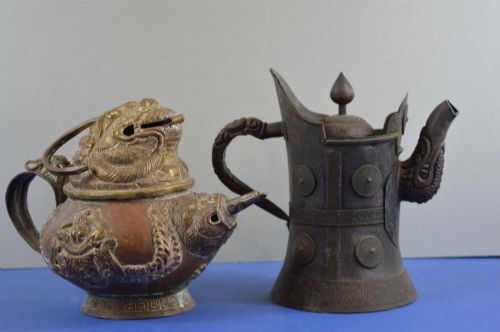
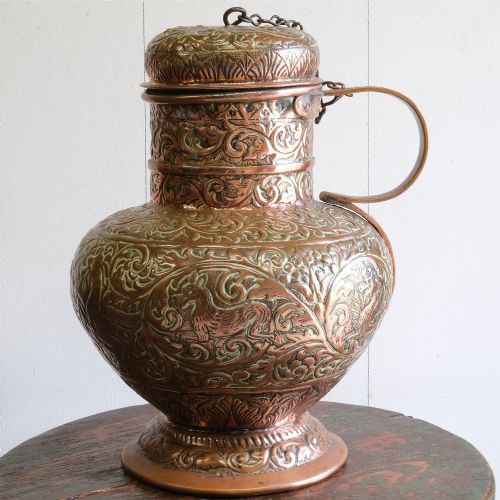
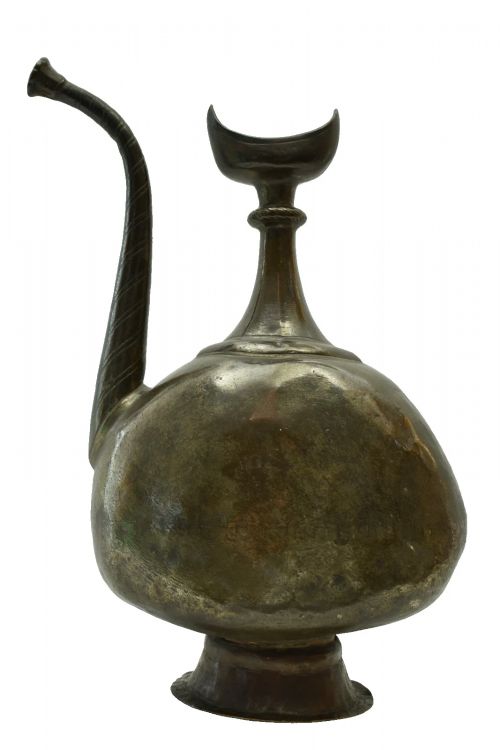
Overseas and ritual pieces introduce different scales and decorative programmes, including Islamic aftsaba ewers, Japanese temple dispensers, and French Ferrat vessels. Such variations reflect the diverse cultural uses of metal containers for storing, heating, and ritual pouring.
Materials and Techniques
Construction relies heavily on sheet copper shaped by hand or machine, often joined with visible seams, dovetails, or rivets. Artisans frequently integrated brass for spouts, handles, and finials, while incorporating materials such as wood, iron, bone, tin, and ebonised wood for insulation or structural support.
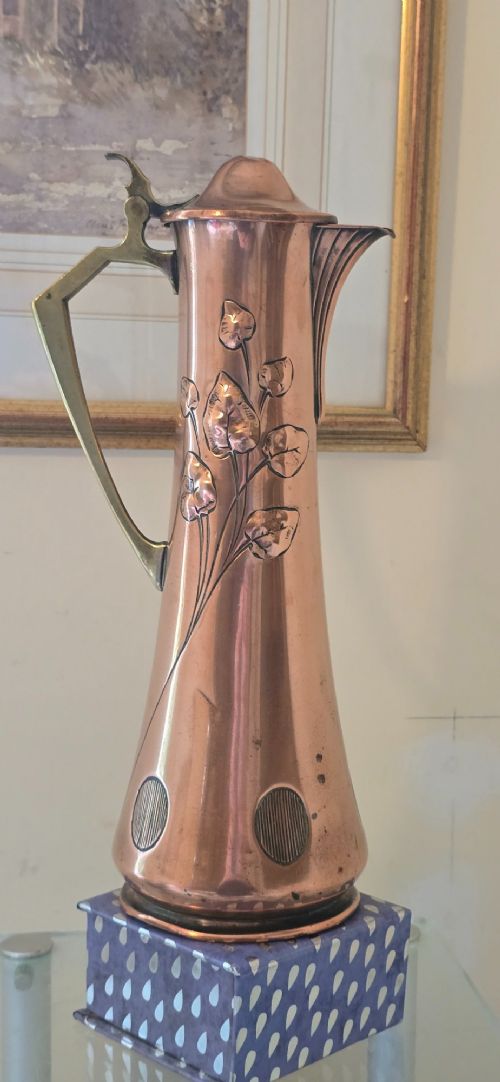
Surface decoration ranges from plain polished metal to intricate engraving, repoussé, floral relief, and silver-and-copper inlay. Arts and Crafts and Art Nouveau examples demonstrate specialised hammering and patination techniques that emphasise the tactile qualities of the metal.
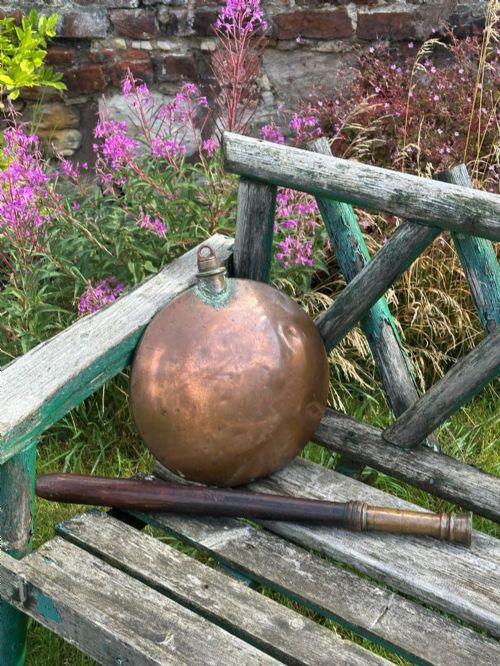
Yak butter tea and moon-shaped warming flasks remind us that historical thirst came in remarkably specific regional packages.
Craftsmanship and Proportion
Quality reveals itself in the weight of the metal, the integrity of the seams, and the balance of the overall silhouette. Superior examples maintain crisp detailing in cast brass components and hand-applied ornamentation without obscuring the structural form.
The finesse of the handle attachment, the precision of the spout alignment, and the presence of makers' marks or distinct regional traits separate standard utilitarian items from finer workshop pieces.
William Soutter And Sons·Benetfink And Co·Joseph Sankey·Orme Evans And Co·WMF
The Copper Water Vessel Glossary
- Samovar
- A heated metal urn used to boil and heat water, traditionally featuring an internal vertical tube.
- Ewer
- A large pitcher with a flared spout, designed for pouring water, often associated with ritual or formal table service.
- Repoussé
- A metalworking technique where the metal is hammered from the reverse side to create a raised design in relief.
- Pontypool Ware
- A style of British japanned metalware known for its lacquered and decorated surfaces.
- Finial
- A decorative knob or ornament fixed to the lid or cover of a vessel.
Copper Water Vessel: Frequently Asked Questions
How do I clean an old copper vessel?
Traditional copper items benefit from gentle cleaning methods that preserve their natural patina rather than achieving a bright, modern shine. Using specialised metal cleaners sparingly helps maintain the historical surface without stripping away age-related wear.
Avoid abrasive pads or harsh chemical dips, which can damage soldered joints, engraved details, and applied brass or wooden elements. Soft cloths and mild soapy water suit regular maintenance best.
Were these vessels used for drinking water?
Many of these pieces were designed for heating water for tea, boiling water for household tasks, or serving water at the table. Samovars and kettles managed hot water, while jugs and barrels held cold water for daily use.
Some international or ritual examples, such as Tibetan butter tea pots or Persian bronze ewers, served specific ceremonial or religious functions rather than standard domestic water storage.
How do I tell a Georgian piece from a Victorian one?
Georgian examples often display restrained lines, simpler handle attachments, and heavier-gauge hand-hammered copper construction typical of the 18th and early 19th centuries. Their forms tend to prioritize functional utility with subtle decorative flourishes.
Victorian and later pieces frequently introduce more ornate detailing, machine-assisted manufacturing marks, and stylistic influences from the Arts and Crafts or Art Nouveau movements, including complex floral relief work.
Can I use a vintage copper kettle on a modern stove?
Most antique kettles and vessels are acquired for display, collection, or gentle decorative use rather than daily culinary service. Thin historical copper and soldered seams may not withstand modern high-heat induction or ceramic hob elements.
Using them as decorative focal points in a kitchen or living space protects their structural integrity and preserves the integrity of internal tin linings that may have degraded over time.