

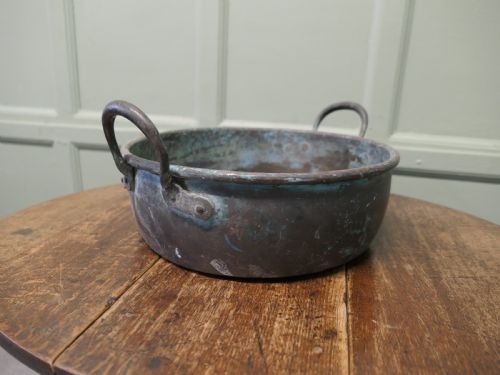


French Copper Basin
These heavy french copper basin examples bring honest warmth and utility to any room, valued for their deep metal tones and working history.
French Copper Basin
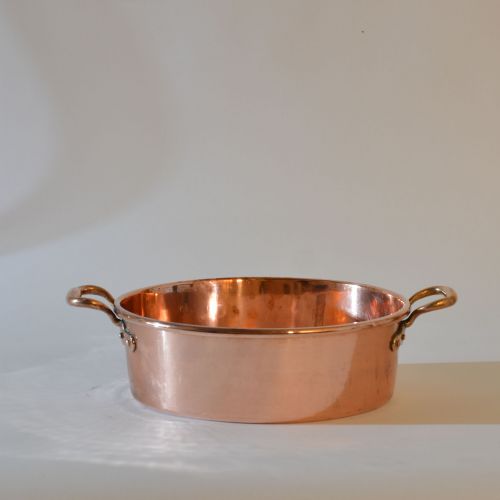
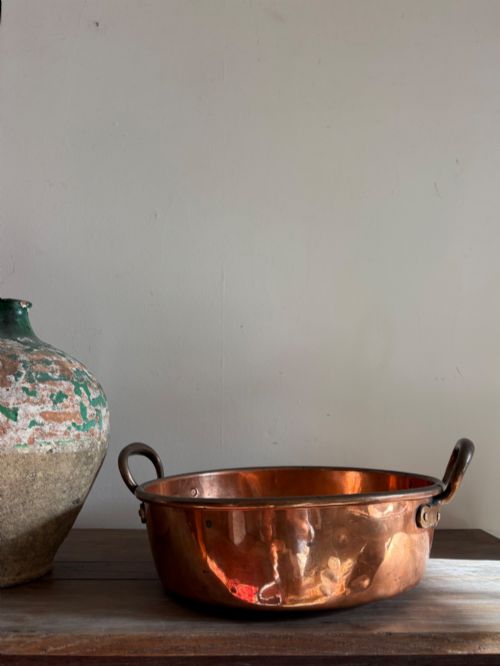
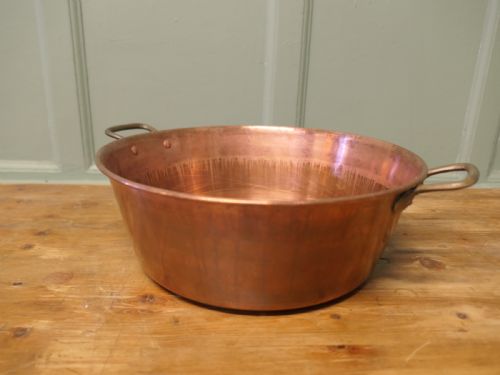
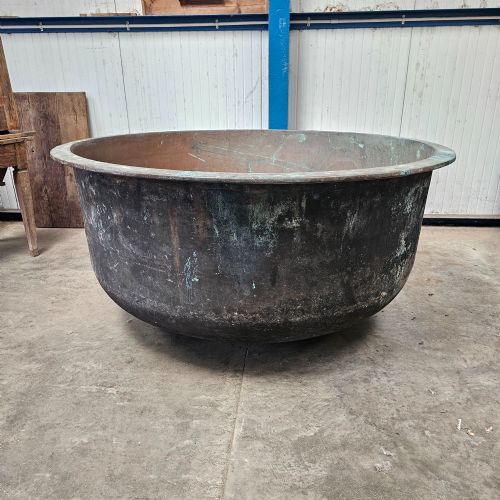
A french copper basin brings heavy domestic metalwork into modern spaces, usually found as large preserving pans, jam pans, or cauldrons. These pieces hail primarily from the nineteenth century, reflecting practical rural life across regions like Franche-Comte.
Buyers most frequently encounter robust double-handled vessels designed for hearth or kitchen use, often showing significant scale and substance. Such items span styles from rustic farmhouse and Victorian country to later art deco dinanderie planters.
The form often includes heavy iron handles or riveted joints that speak to genuine utilitarian origins rather than decorative imitation. Selecting one means acquiring a substantial vessel that served generations of practical kitchen or dairy tasks.
Materials and construction
Construction relies upon heavy sheet copper formed into deep vessels, frequently paired with sturdy iron or brass handles fixed securely by rivets. This combination provided the necessary strength for hanging over open hearths or containing heavy contents like fruit preserves and cheese curds.
Makers shaped the metal by hand or through early industrial techniques, leaving subtle hammer marks and surface variations that distinguish each basin. Interior surfaces sometimes show traces of tin lining, which protected food from direct contact with the copper during boiling.
French Copper Basin Retail Price Guide 2026
Typical asking prices for french copper basin among the pieces listed under this phrase on Sellingantiques today, from the lower quarter to the upper quarter. They describe what is for sale here now, not the wider market.
Some heavy jam pans still retain the faint, sweet scent of fruit preserves boiled over hearth fires generations ago.
Judging quality in copper ware
Quality rests upon the thickness of the metal gauge and the integrity of the original construction rather than surface polish alone. Heavier walls and robustly secured iron handles indicate a basin built for demanding daily toil rather than light decorative duty.
Proportion and form define the finer examples, where generous proportions and clean hammering elevate a humble kitchen tool into a striking interior vessel. The presence of period markings or regional traits adds distinct character to individual pieces.
The French Copper Basin Glossary
- Ferrat
- A traditional French term for a specific style of metal vessel or container. These items typically display sturdy utilitarian construction from the nineteenth century.
- Dinanderie
- A term describing decorative and functional brass or copper objects, particularly those associated with art deco styling. This encompasses heavier vessels adapted for use as planters and log bins.
- Preserving pan
- A large open vessel designed for boiling fruit and sugar or managing dairy production. They feature wide tops to allow rapid evaporation during cooking.
- Cauldron
- A deep rounded pot equipped with handles for suspension or lifting over a fire. Early versions combine heavy copper bodies with wrought iron fixings.
French Copper Basin: Frequently Asked Questions
What were these copper basins used for originally?
These vessels served heavy domestic and agricultural duties in French kitchens and farmhouses, primarily for preserving fruits, boiling jam, or making cheese.
Their robust construction allowed them to hang safely over hearth fires or sit stably on heavy stove rings during long cooking processes.
How do I clean and maintain antique copper?
Maintenance depends entirely on whether you prefer a bright polished shine or the deep, dark patina accumulated over a century.
Gentle washing with warm soapy water preserves the surface integrity without removing the historical character embedded in the metal.
Can I use these pans for cooking today?
Most antique pans require inspection of the interior lining before food use, as historical tin linings often wear away over decades of scrubbing.
Many buyers choose to use them purely as decorative planters, log bins, or hearth vessels rather than for active culinary tasks.
How do I date an old copper basin?
Dating relies on observing construction methods, such as hand-beaming marks, dovetail seams, and the style of the iron or brass handles attached to the body.
Nineteenth-century examples typically show heavier metal gauges and simpler, purely functional joinery compared to later decorative items.