


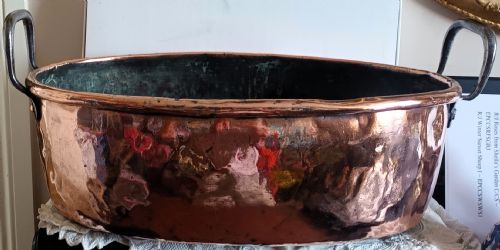


Hand Hammered Copper Tub
These hand hammered copper tub examples range from nineteenth-century dairy pans to Arts and Crafts bowls, offering robust metalwork built for utility.
Hand Hammered Copper Tub
A hand hammered copper tub encompasses vessels designed for practical tasks, appearing across styles such as Georgian, Victorian, and Arts and Crafts. Buyers exploring this search phrase encounter utilitarian items including cream setting pans, coal bins, planters, and cooking vessels from the nineteenth century.
The domestic and farm utility pieces on this page span heavy cooking pots, ferrats, and large bowls. Many specimens display the hammered texture characteristic of period metalworking traditions found in English and French country contexts.
Forms vary from shallow dairy pans to deep log buckets and jardinieres on stands. The selection leans heavily toward nineteenth-century production, incorporating brass fittings, iron handles, and riveted construction.
Materials and construction methods
Makers shaped these objects primarily from sheet copper, often beating the metal by hand to create textured surfaces. Rivets join structural seams on many pieces, securing joints on heavy vessels and cooking pots.
Additional metals appear alongside the copper, notably brass for handles or rims and wrought iron or tin for reinforcement. These mixed-metal details served structural purposes on fireside stores, coal bins, and large washing or cooking containers.
Hand Hammered Copper Tub Retail Price Guide 2026
Typical asking prices for hand hammered copper tub among the pieces listed under this phrase on Sellingantiques today, from the lower quarter to the upper quarter. They describe what is for sale here now, not the wider market.
Listings feature nineteenth-century pieces utilising copper, brass, iron, and tin across Georgian, Victorian, and Arts and Crafts styles.
Evaluating period metalwork quality
Quality in a hand hammered copper tub rests upon the weight of the metal and the precision of the hand-beaten finish. Heavier gauge copper indicates robust domestic or agricultural service rather than light decorative intent.
The integrity of riveted joints and the survival of original brass or iron hardware distinguish superior examples. Pieces retaining their structural fixings and uncompromised basin walls demonstrate better craftsmanship from the nineteenth century.
The Hand Hammered Copper Tub Glossary
- Ferrat
- A traditional vessel form used in food preparation or heating. These items reflect nineteenth-century kitchenware production.
- Cream setting pan
- A wide, shallow basin designed for dairy use, allowing cream to rise from milk. Examples date to the Georgian and nineteenth-century periods.
- Jardiniere
- An ornamental pot or stand for holding plants or flowers. Often fashioned in copper during the Victorian and Arts and Crafts eras.
- Riveted construction
- A method of joining metal plates using driven metal pins. This technique secures seams on heavy copper vessels and cooking pots.
- Arts and Crafts
- A design movement valuing handcraft and traditional materials over industrial output. Pieces from this period emphasise visible hammer marks and simple utility.
Hand Hammered Copper Tub: Frequently Asked Questions
What were these copper tubs used for?
These vessels served various utilitarian purposes in domestic and agricultural settings, ranging from dairy work to fireside storage.
Items like cream setting pans handled milk processing, while larger vessels functioned as cooking pots, coal bins, or planters.
How do I date a copper tub?
Dating relies on stylistic markers, construction techniques, and materials associated with specific periods like the nineteenth century.
Georgian and Victorian pieces display distinct forming methods, handle attachments, and rim treatments that separate them from later craft revivals.
Are these pieces made entirely of copper?
Many items combine copper bodies with elements of brass, iron, or tin for structural strength and handling.
It is common to find brass rims, riveted iron handles, and tin linings on vessels designed for cooking or heavy domestic hauling.
How should I clean antique copper?
Maintaining these surfaces usually involves preserving the natural patina accumulated over the nineteenth century and beyond.
Aggressive polishing removes the aged finish that collectors look for on period metalwork, so gentle dusting is generally preferred.