




Victorian Copper Jardiniere
A victorian copper jardiniere brings the warmth of hammered metal and rich planting into a room, blending utility with decorative weight.
Victorian Copper Jardiniere
A victorian copper jardiniere serves as a substantial vessel for indoor plants, bringing a warm metallic sheen to domestic interiors. These pieces appear across the nineteenth century and into the Edwardian era, taking forms such as round planters, oval tubs, and specialised plant holders.
The versions most commonly met here belong to the Victorian and Edwardian periods, often paired with brass handles or feet. Alongside standard planters, the selection includes related forms like log buckets, coal bins, and coopered wooden vessels with copper bands.
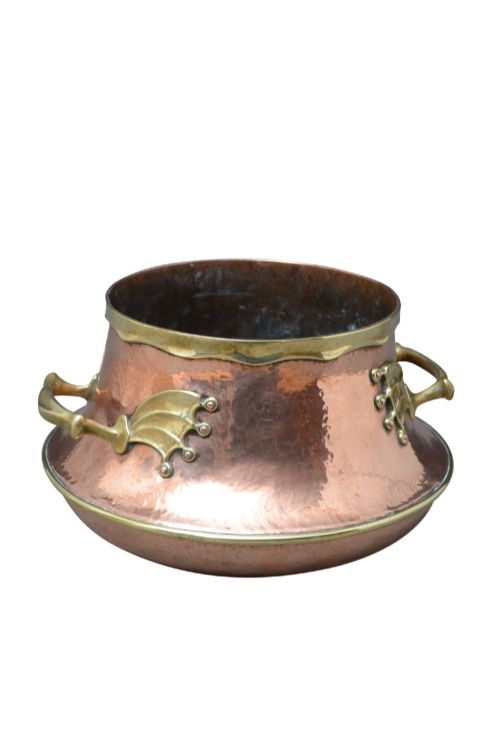
Makers and artisans adapted these planters for various domestic spaces, creating everything from small windowsill dishes to large floor-standing jardinieres on stands. The designs range from plain polished surfaces to heavily embossed or hammered vessels influenced by the Arts and Crafts movement.
How they were made
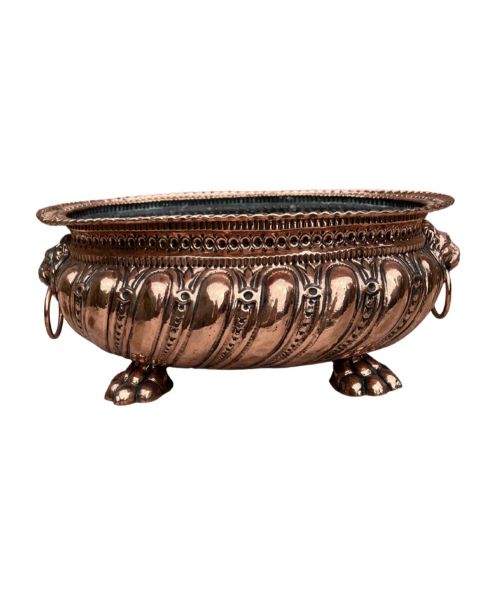
Copper forms the primary body of these vessels, shaped through beating, hammering, or spinning the sheet metal into deep cylindrical and oval forms. Many pieces incorporate brass for handles, rims, and paw feet, providing a contrasting golden tone against the reddish copper body.
Some examples utilise a coopered wooden construction, binding staves of walnut or ebonised wood with heavy copper bands to create watertight buckets and planters. Wrought iron also appears as a structural material, particularly in plant holders and stands from the late nineteenth century.
Victorian Copper Jardiniere Retail Price Guide 2026
Typical asking prices for victorian copper jardiniere among the pieces listed under this phrase on Sellingantiques today, from the lower quarter to the upper quarter. They describe what is for sale here now, not the wider market.
Recorded forms include standard jardinieres, plant holders, Gladstone bag planters, log buckets, and coopered tea stoves.
What varies in quality
The distinction between ordinary and superior pieces rests on the weight of the metal and the crispness of the hand-finishing. Heavier gauge copper retains its shape better and resists denting, while finer examples show deliberate hand-hammering rather than uniform machine stamping.
Detailing determines the upper tier of the range, seen in cast brass handles securely fixed with riveted joints rather than superficial solder. The integration of complementary materials, such as well-turned walnut staves or finely forged wrought iron supports, elevates the overall execution.
The Victorian Copper Jardiniere Glossary
- Jardiniere
- An ornamental pot or stand for holding plants or flowers, usually designed for interior display. They appear in ceramic, metal, and wood throughout the nineteenth century.
- Coopered
- Made by a cooper using wooden staves fitted together and bound with metal hoops. This technique creates watertight buckets and planters.
- Arts and Crafts
- A design movement valuing traditional craftsmanship, simple forms, and visible hand-working. Copper vessels from this style often feature hand-beaten surfaces.
- Embossed
- Decorated with a design raised above the surrounding surface using punches and hammers. This technique adds texture and pictorial relief to plain metal walls.
Victorian Copper Jardiniere: Frequently Asked Questions
What is a victorian copper jardiniere used for?
These vessels were originally designed to hold potted plants and ferns, protecting interior surfaces while adding a decorative focal point to a room.
Today, they serve the same botanical purpose or function as stylish storage containers for logs, magazines, and household items.
How do I clean an antique copper planter?
Dust the surface regularly with a soft cloth and avoid abrasive scouring pads that scratch the metal.
Most collectors prefer to leave a natural aged patina, but mild soapy water or specialised copper cleaners will restore the bright metallic shine if desired.
Are these planters waterproof?
Many solid metal and coopered wooden vessels hold water successfully, but older seams and joints can develop minor seepage over time.
Using a plastic liner inside the jardiniere protects the antique interior from damp soil and standing moisture.
How can I tell the period of a jardiniere?
Look closely at the construction methods, handle attachments, and surface decoration to identify the manufacturing era.
Victorian pieces often feature embossed patterns or cast brass paw feet, while later Arts and Crafts examples display hand-beaten hammering marks.