




Copper Flower Pot
These copper flower pot selections bring warm metallic tones and historical character to indoor planting, forged to display greenery with enduring style.

Copper Flower Pot
A copper flower pot serves as a decorative vessel for indoor plants, combining utility with distinct metalwork craftsmanship. When exploring this selection, buyers encounter various forms designed to hold botanical displays securely.
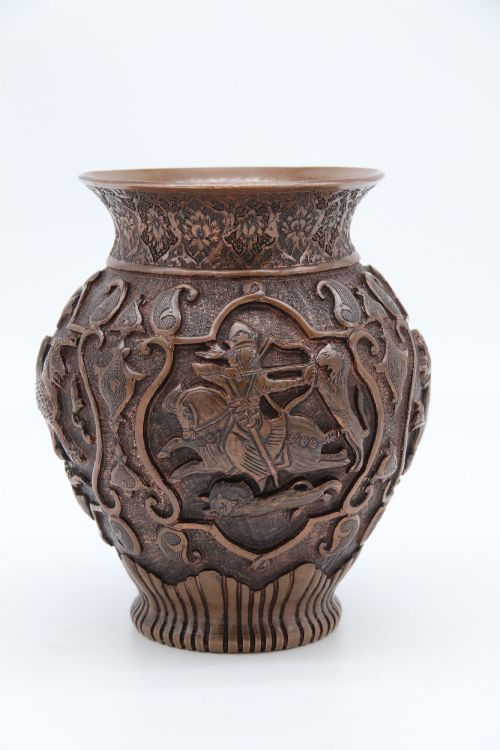
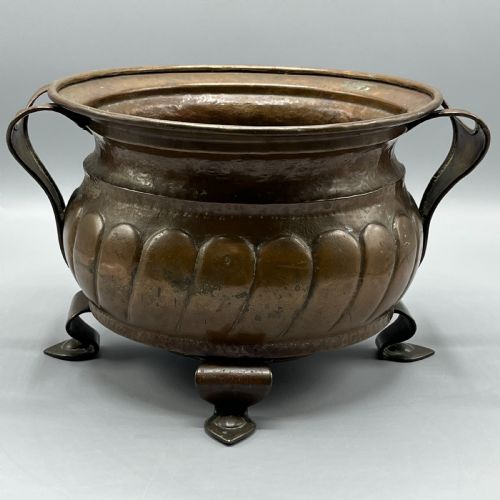
The pieces appearing here primarily comprise jardinieres and planters originating from the Victorian, Late Victorian, and Arts and Crafts periods. Makers also produced bucket forms and vases during the nineteenth and early twentieth centuries to meet domestic demand for plant display.
Middling and finer examples span traditional British and European workshop traditions alongside Anglo-Indian and Chinese Canton enamel iterations. Each object reflects the prevailing aesthetic of its era, from ornate Victorian chasing to clean Arts and Crafts hammered surfaces.
Materials and construction methods
Makers utilised solid copper sheets, frequently combining them with brass for handles, rims, or feet to create structural contrast and stability. Metalworkers shaped these primary materials through beating, spinning, and soldering.
Surface ornamentation relied heavily on repoussé techniques, where artisans hammered designs from the reverse side to produce raised motifs. Certain vessels incorporate enamel work or wooden elements to complement the metallic body.
Copper Flower Pot Retail Price Guide 2026
Typical asking prices for copper flower pot among the pieces listed under this phrase on Sellingantiques today, from the lower quarter to the upper quarter. They describe what is for sale here now, not the wider market.
Listings feature items spanning the eighteenth to the twentieth centuries, utilising copper, brass, enamel, and wood across diverse stylistic traditions.
Evaluating quality and execution
The distinction between standard vessels and superior pieces rests upon the depth and crispness of the repoussé work and the thickness of the copper used. Skilled artisans achieved balanced proportions and secure joints that withstand the weight of soil and water.
Detailing on handles, rims, and brass fittings indicates the level of care invested during production. Superior examples display deliberate hand-hammered textures rather than mechanical stamping, marking them out as products of dedicated workshops.
Amile Coppieters
The Copper Flower Pot Glossary
- Jardiniere
- A decorative ceramic or metal pot, typically used for holding ornamental plants indoors. These vessels often feature substantial proportions and flat bases suitable for tabletops or stands.
- Repoussé
- A metalworking technique where the artisan hammers a design from the reverse side to create low relief on the front. This method requires considerable skill to achieve even depth across the copper surface.
- Arts and Crafts
- A design movement valuing traditional craftsmanship, simple forms, and visible maker marks over mass production. Objects from this period frequently display honest construction and hand-beaten textures.
- Canton enamel
- Painted enamel ware produced in Guangdong, China, characterised by colourful decorative motifs. These pieces occasionally appear alongside European metalwork in diverse decorative schemes.
Copper Flower Pot: Frequently Asked Questions
Are these pots suitable for direct planting?
Many antique vessels lack drainage holes, meaning direct planting can trap moisture against the metal and accelerate corrosion. Using a separate plastic or ceramic inner pot protects the historical material from constant dampness.
This approach also makes watering and repotting considerably easier without disturbing the exterior container.
How can I tell the period of a copper planter?
Stylistic clues such as the profile, handle attachments, and decorative motifs usually point toward a specific era like the Victorian or Arts and Crafts periods. Heavier brass fittings and ornate chasing often indicate nineteenth-century British manufacture.
Simpler, hammered surfaces with minimal embellishment typically align with the later Arts and Crafts or Art Nouveau movements.
What is the difference between a jardiniere and a planter?
In historical manufacturing terms, a jardiniere generally denotes a more decorative, ornate vessel meant to showcase flowering plants in reception rooms. Planters often served a slightly more utilitarian function, though both terms frequently overlap in descriptions.
Both forms utilise durable metals like copper and brass to support indoor greenery safely.