



Copper Cachepot
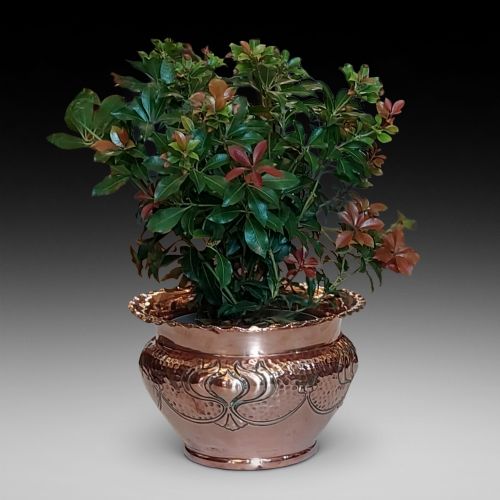
A copper cachepot brings warm metallic reflection and living green together, offering a timeless vessel for indoor plants.
Copper Cachepot
A copper cachepot is a decorative container designed to hold a potted plant, concealing standard nursery pots while protecting interior surfaces. These pieces range from compact Victorian vessels to striking Arts and Crafts designs.
The selections available here span several distinct periods including Victorian, Edwardian, and the late nineteenth century. Forms alternate between straightforward planters, traditional jardinieres, and decorative buckets.
Makers utilised various metals and woods across these eras, pairing bright copper bodies with contrasting brass fittings, wrought iron stands, and ebonised wood details. French repoussé examples and Chinese Canton enamel pieces also appear among the varied origins.
Materials and construction
Makers fashioned the primary bodies from solid copper sheets, often shaping them by hand to create seamless cylindrical or bulbous forms. Repoussé techniques allowed artisans to hammer intricate decorative motifs into the soft metal from the reverse side.
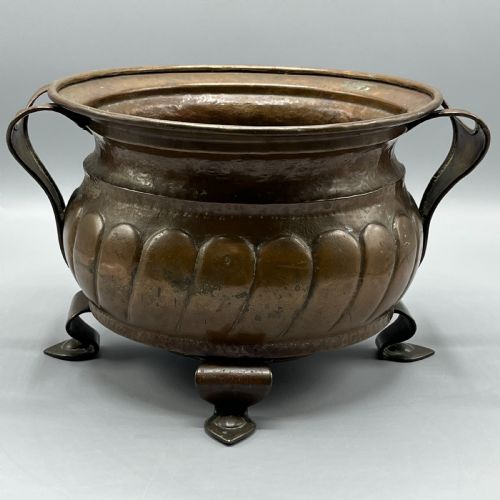
Constructors integrated brass trim, handles, and feet to provide structural contrast and secure joins. Wrought iron served as sturdy framework for plant holders, while internal tin linings protected the outer copper from moisture.
Copper Cachepot Retail Price Guide 2026
Typical asking prices for copper cachepot among the pieces listed under this phrase on Sellingantiques today, from the lower quarter to the upper quarter. They describe what is for sale here now, not the wider market.
Judging quality and craftsmanship
Distinctions in quality rest upon the thickness of the metal gauge and the firmness of the construction. Heavier copper bodies retain their structural integrity better over decades of holding damp soil and heavy plants.
Artisanal execution separates standard vessels from superior examples. Crisp repoussé definition, well-fitted brass mounts, and clean joinery distinguish the work of skilled metalworkers from routine factory output.
The Copper Cachepot Glossary
- Cachepot
- An ornamental flowerpot cover designed to hold a plant in its inner pot. It lacks drainage holes in the base to protect indoor furniture.
- Jardiniere
- A large ornamental pot or stand for plants or flowers. These vessels often sit directly on the floor or on low tables.
- Repoussé
- A metalworking technique where the artisan hammers a design from the reverse side to form a raised pattern in relief. This method defines many decorative panels on nineteenth-century vessels.
- Canton enamel
- Painted copper ware produced in China for export, featuring colourful vitreous enamel designs. Pieces of this type demonstrate intricate floral or figurative detailing.
Copper Cachepot: Frequently Asked Questions
Can I plant directly into a copper cachepot?
Planted soil introduces moisture that can accelerate internal corrosion and tarnish the metal over time. Using an inner plastic nursery pot preserves the interior.
Lifting the potted plant out for watering also prevents standing water from accumulating at the base of the vessel.
How do I clean a antique copper cachepot?
Dust the surface regularly with a soft, dry cloth to prevent grime accumulation. Avoid harsh chemical cleaners that strip away historic patination.
If polishing is necessary, select a mild metal cream formulated specifically for copper and apply it sparingly with a soft cloth.
How do I date an older copper planter?
Examine the construction methods, fastener types, and decorative styles visible on the body. Machine-rolled edges and specific manufacturing marks often indicate nineteenth or early twentieth-century origin.
Stylistic cues such as floral motifs point directly toward Arts and Crafts or Art Nouveau periods.
Where should I place a metal planter?
Position the vessel on stable surfaces where natural light highlights the reflective metallic finish. Keep the piece away from direct, continuous moisture to protect surrounding furniture.
Pairing the warm copper tones with green foliage creates a strong visual contrast in living spaces.