

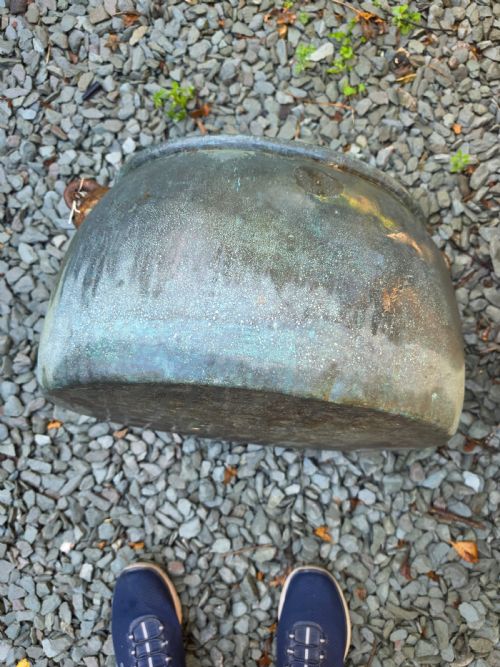


Rustic Copper Fire Bucket
These heavy metal vessels bring utilitarian warmth to a hearth, offering a practical way to store fuel while showing the marks of past labour.
Rustic Copper Fire Bucket
A rustic copper fire bucket serves as a sturdy receptacle for hearth fuel or garden planting, often repurposed from industrial vessels of the nineteenth century. These items appear in forms such as riveted boilers, cauldrons, and large planters associated with Victorian and Arts and Crafts styles.
Buyers seeking a rustic copper fire bucket will most frequently encounter nineteenth-century examples shaped by country and industrial traditions. These pieces combine functional metal construction with patinated surfaces shaped by age and use.
What varies in quality
Quality rests in the weight of the metal and the integrity of the riveted joints, which determine how solidly a vessel holds its shape over decades of use. Thicker plates and heavier iron handles indicate superior utility, whereas lighter decorative items lack the substantial presence of true working pieces.
The character of the surface patination also separates standard examples from finer ones, as untouched oxidation and natural wear provide visual depth. Pieces that retain their original structural hardware without excessive modern intervention command greater interest among collectors.
Rustic Copper Fire Bucket Retail Price Guide 2026
Typical asking prices for rustic copper fire bucket among the pieces listed under this phrase on Sellingantiques today, from the lower quarter to the upper quarter. They describe what is for sale here now, not the wider market.
Listings for this search span the nineteenth century, featuring materials such as copper, brass, iron, zinc, and wrought iron.
The Rustic Copper Fire Bucket Glossary
- Riveted
- Joined with metal pins hammered flat at the ends. This traditional method secures overlapping metal plates on heavy vessels and boilers.
- Verdigris
- A green patina formed naturally on copper through atmospheric oxidation. This surface layer develops over long periods of exposure.
- Cauldron
- A large metal pot with a rounded base and handles for hanging or carrying. These vessels were utilised over open fires for heating and domestic tasks.
- Boiler
- A large metal container designed for heating water. Nineteenth-century examples often feature sturdy copper construction and riveted seams.
Rustic Copper Fire Bucket: Frequently Asked Questions
How were these metal buckets originally used?
These vessels served practical purposes around the home, workshop, or hearth, holding water for fire safety or carrying heavy loads of fuel.
Over time, many of these utilitarian items moved from active service into domestic interiors as decorative containers for logs and plants.
Can I use a copper bucket for planting?
These metal vessels adapt easily to holding large plants and indoor greenery, matching their historical use as garden planters.
The durable copper and iron construction resists moisture, though lining the interior helps protect the metal from prolonged damp soil.
How do I identify a nineteenth-century piece?
Nineteenth-century items typically feature hand-hammered surfaces, visible iron rivets, and heavier gauge copper than modern reproductions.
Examine the construction joints and handles for signs of traditional blacksmithing or early industrial fabrication methods.
What causes the green verdigris on copper?
Verdigris forms when copper reacts naturally over decades with moisture and oxygen in the air. This green layer adds historical character and confirms the age of the metal.