
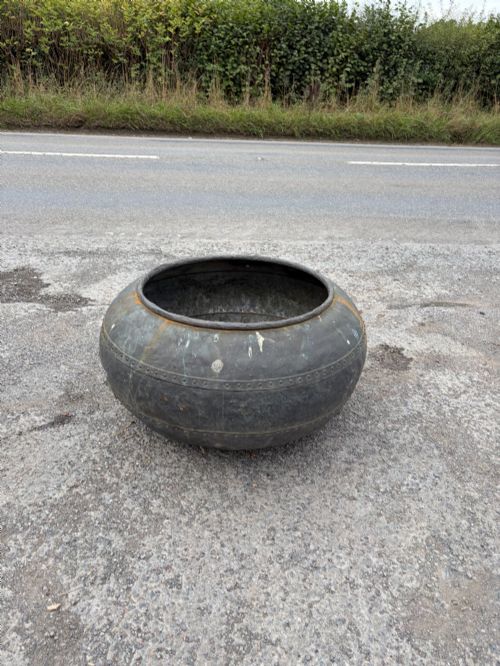
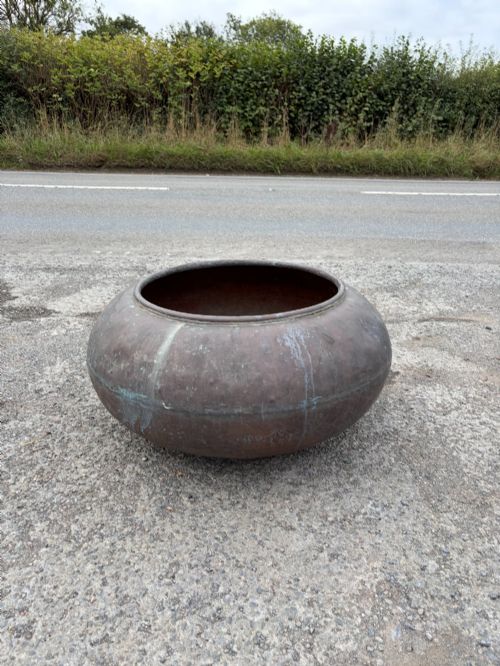
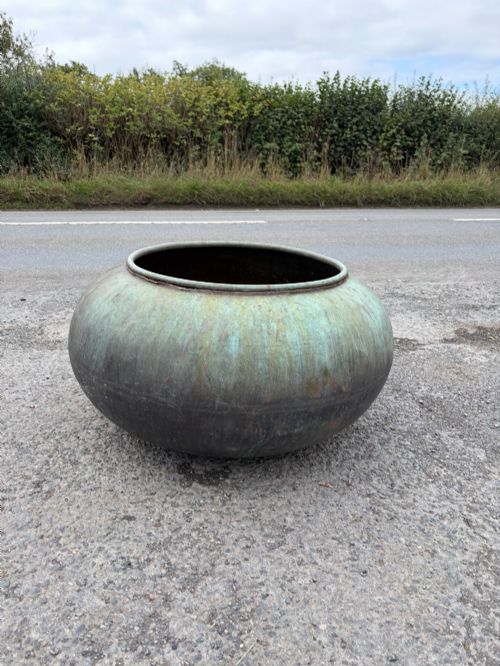
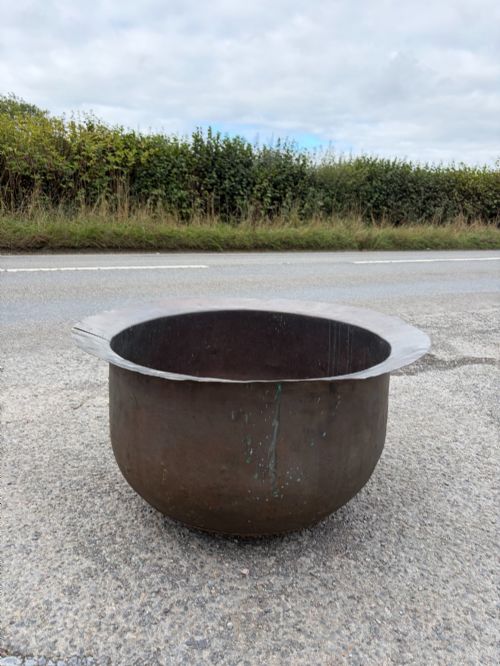

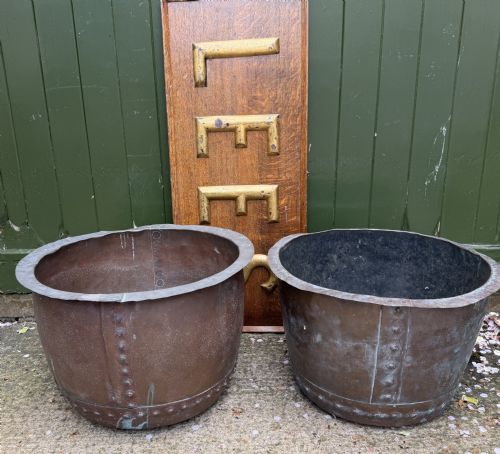


19th Century Copper Planter
These heavy metal vessels bring warmth and functional history into a room, making a 19th century copper planter a versatile choice for holding logs or greenery.
19th Century Copper Planter
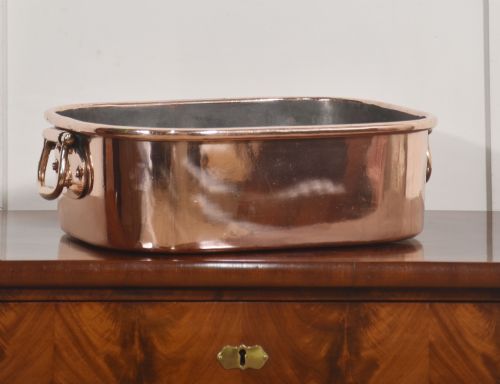
The periods represented span the Georgian era through to the late Victorian period and the Arts and Crafts movement, encompassing styles from rustic farmhouse to industrial. Many pieces display dual identities in their titles, serving interchangeably as log baskets, wine coolers, and garden planters depending on their scale and setting.
How They Were Made
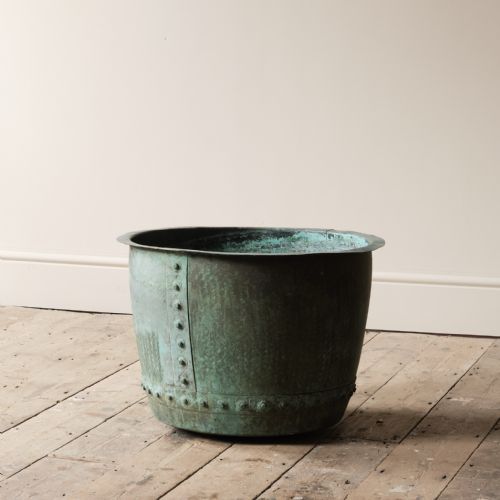
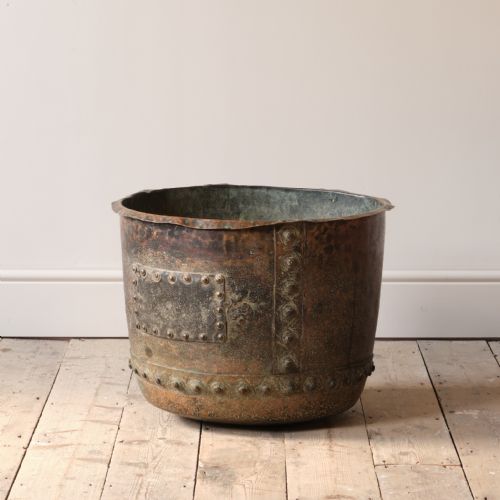
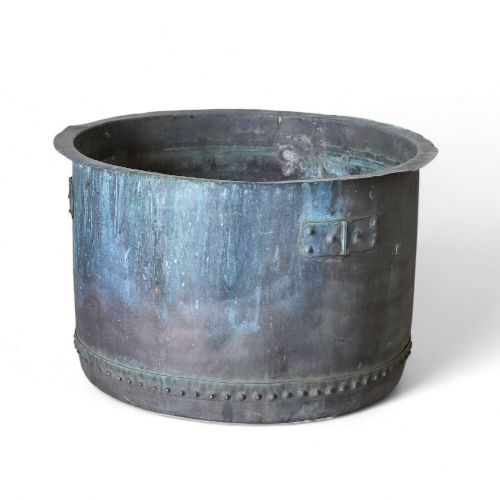
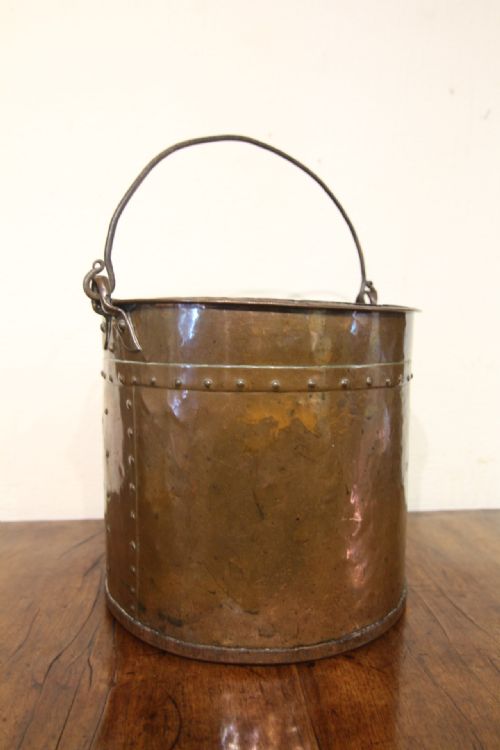
The construction relies heavily on sheet copper joined with hand-beaten rivets, creating robust seams designed to hold weight and moisture without leaking. Blacksmiths and metalworkers added structural integrity and contrast by incorporating wrought iron swing handles, brass fittings, and steel reinforcements.
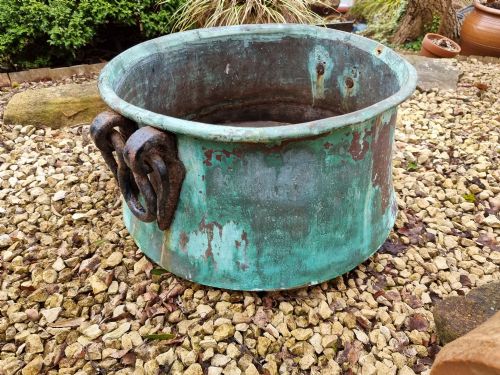
Surfaces developed their character through prolonged use and exposure to the elements, leaving behind rich natural patinas, weathered verdigris finishes, and the subtle hammer marks of the artisan who shaped them.
Listings span materials including copper, brass, iron, wrought iron, tin, zinc, and wood across various Victorian and Georgian forms.
What Varies in Quality
Quality rests in the integrity of the original construction, seen in the regularity of hand-driven rivets and the thickness of the copper sheet used to form the body. Substantial vessels retain their structural rigidity and roundness better over centuries of handling than thinner, lighter examples.
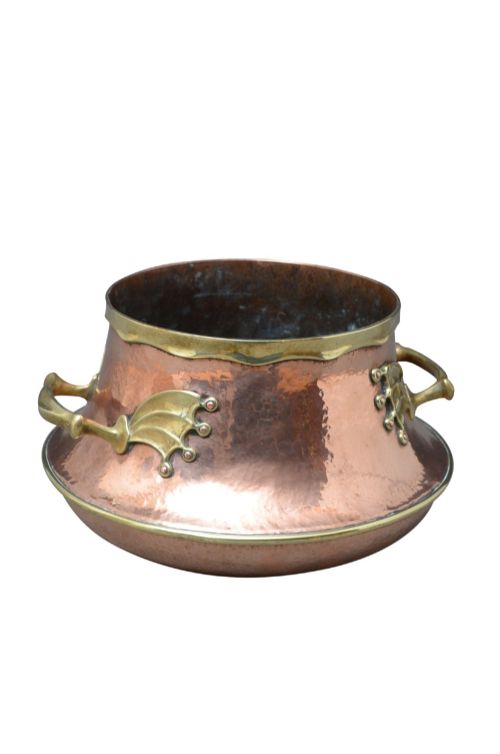
The visual appeal of the surface finish also determines standing, with unpolished natural patinas and undisturbed verdigris holding more historical character than overly scrubbed metal. Additionally, the presence of original wrought iron handles or complementary brass mounts elevates a piece from a simple utility item to a refined decorative object.
The 19th Century Copper Planter Glossary
- Verdigris
- A green patina or crust that forms on copper through atmospheric weathering and oxidation. This natural chemical reaction adds decorative depth and confirms age.
- Jardinière
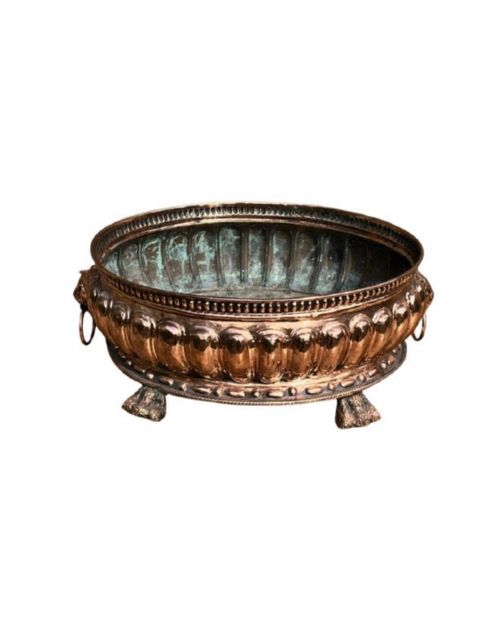
- An ornamental pot or stand designed specifically to hold growing plants or flowers. These items often feature more decorative brass or copper detailing than standard utility vessels.
- Cauldron
- A large metal pot with a wide rim and a swing handle, traditionally used for heating liquids over an open fire. In modern contexts, these serve as deep log bins or large garden planters.
- Grain measure
- A standardised cylindrical metal vessel once used for quantifying dry agricultural produce. Their heavy construction and uniform proportions make them robust choices for contemporary interiors.
19th Century Copper Planter: Frequently Asked Questions
How do I clean a copper planter?
Maintenance depends entirely on whether you prefer a bright, polished metallic shine or the historic character of a dark, weathered patina. Most collectors choose to leave the surface undisturbed, removing only dust with a soft, dry cloth.
Using abrasive chemical cleaners strips away the natural verdigris and centuries of oxidation that give these pieces their value. If you must wash out interior soil or residue, use mild soapy water and dry the metal thoroughly immediately afterwards.
Can I use these planters outdoors?
Many of these metal vessels were built for rugged utility and handle outdoor conditions well, though care is required. Placing them on patios or in gardens allows them to weather further naturally in the elements.
Protecting them from standing water or freezing temperatures prevents structural stress on the historic riveted seams. For delicate plants, using a plastic liner inside the copper pot protects the antique metal from constant damp soil.
What is the difference between a log bin and a jardinière?
Log bins and buckets typically originated as heavy-duty domestic or agricultural items intended for carrying fuel or grain. They usually display robust iron swing handles and thicker, utilitarian copper construction.
Jardinières tend to be more decorative pieces manufactured specifically for indoor display, often incorporating refined brass feet or patterned trim. Despite their original purposes, collectors frequently use both terms interchangeably today depending on the intended room display.
How can I tell a Georgian piece from a Victorian one?
Georgian items, dating from the early part of the timeline, often exhibit simpler, heavier hand-beaten construction with distinct joinery and minimal ornamentation. They reflect domestic utility from an era before industrial mass production standardised metal rolling.
Victorian and later Arts and Crafts pieces frequently introduce more varied decorative elements, such as shaped rims, contrasting brass bands, or stylized handles. Examining the rivet placement and the thickness of the metal sheet helps establish where a piece sits within the nineteenth-century timeline.