

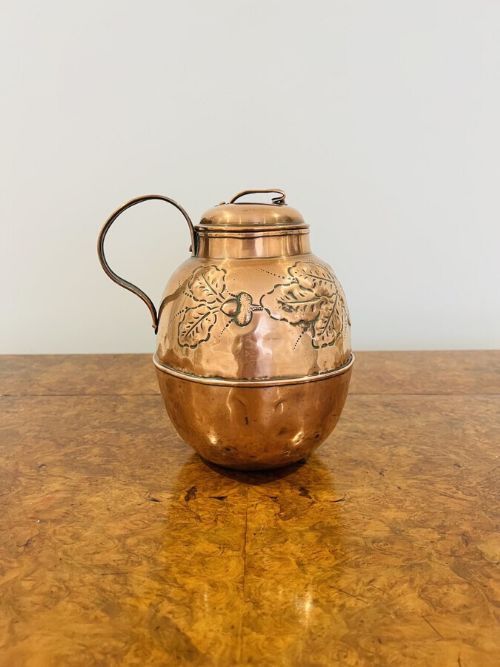


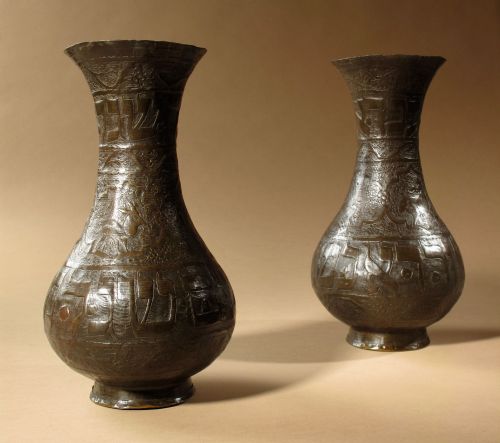

Embossed Copper Vessel
An embossed copper vessel brings warmth and texture to a room, offering both decorative presence and utilitarian history.
Embossed Copper Vessel
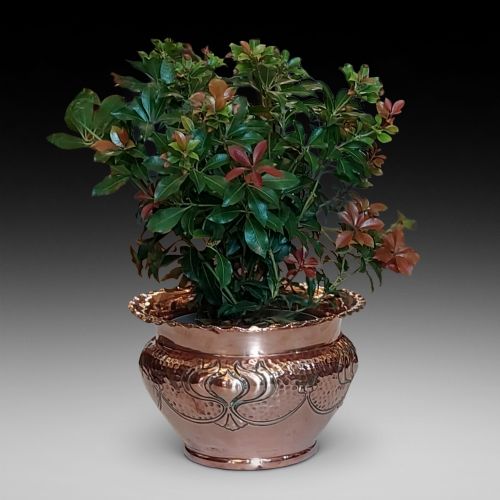
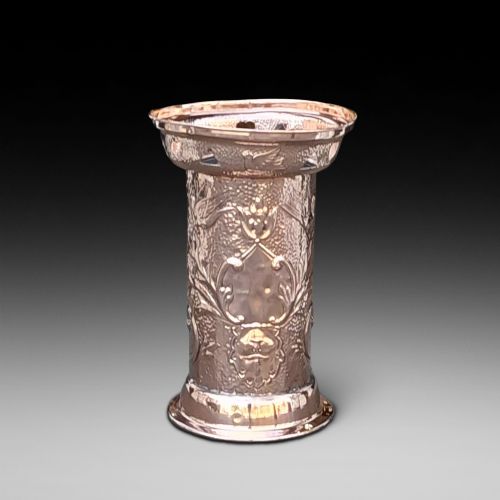
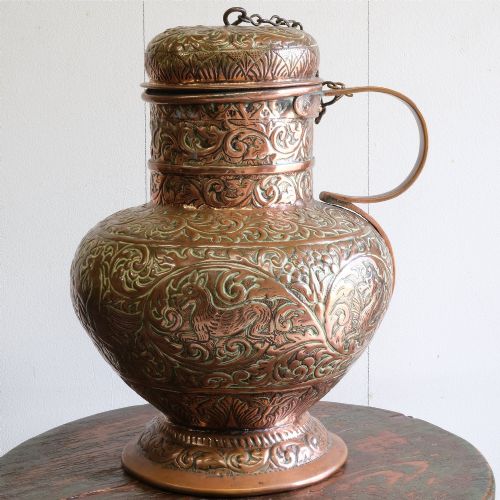
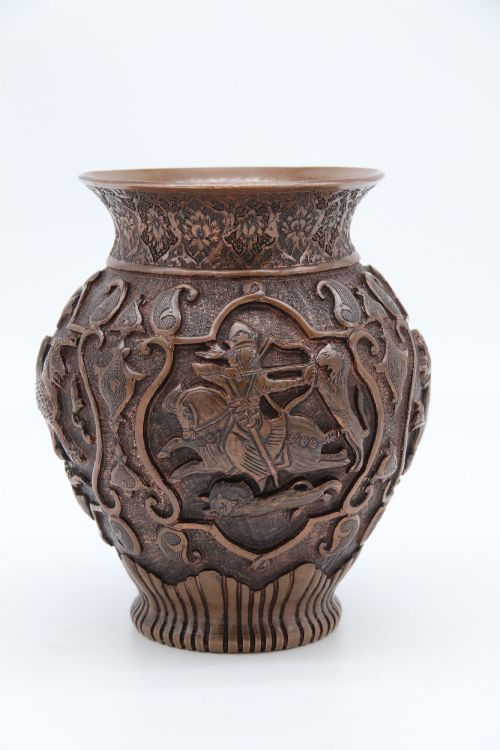
When you search for an embossed copper vessel, you encounter a diverse group of hollowware spanning several centuries and geographic origins. The forms range from practical domestic containers like pitchers, jugs, and cooking pots to decorative jardinières, umbrella stands, and wine cisterns.
The pieces on this page heavily reflect late nineteenth-century production, particularly the Art Nouveau and Arts and Crafts movements. You will also find earlier examples, such as eighteenth-century Italian wine cisterns and Indian repoussé work, alongside Edwardian and Victorian utilitarian items.
Domestic vessels vary from large log bins and umbrella stands to table bowls and Jersey cans. Each item combines metalworking utility with ornamental surface design, utilising hammering and repoussé techniques to create raised patterns.
Materials and construction methods
The primary material across these listings is copper, occasionally accompanied by brass accents or components. Artisans shaped these metals through hand-hammering, raising, and joining techniques to form sturdy hollowware bodies.
Surface ornamentation relies heavily on repoussé and embossing, where craftsmen worked the metal from the reverse side to push decorative motifs outward. Art Nouveau and Arts and Crafts examples often feature stylized floral or organic designs executed through this manual displacement of metal.
Embossed Copper Vessel Retail Price Guide 2026
Typical asking prices for embossed copper vessel among the pieces listed under this phrase on Sellingantiques today, from the lower quarter to the upper quarter. They describe what is for sale here now, not the wider market.
Listings feature copper alongside brass and metal, spanning periods from the eighteenth century through the Edwardian era.
Distinctions in craftsmanship and origin
Quality in these vessels rests upon the precision of the metalwork and the depth of the repoussé detailing. Finer examples display deliberate, crisp hammering and balanced proportions that elevate utilitarian items into artistic works.
Attribution to specific makers or defined stylistic movements, such as identified Arts and Crafts workshops, distinguishes standard domestic containers from notable decorative pieces. The complexity of the embossed motifs and the integrity of the joins further define the upper tier of the range.
Joseph Sankey
The Embossed Copper Vessel Glossary
- Repoussé
- A metalworking technique where the artisan hammers designs from the reverse side to create a raised pattern on the front. This method defines much of the surface decoration seen on nineteenth-century pieces.
- Jardiniere
- An ornamental pot or stand designed to hold a plant or flowers. These items often feature substantial embossing and were used for interior decoration in Victorian and Edwardian homes.
- Jersey Can
- A traditional vessel originating from the Channel Islands, typically utilised for holding and pouring milk or liquids. Antique examples are frequently made of heavy copper with brass fittings.
- Wine Cistern
- A large basin or vessel historically used for chilling or storing wine bottles. Eighteenth-century Italian examples represent particularly grand iterations of this form.
- Art Nouveau
- A stylistic movement prevalent around nineteen hundred characterised by organic, flowing lines and plant-inspired motifs. Pieces from this period frequently employ copper as a primary medium for decorative domestic objects.
Embossed Copper Vessel: Frequently Asked Questions
How do I clean an antique copper vessel?
Maintenance typically involves gentle dusting and occasionally utilising specialised metal cleaners if you prefer a bright finish. Many collectors choose to preserve the natural aged patina rather than polishing the surface to a high shine.
Avoid harsh abrasive compounds that can wear down the embossed details and thin the historic metal over time. A soft cloth and mild soapy water suffice for routine care.
What were copper log bins used for?
Log bins served as practical containers positioned by hearths to store firewood for domestic fires. Their robust copper construction easily accommodated heavy logs while protecting surrounding floors.
Over time, these utilitarian hearth accessories transitioned into decorative interior storage items. Today they frequently serve alternative purposes such as umbrella stands or large plant holders.
How can I tell an Art Nouveau piece apart?
Art Nouveau vessels feature characteristic asymmetrical, flowing lines and stylized organic motifs inspired by natural plant forms. These design elements distinguish them from earlier Victorian or later geometric styles.
Many pieces from this movement date around nineteen hundred and reflect the philosophies of the Arts and Crafts revival. The embossing often emphasises whip-like stems, floral buds, and sinuous curves.
Were these vessels purely decorative?
While many surviving items possess strong ornamental qualities, most started as functional household equipment. Pitchers, cooking pots, and Jersey cans performed daily domestic tasks in kitchens and dairies.
Jardinières and umbrella stands similarly served specific organizational roles within nineteenth-century hallways and reception rooms. Their conversion into purely display items happened as modern heating and storage methods replaced traditional copperware.