
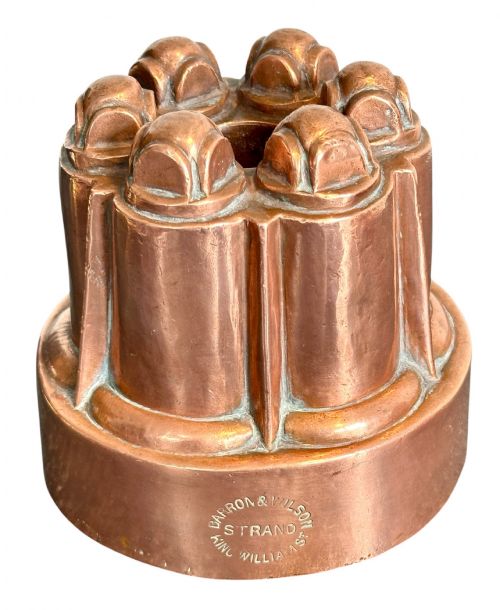
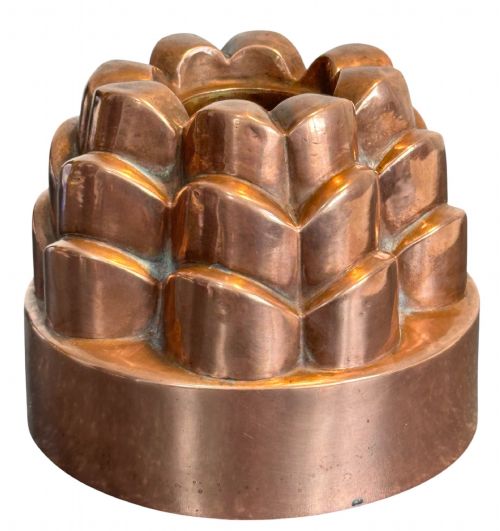


Copper Jelly Mold
These copper jelly mould pieces bring tactile kitchen history into the home through sculptural shapes and warm metal.
Copper Jelly Mold
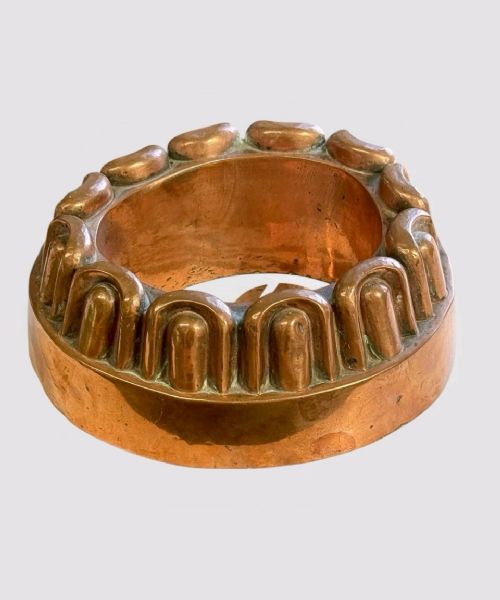
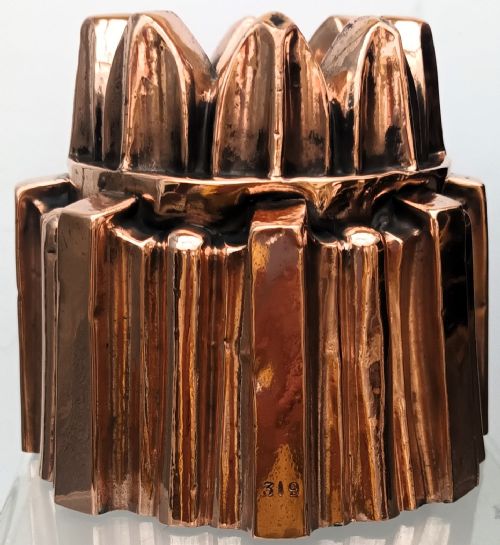
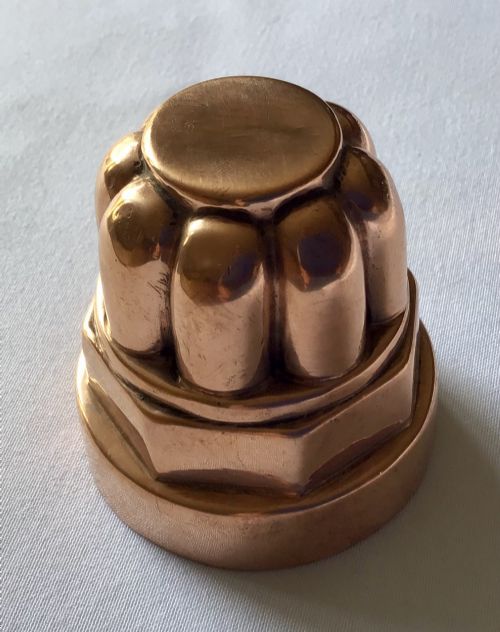
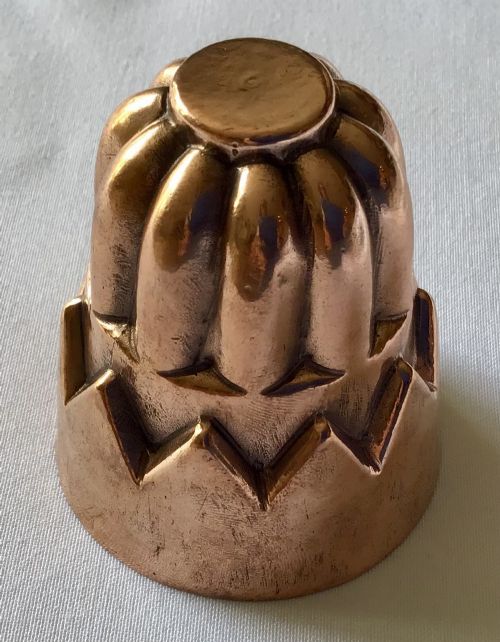
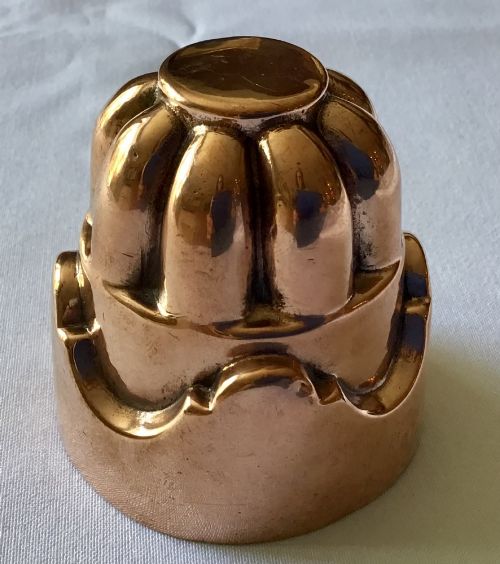
When you search for a copper jelly mould, you are looking at kitchenware designed for shaping jellies, aspics and iced desserts during the nineteenth century. These culinary moulds and kitchen collectables survive as decorative kitchenalia originating from English and French makers.
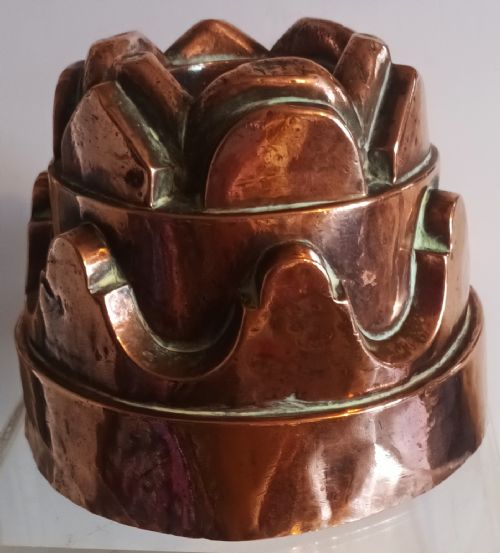
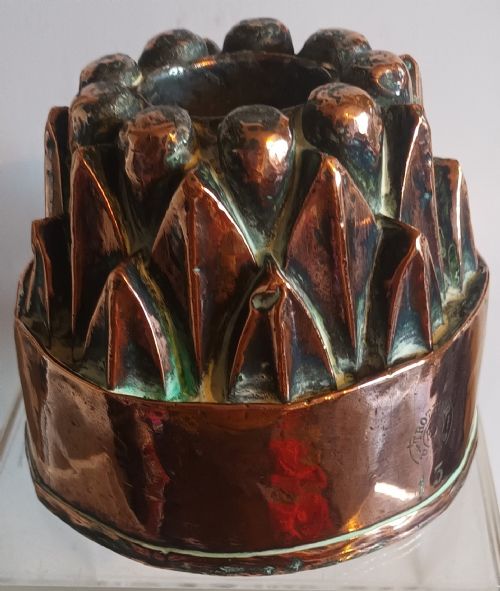
You are most likely to meet Victorian pieces on this page, ranging from standard kitchen forms to miniature versions and distinct pictorial designs. Examples include castle tops, cat shapes and lidded pots associated with retailers like Harrods.
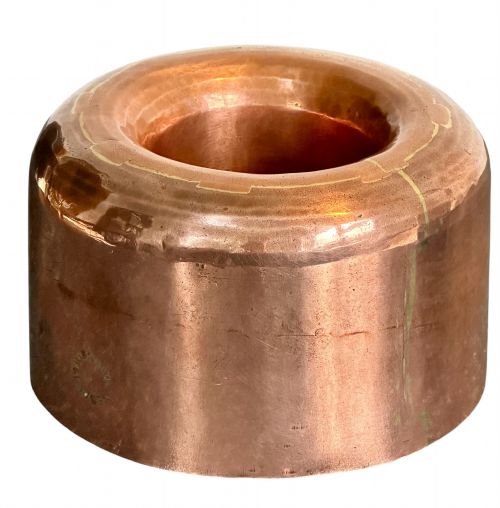
The objects combine utilitarian kitchen utility with ornamental form, reflecting domestic food preparation of the nineteenth century. They appear in various sizes and configurations, spanning simple jelly moulds to paired ice cream pots.
How they were made
These items were constructed primarily from heavy-gauge copper, often lined with tin internally to prevent food from reacting with the base metal. Brass and bronze elements occasionally appear in structural fittings or reinforcing rims.
Metalworkers shaped the heavy copper sheets through sinking and spinning techniques, forming intricate fluted patterns, raised castles and animal figures such as cats. Riveted or folded seams secure the structure, while the interior tinning provides a smooth, food-safe surface for setting culinary mixtures.
Recorded object types span kitchenware, jelly moulds, culinary moulds, kitchenalia and specific animal or architectural shapes.
What varies in quality
The distinction between ordinary utility pieces and finer examples rests on the complexity of the interior design and the crispness of the raised motifs. Moulds featuring architectural castle tops or detailed animal forms demand higher levels of metalsmithing skill than plain geometric shapes.
Condition and original linings also differentiate the pieces, with intact tin linings and uncompromised metal thickness preserving the integrity of the original kitchen implement. Maker attributions and retailer provenance, such as pieces retailed by Harrods or marked by Trottier, elevate the interest for collectors.
The Copper Jelly Mold Glossary
- Tin lined
- A protective interior coating applied to copper culinary vessels to prevent copper toxicity during food preparation. This silver-coloured layer requires careful maintenance over time.
- Kitchenalia
- Historic domestic utensils and culinary equipment collected for their decorative and social history value. These items were once in daily kitchen use.
- Castle top
- A pictorial mould design featuring architectural crenellations and towers at the apex. It produces an elaborate jellied shape resembling a fortress.
- Culinary mould
- A rigid vessel utilised for shaping jellies, blancmanges, and iced desserts before unmoulding onto a serving dish. They employ thermal conductivity to aid chilling.
Copper Jelly Mold: Frequently Asked Questions
What were copper jelly moulds used for?
These vessels were filled with gelatinous mixtures, aspics or creams and placed in cool environments or ice chambers to set. Once chilled, the contents were turned out onto dishes for formal dining tables.
The intricate internal designs ensured the turned-out food displayed decorative motifs, ranging from geometric flutes to architectural castle facades.
How do you clean antique copper?
Maintenance typically involves using specialised copper cleaners to remove tarnish while preserving the warm metallic tone. Harsh abrasives are avoided to protect the underlying metal surface.
Collectors often prefer to retain a gentle patination rather than polishing the copper to a mirror finish, respecting the age of the kitchenalia.
Are these moulds safe for modern cooking?
While physically robust, historical pieces are generally acquired for display rather than contemporary food preparation. The interior tin linings often show wear from nineteenth-century use and cleaning.
Using them as decorative kitchen objects protects the original metalwork from modern dishwasher detergents and heavy utensil contact.
How can you date a copper mould?
Dating relies on manufacturing techniques, weight of the metal, fastening methods and distinct Victorian stylistic conventions. Standard nineteenth-century forms often feature hand-beaten construction and specific maker marks.
Comparative study of recorded architectural designs and documented maker stamps helps place individual items within the nineteenth century.