




Coopered Wooden Barrel
A coopered wooden barrel brings industrial utility indoors, serving as a sturdy umbrella stand, wine cooler, or planter shaped by staves and metal bands.
Coopered Wooden Barrel
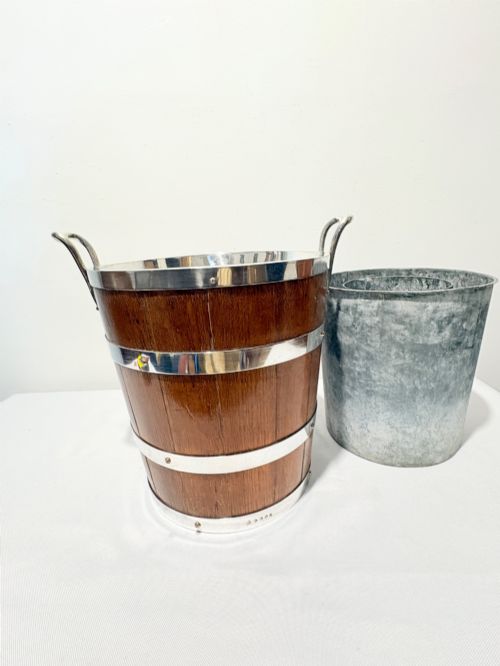
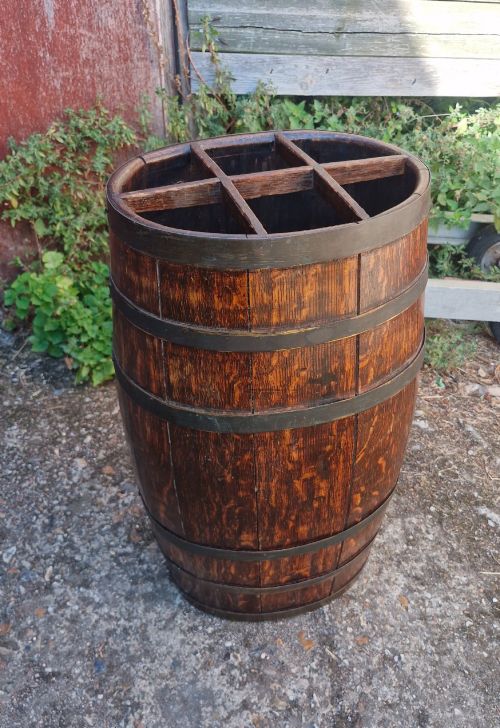
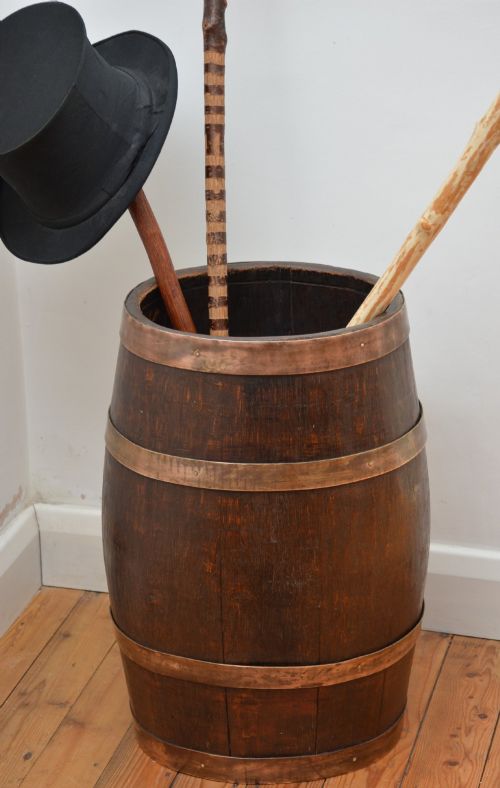
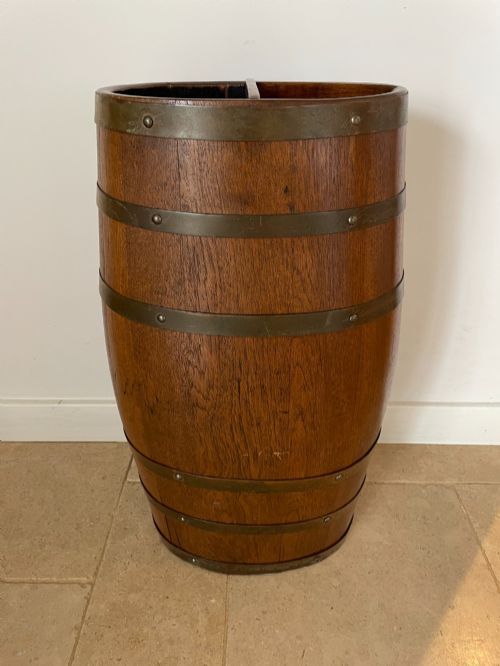
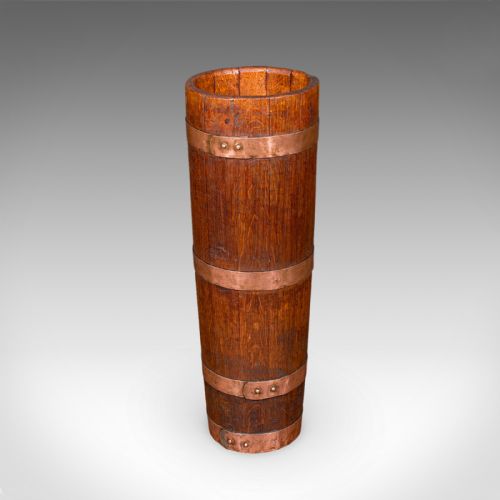
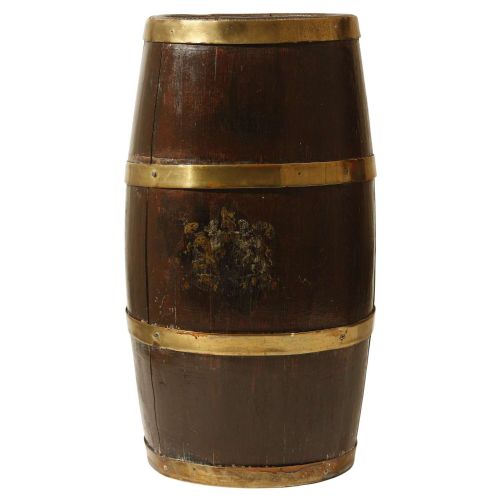
When you search for a coopered wooden barrel, you are looking at sturdy vessels traditionally built by banding curved staves together with metal hoops. The examples appearing on this page most commonly take the form of umbrella stands, stick stands, wine coolers, and planters.
Originating from periods spanning the Georgian era through the Victorian and Edwardian decades, these pieces bring robust country house and naval utility into domestic interiors. Oak remains the predominant wood across these functional forms, frequently paired with brass or iron reinforcement.
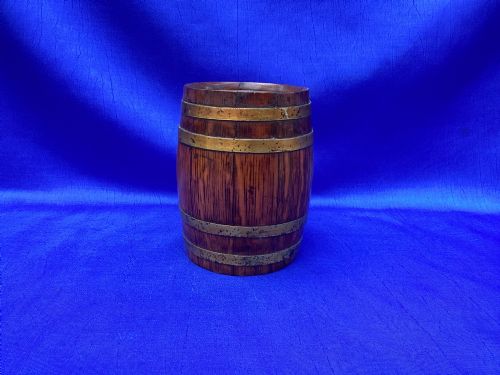
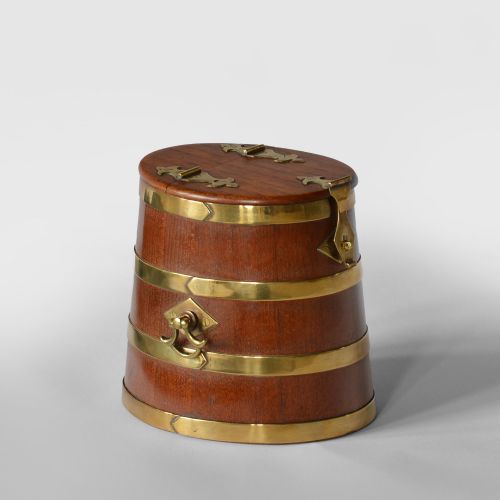
You will encounter items ranging from miniature naval rum barrels to large hall umbrella stands fitted with metal loops. English country and Dutch country styles dominate the selection, showing how utilitarian workshop items adapted into decorative household furnishings.
How they were made
Craftsmen built each coopered wooden barrel by selecting seasoned timber, usually oak or hardwood, and shaping individual vertical staves with bevelled edges so they formed a watertight or tightly sealed cylinder without glue. These staves were arranged around a central axis and held under immense tension by metal hoops.
The structural integrity relies heavily on metal bounding, executed in brass, copper, or iron, which was heated and driven tightly onto the tapered wooden body to lock the staves into place as it cooled. Many domestic pieces incorporate silver-plated mounts, ceramic creamware liners, or cast brass coats of arms to elevate their status for parlour use.
Listings feature oak as the primary timber, complemented by brass, copper, and iron metalwork across Victorian, Edwardian, and Georgian periods.
What varies in quality
Quality in a coopered wooden barrel rests upon the precision of the stave joints and the proportion of the vessel. Superior examples exhibit tight, seamless joins between the wooden segments and well-fitted metal bands that maintain structural tension evenly.
The choice of secondary materials and hardware distinguishes standard utility pieces from finer items. High-quality versions feature heavy cast brass handles, intact ceramic liners, or hallmarked silver plating, whereas simpler items rely on plain iron hoops and basic timber.
Lister and Co·R.A. Lister
The Coopered Wooden Barrel Glossary
- Coopered
- Constructed from curved wooden staves bound together by hoops of metal or wood. This traditional technique formed the basis for vessels ranging from large storage casks down to domestic umbrella stands.
- Stave
- One of the narrow tapered strips of wood that form the sides of a barrel or tub. Each piece is individually bevelled to fit tightly against its neighbours.
- Jardiniere
- An ornamental pot or stand for holding plants or flowers. In coopered pieces, these often feature waterproof liners to protect the timber from moisture.
- Creamware
- A type of fine earthenware with a pale yellowish-white glaze developed in the eighteenth century. It frequently appears as an internal liner inside ice buckets and planters.
Coopered Wooden Barrel: Frequently Asked Questions
Were all these barrels used for wine?
Only a specific subset of these vessels served for wine or rum, such as designated wine coolers and miniature naval casks. The majority of domestic pieces on this page functioned as umbrella stands, stick holders, or jardiniere planters.
Their form derives from storage casks, but their secondary domestic purpose dictated their adaptation.
How can I tell the period?
Dating relies on the combination of timber patination, the style of metal used for the hoops, and any accompanying hardware. Georgian and early Victorian examples often display heavier hand-forged iron or thick brass work with deep timber shrinkage.
Edwardian and later pieces frequently show lighter construction, brighter brass mounts, and occasionally maker stamps from firms like Lister.
Can I use an antique barrel as an umbrella stand?
Many of these items were specifically manufactured or adapted as umbrella and stick stands during the nineteenth and early twentieth centuries. They are robust enough for daily hallway use when fitted with a suitable drip tray or liner.
Ensure the interior remains dry to prevent the wooden staves from rotting or the metal bands from rusting.