

Antique Mahogany Barrel
These pieces gather under the search phrase antique mahogany barrel to describe curved seating, staved vessels, and cabinet fronts shaped with a distinctive sweep.
Antique Mahogany Barrel
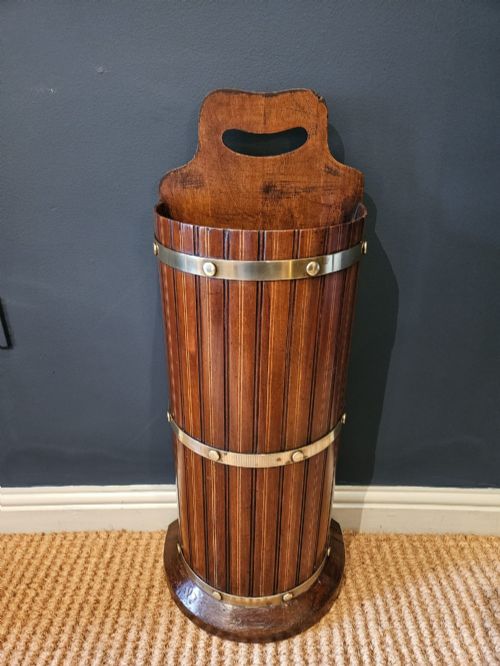
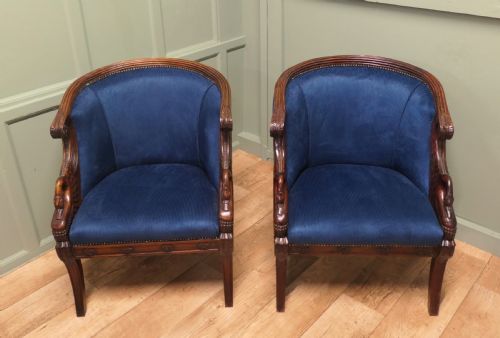
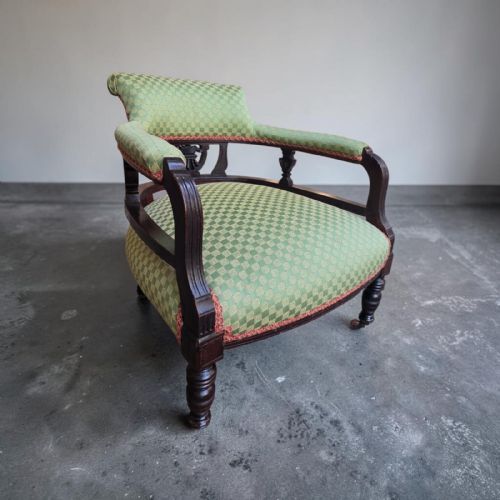
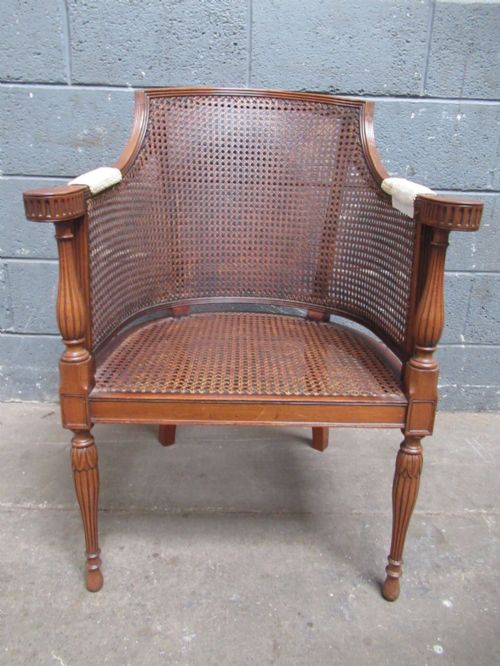
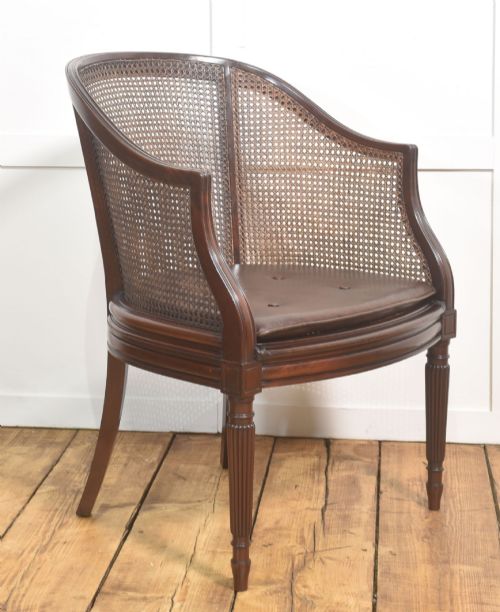
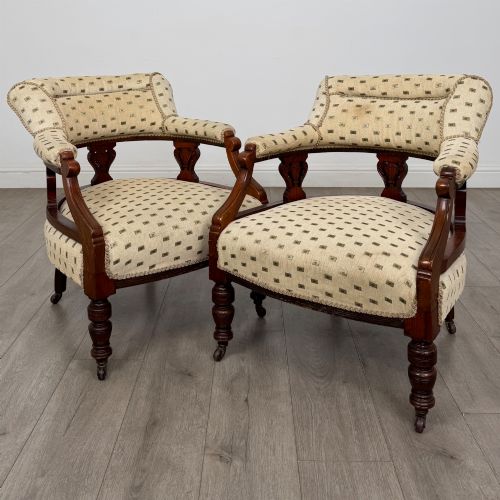
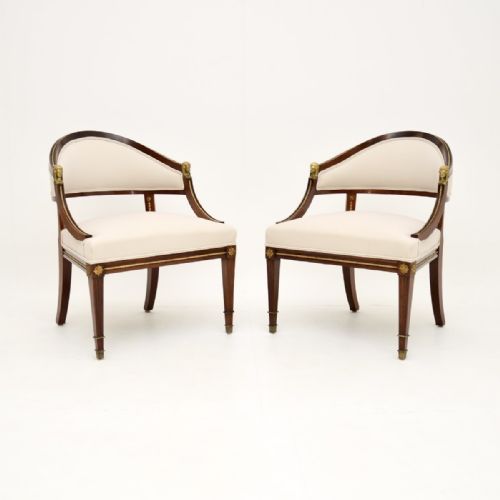
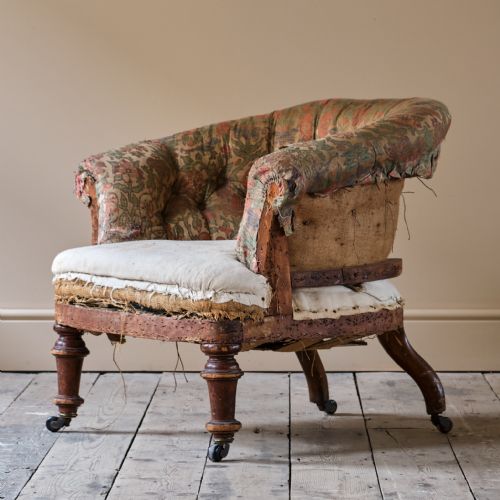
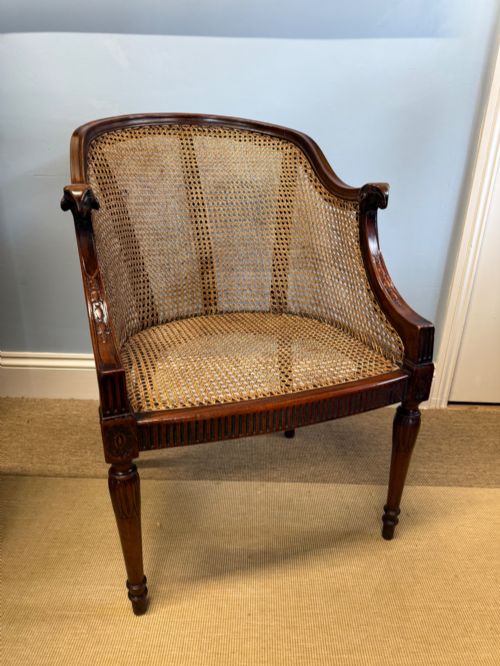
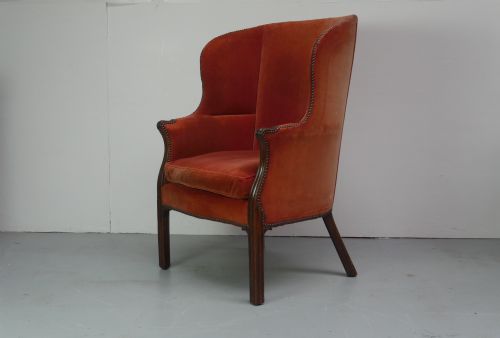
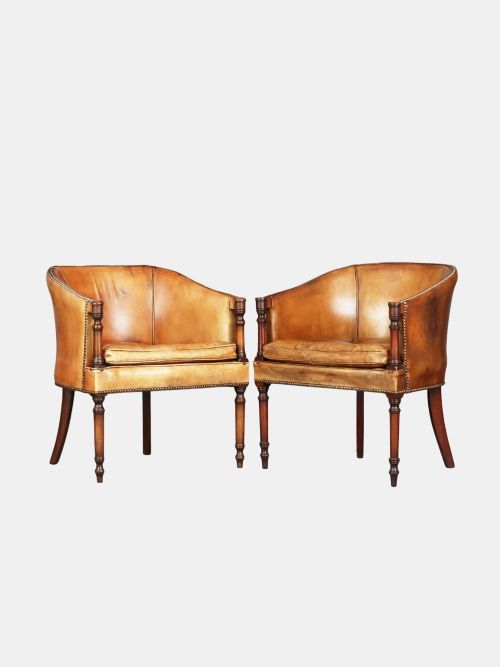
When you search for an antique mahogany barrel, you encounter a varied group of objects ranging from enveloping tub armchairs and library seats to staved storage vessels, biscuit barrels, and curved corner cupboards. The seating category dominates the selection, featuring Georgian, Victorian, and Edwardian tub and barrel back chairs defined by semi-circular upholstered backs that wrap around the sitter.
Originating across British, Dutch, and Scandinavian workshops from the eighteenth century onwards, these pieces serve as practical storage or seating solutions that introduce organic curved lines into a room. The structural commonality lies in the curved sweep, whether achieved through steam-bent wood, coopered staves, or cabinet-making joinery.
Materials and construction methods
The primary material across these pieces is solid and veneered mahogany, frequently paired with secondary woods and secured by brass bands in coopered items. Coopered vessels utilise curved wooden staves bound tightly together with metal hoops, a technique traditionally used for holding liquids or dry goods.
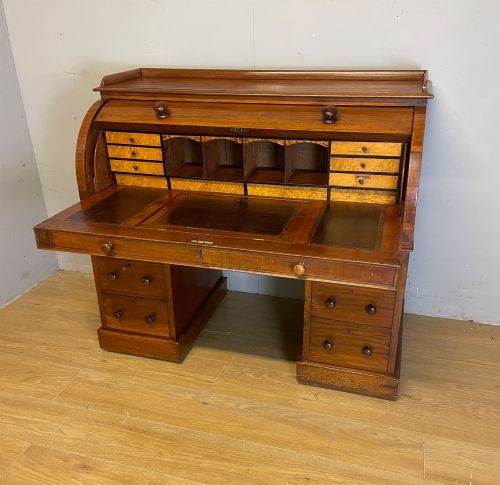
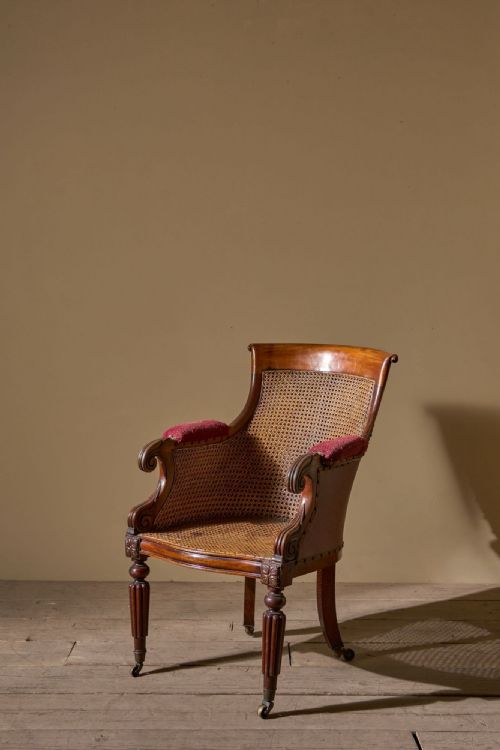
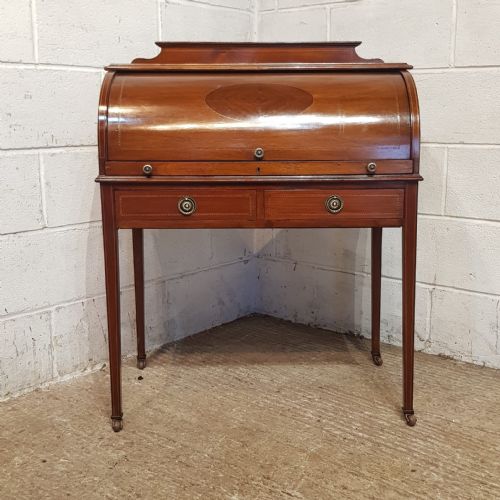
Seating frames rely on sturdy mahogany joinery, sometimes incorporating cane panels, leather upholstery, fabric, velvet, or horsehair stuffing to pad the curved tub backs. Cabinet work for corner cupboards and desk fronts employs curved panels and mahogany veneers shaped to fit the characteristic rounded profile.
Surface details often include brass bindings, silver plating, fan inlays, or ormolu mounts depending on whether the piece originates from a domestic country house or a formal French Empire revival workshop.
Listings feature items spanning the 18th, 19th, and 20th centuries, covering Georgian, Victorian, Edwardian, and Regency periods.
Distinctions in craftsmanship and condition
Quality in these items rests on the precision of the curved joinery and the integrity of the timber used. Superior examples display seamless staving in coopered vessels or robust, fluid lines in the bent framework of armchairs without awkward joints.
The choice of mahogany grain and the delicacy of secondary elements like brass mounts, inlay work, and original leather or cane seating surfaces determine the distinction between utilitarian items and fine decorative pieces. Preservation of original structural elements and surfaces separates well-kept examples from heavily altered pieces.
Harrods London
The Antique Mahogany Barrel Glossary
- Barrel back
- A seating form featuring a continuous semi-circular backrest that curves around to form the arms in a single enveloping sweep. This design provides enclosed comfort and was favoured in libraries and studies.
- Coopered
- A method of construction where tapered wooden staves are joined edge to edge and bound with hoops of metal or wood to form a rounded vessel. This technique creates water-tight or secure storage containers like rum and tobacco barrels.
- Tub chair
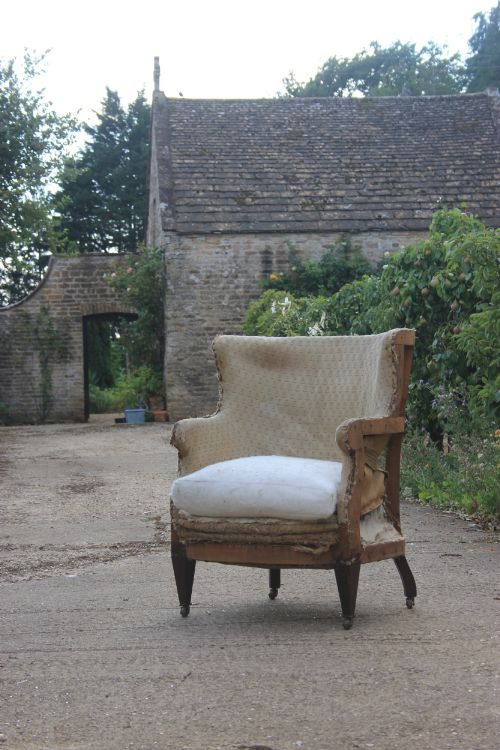
- An upholstered armchair with a low, curved back enclosing the sides. It shares a similar rounded profile with the barrel back chair.
- Bergère
- An enclosed armchair with a wooden frame and cane panels lining the back and sides. These chairs often feature upholstered loose cushions.
Antique Mahogany Barrel: Frequently Asked Questions
What is a barrel fronted corner cabinet?
A barrel fronted corner cabinet is a storage cupboard built with a convex, curved front designed to fit neatly into the corner of a room. These pieces date predominantly from the Georgian period and utilise mahogany cabinetry to soften interior angles.
They provide enclosed shelving behind doors that follow a rounded sweep rather than a flat plane. The design adds architectural interest to plain corners while offering practical concealment for china or documents.
How were coopered mahogany barrels used?
Coopered mahogany barrels served as durable storage containers for commodities such as tobacco, biscuits, butter, and naval rum. The staved construction kept contents dry and secure during domestic use or transport.
Smaller examples functioned on desks or sideboards for daily luxury provisions, while larger vessels stood on floors or counters. Their brass bands and rich timber grain elevated them beyond simple utility into decorative household objects.
Are tub chairs comfortable for daily seating?
Tub chairs offer an enclosed seating experience because the curved backrest and arms wrap closely around the body. Nineteenth and twentieth-century examples rely on padded upholstery, horsehair stuffing, or supportive cane panels to ensure comfort.
Their compact footprint makes them versatile for studies, bedrooms, and libraries without dominating the floor space. The supportive back encourages upright sitting while cradling the sitter.
How do I identify a Georgian barrel piece?
Georgian barrel pieces display characteristic eighteenth-century joinery, proportion, and timber selection, such as Cuban mahogany with deep patination. Cabinets and chairs from this era prioritise structural harmony and understated classical details.
Look for hand-cut dovetails, traditional finishing methods, and authentic wear patterns rather than modern fixings. The proportions tend to be robust yet refined, reflecting the cabinet-making standards of the period.